‘I resigned before arrest, unlike Congress leaders’: Amit Shah in Lok Sabha
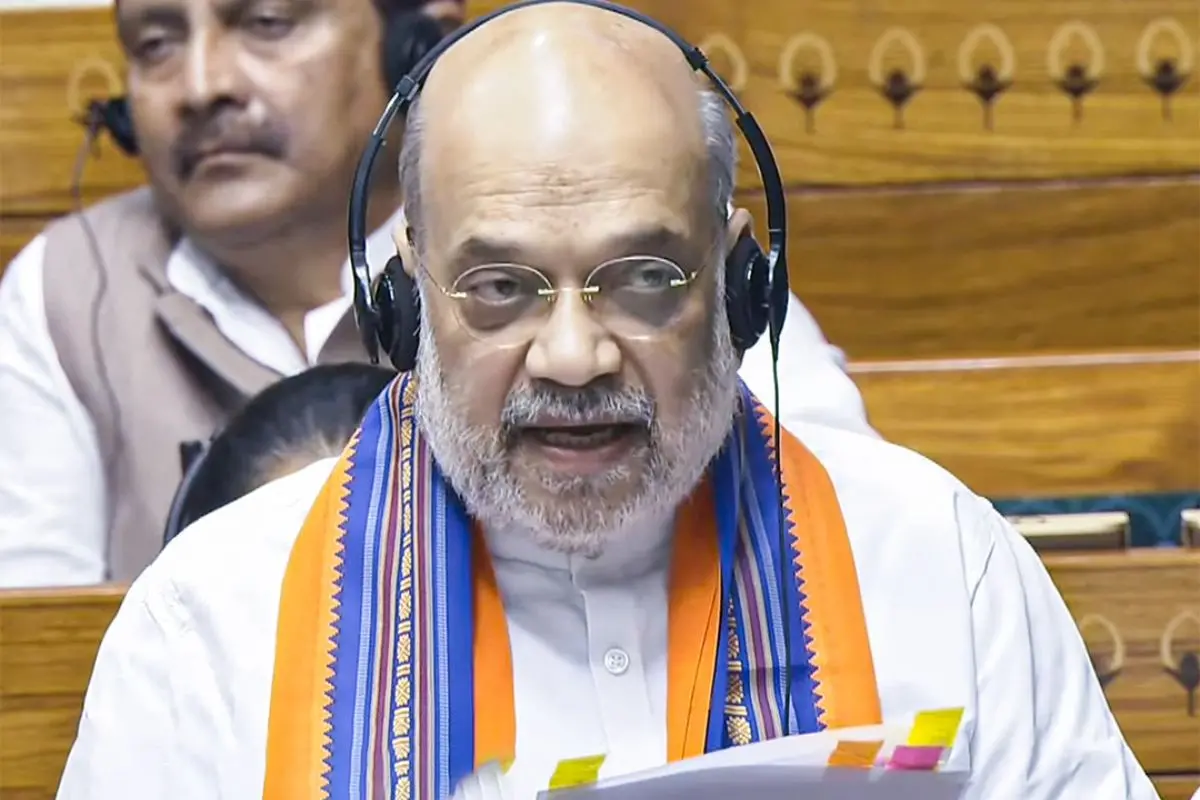
New Delhi: Union Home Minister Amit Shah on Wednesday asserted in the Lok Sabha that he had resigned as a Gujarat Minister before his arrest in 2010, rejecting Congress’s charge of “moral failure” on his part.
Shah’s remarks came in response to Congress MP K C Venugopal, who had questioned the BJP’s credibility while opposing the introduction of Constitutional Amendment Bills. Venugopal had recalled Shah’s arrest during Narendra Modi’s tenure as Gujarat Chief Minister.
“Respected Speaker Sir, I want to clear the record. When false allegations were levelled against me, I resigned before I was arrested. On moral grounds, till I was cleared by the court, I did not hold any Constitutional post. What morality can Congress teach us? We are not so shameful that we cling to posts despite allegations,” Shah said, adding that any Bill to disqualify those facing serious criminal charges should be referred to a Joint Parliamentary Committee (JPC).
The House witnessed uproar after Shah introduced the Bills. Trinamool Congress MP Kalyan Banerjee rushed towards the Home Minister, while Congress MPs tore copies of the proposed legislation.
For the record, Shah was arrested by the CBI in the 2010 Sohrabuddin Sheikh fake encounter case but was later cleared of all charges by the court.
Later, Shah moved to another row in the House as Speaker Om Birla repeatedly adjourned proceedings. Posting on X, the Home Minister said the Congress was “completely exposed.”
आज सदन में काँग्रेस के एक नेता ने मेरे बारे में व्यक्तिगत टिप्पणी भी की, कि जब काँग्रेस ने मुझे पूरी तरह से फर्जी केस में फँसाया और गिरफ़्तार कराया, तब मैंने इस्तीफा नहीं दिया।
मैं काँग्रेस को याद दिलाना चाहता हूँ कि मैंने अरेस्ट होने से पहले ही इस्तीफा दे दिया था और बेल पर बाहर…— Amit Shah (@AmitShah) August 20, 2025
He wrote: “When Congress implicated me in a fake case and got me arrested, I had resigned before the arrest. Even after coming out on bail, I did not hold any post until I was acquitted. The case itself was dismissed as politically motivated.”
Shah further recalled that BJP stalwart L K Advani too had resigned when allegations were made against him. “On the other hand, Congress continues the immoral tradition started by Indira Gandhi. They even tried to protect Lalu Prasad Yadav through an ordinance, which Rahul Gandhi opposed then, but today Rahul hugs him in Patna,” he said.
Calling the opposition’s protest “vulgar” and “shameless,” Shah added: “The INDI alliance has shown its true face. Just to save the corrupt, they opposed a bill that was anyway to be examined by the JPC. The public has seen through their double standards.”
What Actually Happened?
Home Minister Amit Shah introduced three controversial bills in the Lok Sabha:
- The Constitution (One Hundred and Thirtieth Amendment) Bill, 2025,
- The Government of Union Territories (Amendment) Bill, 2025, and
- The Jammu & Kashmir Reorganisation (Amendment) Bill, 2025
The centerpiece, the 130th Amendment Bill, proposes that the Prime Minister, Chief Ministers, and Ministers be automatically removed from office if detained for 30 consecutive days on serious criminal charges, even without a conviction. Reinstatement would be possible post-release
Opposition MPs responded with fierce protests: they stormed the well of the House, tore copies of the bills, and hurled paper fragments at Amit Shah, creating a dramatic scene
Tensions escalated further when TMC MPs alleged physical aggression—pushing and shoving by members of the ruling party. However, Lok Sabha Secretariat sources later said CCTV footage did not corroborate any such claims
Why the Bills Sparked Such Fury
Opposition leaders called the proposals “draconian” and warned of potential misuse. They argued that politically motivated arrests could be used to oust non-BJP leaders—citing cases like Delhi CM Arvind Kejriwal or Jharkhand's Hemant Soren as vulnerable examples
Critics also labeled this legislative move as authoritarian, especially given its impact on executive stability and institutional balance
In response to the uproar, Amit Shah announced that all three bills will be sent to a Joint Parliamentary Committee (JPC) for more detailed scrutiny and discussion