How new trade deal with the US to boost India’s global economic and strategic advantage
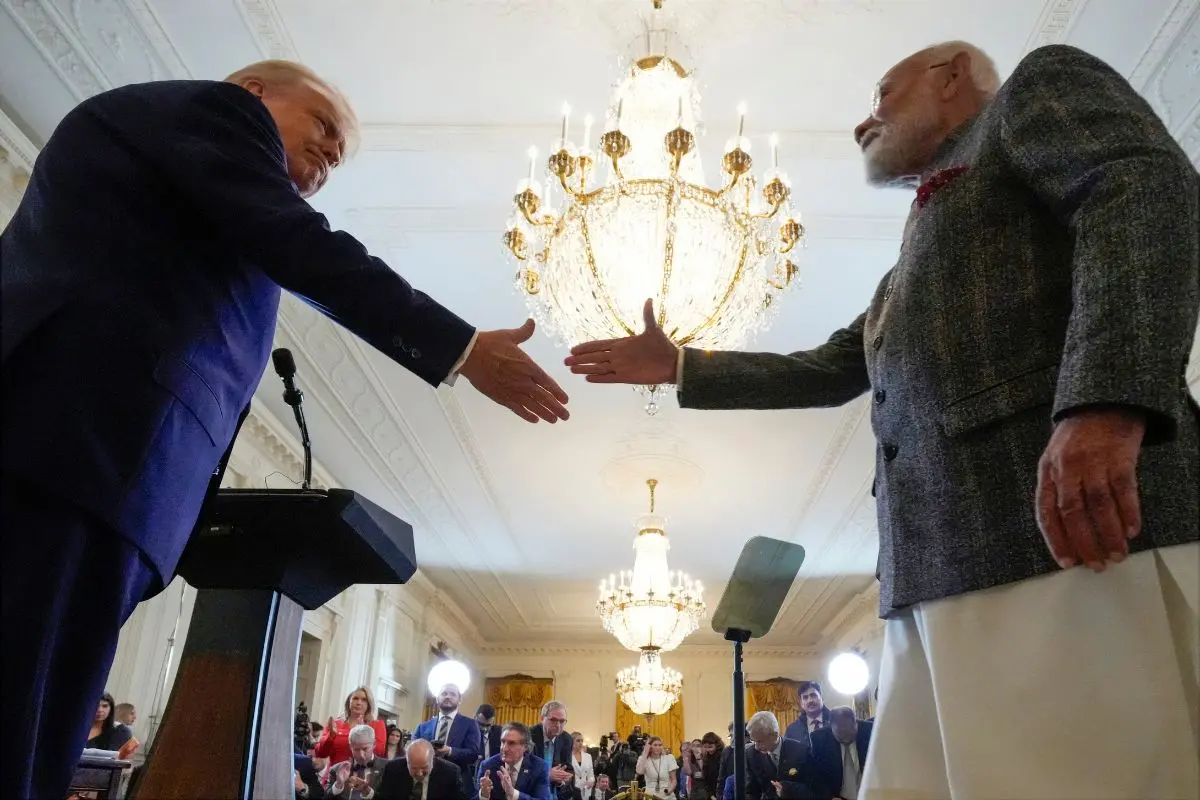
Washington: As India and the United States announce a landmark trade deal, Washington will cut tariffs on Indian goods to 18 per cent. In return, India has reportedly agreed to reduce Russian oil imports and lower trade barriers for US products. The agreement is expected to boost Indian exports, strengthen market access and enhance the country’s economic and strategic position globally.
Prime Minister Modi has welcomed the agreement, saying, “Delighted that Made in India products will now have a reduced tariff of 18 per cent. Big thanks to President Trump on behalf of the 1.4 billion people of India for this wonderful announcement.”
He added that collaboration between two of the world’s largest democracies “benefits our people and unlocks immense opportunities for mutually beneficial cooperation”.
India gains edge in Asian trade
The new arrangement puts India in a favourable position compared with other major Asian economies, including China, Pakistan, Bangladesh, Vietnam and Indonesia.
Countries facing higher US tariffs than India: Brazil (50%), Myanmar (40%), Laos (40%), China (37%), South Africa (30%), Vietnam (20%), Bangladesh (20%), Pakistan (19%), Malaysia (19%), Cambodia (19%), Thailand (19%).
Countries enjoying lower US tariffs: United Kingdom (10%), EU (15%), Switzerland (15%), Japan (15%), South Korea (15%).
This means Indian exporters now enjoy preferential access, potentially boosting trade volumes, strengthening India’s regional competitiveness, and positioning it as a key player in Asia.
Key deal highlights
The agreement removes the punitive 25 per cent duty imposed on Indian imports due to Russian oil purchases, which had been applied on top of the 25 per cent “reciprocal” tariff. Prime Minister Modi also committed India to remarkably increase purchases of US energy, technology, agriculture, and other products, valued at over $500 billion.
President Trump added, “They will likewise move forward to reduce their tariffs and non-tariff barriers against the United States to ZERO.”
Until last year, India faced some of the world’s highest tariffs, with a simple applied rate of 15.6 per cent and an effective applied tariff of 8.2 per cent, according to World Trade Organization data.
Details yet to be clarified
Several aspects remain unclear, including the exact timeline for tariff reductions, the deadline for halting Russian oil imports, and the full list of US products India has pledged to buy. Official notifications from India or the US are still pending, and Russia has not commented on India’s proposed oil halt. Unlike prior agreements with Japan and South Korea, no specific investment commitments have yet been announced.
India’s strategic advantage
By securing lower tariffs than most regional competitors, India strengthens its export potential, energy diversification and economic growth prospects. The deal also reinforces its position as a rising economic power in Asia, while deepening strategic ties with the United States.