Has China taken Indian land? Opposition sounds alarm, but former top cop offers a different picture
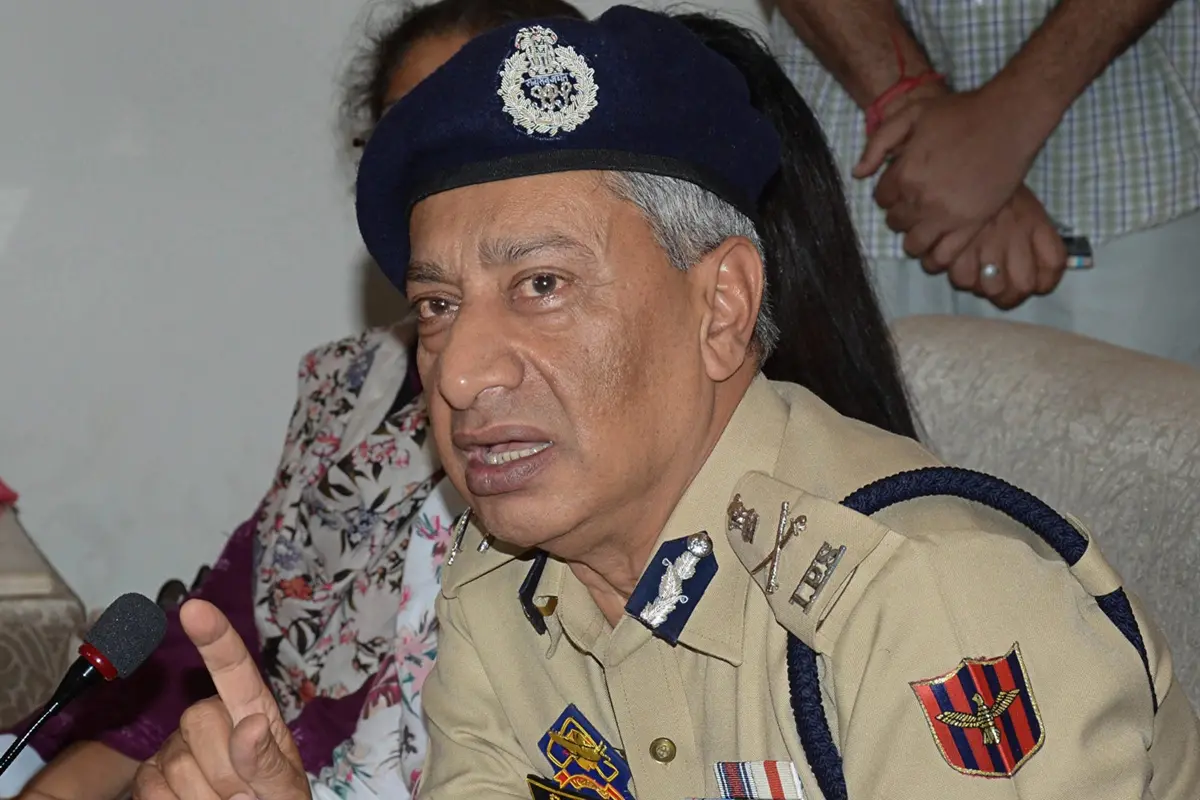
A fierce political dispute has broken out in India following public disclosures by Indo-Tibetan Border Police (ITBP) Director General Shatrujeet Kapoor that Indian security forces continue to engage in confrontations with China's People’s Liberation Army (PLA) troops along the Line of Actual Control (LAC) in Arunachal Pradesh. While the opposition has seized upon these remarks to accuse the Centre of keeping the public in the dark and conceding territory, former Jammu and Kashmir Director General of Police SP Vaid stepped forward to rebut allegations that Indian land has been surrendered.
Speaking to ANI on Friday, Vaid insisted that the ITBP chief’s comments were being misconstrued. "The DG of the ITBP is simply stating that there have been 'face-offs' with China in certain areas. This does not mean that an armed conflict is taking place. Yes, they do engage in bullying, and a bully must be countered with the same tactics. That is precisely what our brave ITBP personnel are doing," Vaid said. He highlighted that the remarks nowhere implied that Chinese forces had occupied Indian land.
Vaid pointed out that a face-off merely reflects the absence of cordial ties on the ground. "There is verbal abuse, shoving, and pushing; that is the nature of these encounters. This is an old habit of China’s; we saw it in Ladakh as well, where India responded, and they suffered significant casualties. We lost a commanding officer, Babu Ram, along with some other soldiers, but in response, according to one report, more than 40 of their personnel were killed. Ultimately, when dealing with a bully like China, you have no choice but to respond in kind," he added.
Opposition attacks government over territorial transparency
The opposition parties launched a joint offensive against the central government, demanding parliamentary accountability and accusing Prime Minister Narendra Modi of giving Beijing "calibrated concessions" while keeping citizens uninformed.
Leading the attack, Congress President Mallikarjun Kharge accused the government of avoiding difficult truths. Taking to X, Kharge asked: "The ITBP DG's confirmation of continuing PLA face-offs in Arunachal Pradesh is deeply alarming. After Doklam and Galwan, is another serious confrontation unfolding? Reports of Chinese incursions near Taksing emerged in August. Yet, even 47 days after Corps Commander-level talks at Wacha–Damai, reportedly just 180 km away, confrontations continue. Has India's patrolling access been compromised?". Kharge further asserted: "At least 23 reported Modi–Xi meetings and interactions, 25 Special Representatives' rounds involving NSA Ajit Doval, 36 WMCC meetings, and successive SCO and BRICS Summits. What tangible results have these engagements delivered? Have India's pre-May 2020 patrolling rights been fully restored? Our Armed Forces have our complete confidence. But National security demands accountability, not diplomatic photo opportunities & Hugplomacy! Instead of attacking the Opposition, PM Modi must take Parliament and the Nation into confidence".
Kharge also flagged the economic tilt, noting that since the 2020 Galwan clash, India's trade deficit with China has widened by 155 per cent to $112.16 billion, asking if "Make in India" had turned into "Import from China".
Congress General Secretary Jairam Ramesh echoed these claims, stating that the Prime Minister has maintained a "deafening silence" over Arunachal face-offs and traditional patrolling points, whilst warning against China's renaming of border villages and its 60,000-MW dam project on the Brahmaputra River.
At a press conference at the AICC headquarters, Congress leader Pawan Khera questioned why economic curbs were softened, asking: "What did we get? Can we patrol the points today where we used to patrol before April 2020, or not? In exchange for all this, shouldn't you have taken something? Or did you just accept that you will do whatever China wants because you are afraid?". Congress MP Jebi Mather raised questions over the operational timeline, asking why the country had to wait until October to learn from a paramilitary chief about encounters that had reportedly been taking place since July.
From Hyderabad, AIMIM President Asaduddin Owaisi demanded an independent white paper and an emergency parliamentary session. "No discussion takes place in the Parliament, no questions are allowed, PM Modi doesn't hold a press conference and even when he has spoken, as in June 2020, he has claimed that there were no Chinese on the Indian territory. That was obviously not true or factual," Owaisi stated on X. He added: "The least that this country deserves is the truth, honesty and political accountability, when it comes to such core issues that affect the territorial integrity of India".
Shiv Sena (UBT) MP Priyanka Chaturvedi pressed top cabinet ministers to explain the disconnect between public peace posturing and ground frictions, while Communist Party of India (CPI) General Secretary D Raja urged the Prime Minister to rise above partisan domestic rhetoric and address vital national security issues through mature bilateral dialogue. Activist Abhijeet Dipke also criticised the Centre, alleging border security is jeopardised when paramilitary resources are directed towards containing internal civic protests.
Border posture, diplomacy, and broader developments
Beyond the political crossfire lies a complex web of strategic posturing and sustained diplomatic negotiations along the contested Himalayan frontier.
Addressing the controversy during his bi-weekly media briefing, Ministry of External Affairs (MEA) spokesperson Randhir Jaiswal explained why friction regularly surfaces. "As we have noted in the past, the situation in the India-China border areas gets disturbed from time to time when Chinese forces diverge from established patrolling patterns," Jaiswal stated. He referred specific military details to the Ministry of Defence, while reaffirming that maintenance of peace and tranquillity in the border regions is an indispensable prerequisite for the broader growth of bilateral ties.
Jaiswal noted that both nations actively rely on established military and diplomatic channels to resolve outstanding issues and prevent miscalculations along the LAC. The two countries have also agreed to pursue discussions aimed at clarifying their common understanding of the LAC in sensitive areas for smoother border management.
On the operational front, ITBP DG Shatrujeet Kapoor, speaking in Rajasthan's Alwar on Thursday, revealed that the border guarding force has systematically enhanced its tactical preparedness. The force has raised specialised drone platoons across all border units and instituted a dedicated 'Strike' combat training course to prepare troops for close-quarter, Galwan-style border brawls.
These developments occur against the backdrop of sustained bilateral diplomacy aimed at stabilising relations that broke down after the 2020 Galwan Valley clashes. In October 2024, India and China finalised a landmark disengagement pact regarding Depsang and Demchok, resolving the last two major friction points in eastern Ladakh.
This agreement was promptly followed by direct talks between Prime Minister Narendra Modi and Chinese President Xi Jinping in Kazan. Prime Minister Modi also met Xi on the margins of the SCO summit in Tianjin, emphasising mutual trust, respect, and sensitivity, and held further bilateral discussions during the BRICS summit in New Delhi, where he stressed that relations must rest upon the foundational "three mutuals" — mutual respect, mutual sensitivity, and mutual interest. Additionally, on August 25, the 25th Round of Talks between the Special Representatives on the Boundary Question took place in Beijing, where both capitals reaffirmed their intent to preserve border peace and foster steady bilateral ties.