No contest for Hardeep Singh Puri: Two nominations rejected, Rajya Sabha seat within reach
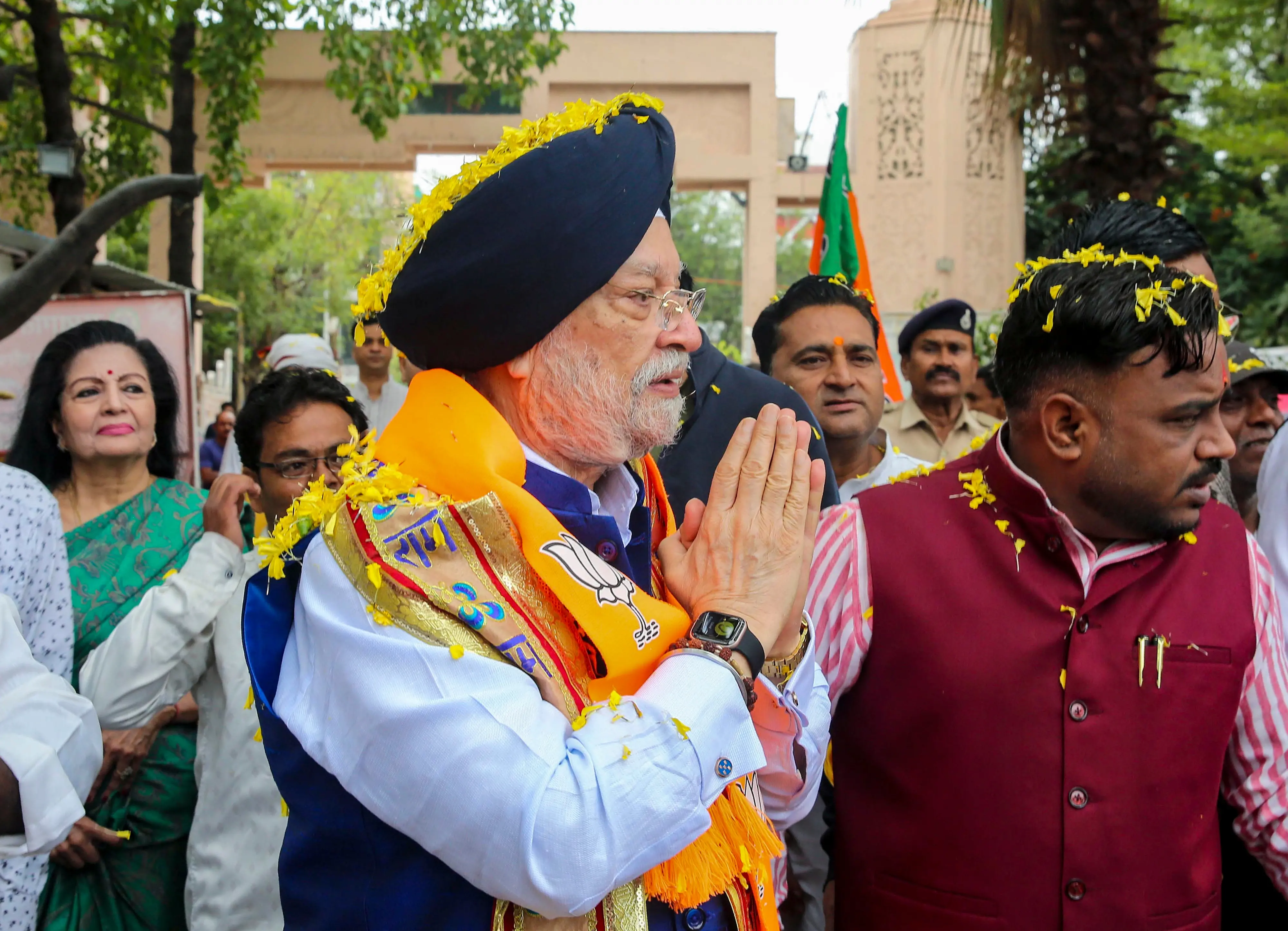
Bhopal: Union Petroleum Minister Hardeep Singh Puri is set to secure a Rajya Sabha seat from Madhya Pradesh without a contest after the nomination papers of two independent candidates were rejected during scrutiny on Tuesday, November 3.
The development has triggered a political dispute, with Congress leaders questioning the Returning Officer's decision and announcing plans to challenge it in court. At the same time, Puri has faced renewed scrutiny over his past interactions with Jeffrey Epstein following the release of documents by the US Department of Justice in January 2026.
While the two developments are separate, they have placed the Union minister at the centre of political and public scrutiny.
How Puri emerged as the likely unopposed winner
The Madhya Pradesh Rajya Sabha seat became vacant after the resignation of Union Minister L Murugan.
The BJP fielded Hardeep Singh Puri for the bypoll. However, the nomination papers of two independent candidates, Kante Sayanna and Congress-backed Rajkumar Lohani, were rejected on Tuesday during scrutiny.
An official said the outcome would be declared on November 5, the deadline for withdrawing nominations. With the two rival nominations rejected and Puri's papers accepted, he is expected to be elected unopposed if no further candidate remains in the contest.
Congress challenges rejection of nominations
The nomination scrutiny also became contentious after Sayanna, Lohani and Congress leader Hemant Katare raised objections to Puri's nomination papers.
They alleged that Puri's affidavit submitted in Form 26 was incomplete and invalid. However, Returning Officer Umesh Sharma rejected the objections, stating that no defect had been found in Puri's nomination papers and that he had not violated any provision of the Representation of the People Act.
Katare and Congress MLA Atif Aqeel said they would challenge the decision in court.
"This is an attack on Indian democracy. Despite such significant errors, the nomination was not rejected," they said in a statement.
The Returning Officer's decision, rather than the allegations themselves, will be central to any legal challenge.
Epstein files controversy: Why Puri faced renewed scrutiny
The Rajya Sabha development comes against the backdrop of controversy surrounding Puri's past correspondence with Jeffrey Epstein, the US financier and convicted sex offender whose connections with influential figures across politics, business and other fields have drawn international attention.
On January 30, 2026, the US Department of Justice released another set of documents relating to Epstein. The disclosures included email exchanges between Puri and Epstein from 2014 and 2015, when Puri was associated with the International Peace Institute after retiring from the Indian Foreign Service.
According to documents reported by The Indian Express, Epstein helped connect Puri with LinkedIn co-founder Reid Hoffman. Their correspondence also included discussions about investment opportunities in India's internet economy and the Narendra Modi government's Digital India initiative.
One exchange from December 2014 attracted particular attention. Puri reportedly asked Epstein when he would return from his "exotic island" so they could meet. In another message, Puri responded with the words "have fun".
These exchanges prompted questions about the nature of their association, the purpose of their meetings and Puri's knowledge of Epstein's activities.
However, the existence of email correspondence or meetings does not, by itself, establish involvement in Epstein's sexual abuse crimes or knowledge of those crimes. The disclosures have raised questions about the association, but the information provided does not establish criminal wrongdoing by Puri.
A political controversy that has not gone away
The Epstein-related disclosures have given political opponents grounds to question Puri about his past association with the financier. The controversy also highlights the wider public interest in understanding how influential individuals interacted with Epstein before and after his criminal activities became widely known.
The questions are particularly significant because Puri is a senior Union minister and a former diplomat who has represented India in international forums.
The latest nomination dispute adds another layer to the political debate surrounding him. While the Returning Officer has upheld Puri's nomination, the Congress has questioned the scrutiny process and indicated that it will seek judicial intervention.
The two issues must be assessed separately: the nomination dispute concerns the legality of the election process, while the Epstein controversy concerns the nature and context of Puri's past correspondence and interactions.
An uncontested election does not end questions of accountability
Puri's likely unopposed election highlights an important distinction between securing an elected position and addressing questions raised about a public figure.
The rejection of rival nominations has cleared the way for his return to Parliament, but it has not automatically resolved the political questions surrounding the Returning Officer's decision. Whether the Congress can establish grounds for challenging the scrutiny process will depend on the evidence and the court's assessment.
Similarly, the Epstein files controversy requires examination of the actual correspondence, the context of the interactions and any further evidence that may emerge. Being named in documents or having exchanged emails with Epstein should not be treated as proof of participation in his crimes. At the same time, public figures can reasonably be asked to explain the nature of their associations, particularly when those associations involve someone convicted of serious sexual offences.
The broader issue is one of transparency. Parliamentary representation, ministerial responsibility and public accountability are not interchangeable. An uncontested victory may settle the immediate electoral contest, but it does not necessarily settle the questions surrounding a politician's public record.