From birth to diplomatic bonds: Khaleda Zia’s enduring India connection
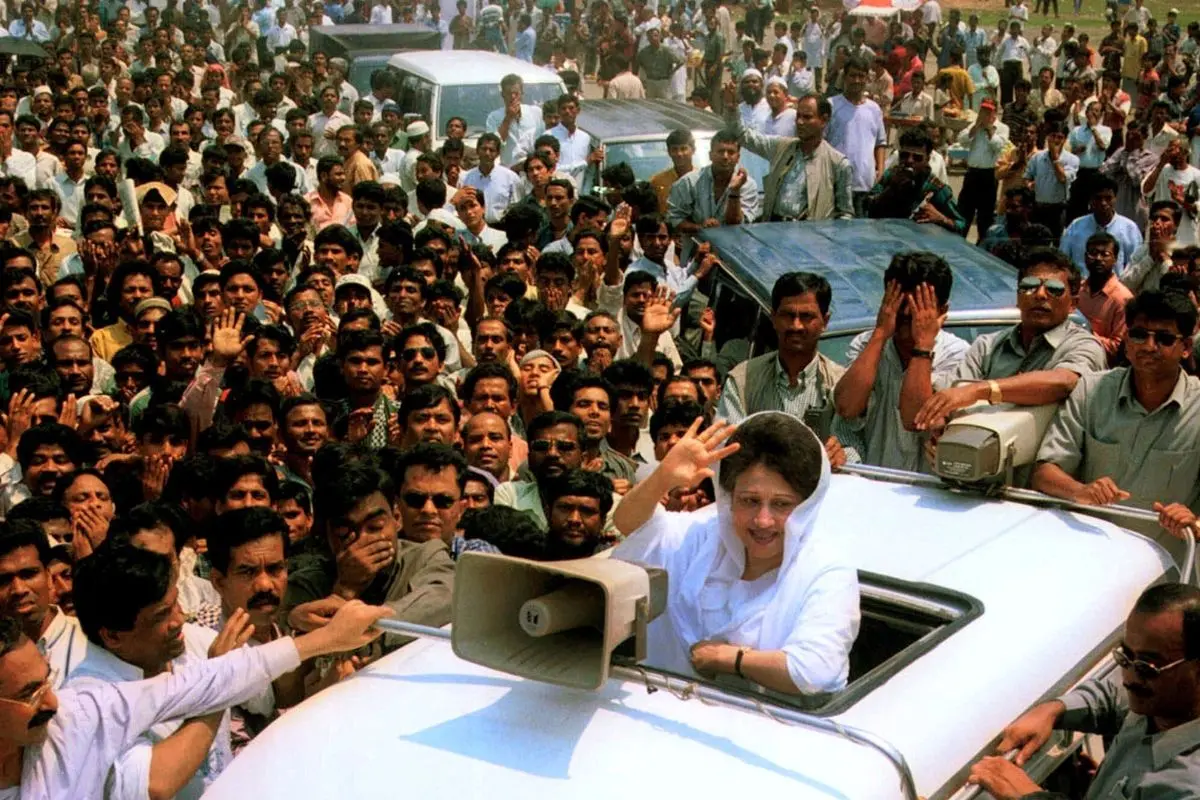
Bangladesh’s former Prime Minister Khaleda Zia, who many expected to make a political comeback in next year’s elections, passed away on Tuesday aged 80, her party confirmed. She was the first woman elected to lead Bangladesh and remained a pivotal figure in its politics despite years of ill health and imprisonment.
“The BNP Chairperson and former prime minister, the national leader Begum Khaleda Zia, passed away today at 6:00 am (0000 GMT), just after the Fajr (dawn) prayer,” the Bangladesh Nationalist Party said. “We pray for the forgiveness of her soul and request everyone to offer prayers for her departed soul.”
Despite years of ill health and imprisonment, Zia vowed in November to campaign in elections set for February 2026 -- the first vote since a mass uprising toppled her arch-rival Sheikh Hasina last year.
Born on 15 August 1945 in Jalpaiguri, in the then undivided Dinajpur district of Bengal Province in British India (now in West Bengal, India), Zia and her family migrated to Dinajpur town in present-day Bangladesh following partition. She was educated at Dinajpur Missionary School and later Dinajpur Girls’ School.
A Political Life with India in Focus
Zia’s relationship with India was marked by frequent official visits and close diplomatic engagement. Her last visit as Bangladesh’s Prime Minister came in March 2006, when she travelled to India at the invitation of Prime Minister Manmohan Singh.
During that state visit, Zia held wide-ranging discussions on bilateral relations, regional issues, and international concerns. She called on President A.P.J. Abdul Kalam, Vice-President Bhairon Singh Shekhawat, and UPA Chairperson Sonia Gandhi. Other meetings included India’s Commerce Minister Kamal Nath, Opposition Leader L.K. Advani, and Mizoram Chief Minister Zoramthanga.
Two key agreements were signed during the trip: a revised trade agreement to expand bilateral commerce and a pact to combat illicit trafficking in narcotic drugs. The visit also reinforced the need for frequent meetings of institutional mechanisms, including the Joint Economic Commission, Joint Boundary Working Groups, Joint Rivers Commission, and Home Secretary-level talks.
Both leaders emphasised working closely to resolve issues around security, trade, and water-sharing, highlighting the importance of a constructive political dialogue. Zia’s visit was seen as a step toward consolidating the friendly ties between the two neighbours, built on shared history, culture, and people-to-people relations.
Visits as Opposition Leader
Even after leaving office, Zia maintained her engagement with India. In 2012, she visited at the invitation of India’s External Affairs Minister, meeting President Pranab Mukherjee, Prime Minister Manmohan Singh, and other senior officials.
The President praised her contributions to Bangladesh’s development and reiterated the importance of strong Indo-Bangladesh relations. Zia fondly recalled her past visits and stressed her party’s commitment to maintaining a close and friendly relationship with India. She also visited Ajmer Sharif, reflecting her personal and political ties with India beyond formal diplomacy.
A Lasting Legacy
Throughout her life, Khaleda Zia’s India connection remained a defining feature of her political journey. From her early days in British India to high-profile meetings with Indian leaders, her interactions with India helped shape Bangladesh’s diplomatic and political landscape.
Despite her passing, her engagement with India stands as a testament to her enduring role in fostering neighbourly cooperation and dialogue.