The curious case of ‘micronations’: Ghaziabad fake embassy probe reveals links to international fraud, arms dealing
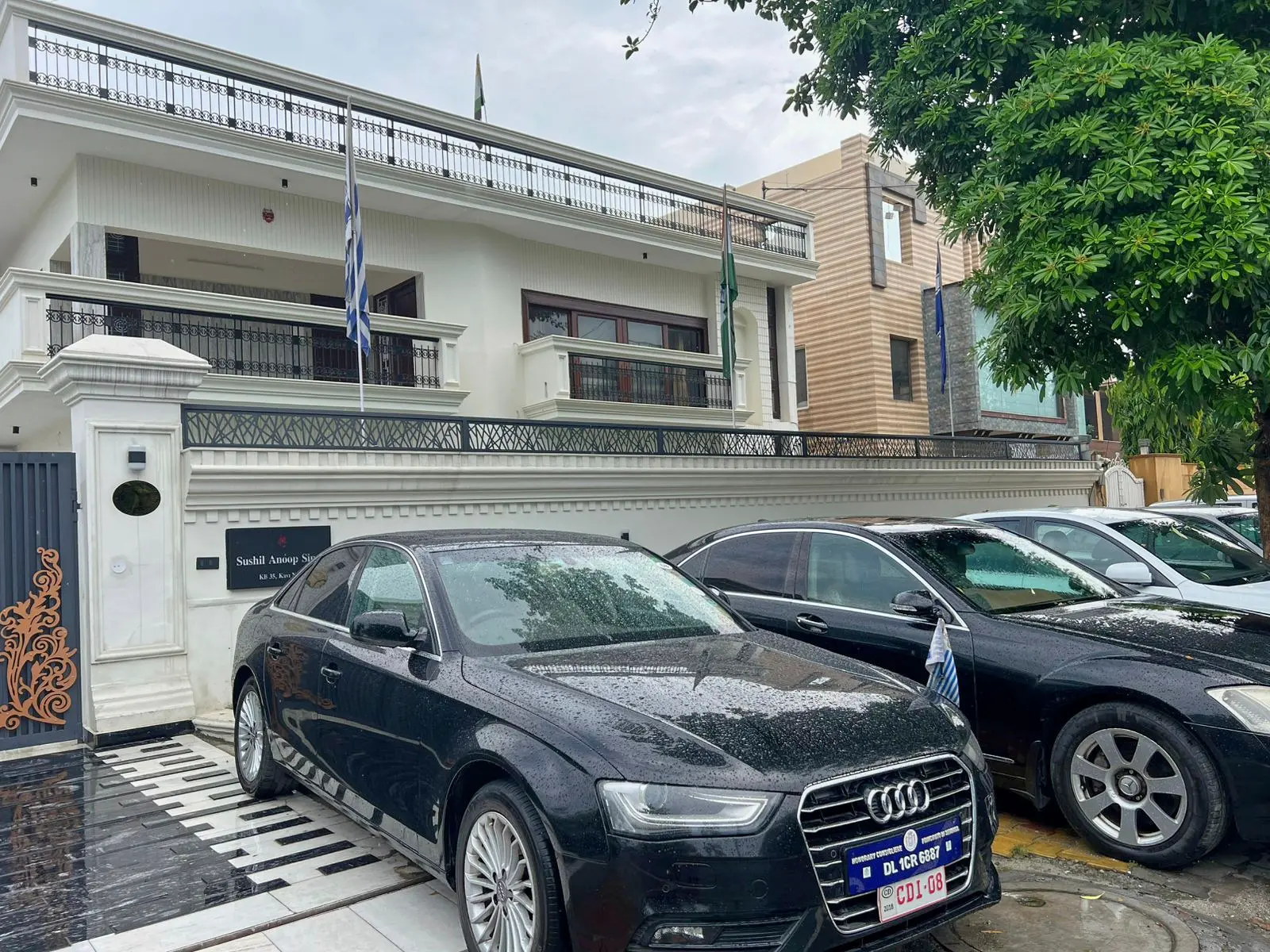
New Delhi: A bizarre fraud case uncovered in Ghaziabad, near Delhi, has brought attention to the obscure world of "micronations" — self-proclaimed entities that imitate the structure of sovereign countries but lack any legal recognition. The Uttar Pradesh Police now finds itself grappling with an unprecedented investigation for which no clear precedent exists.
On July 22, the UP Special Task Force arrested 47-year-old Harsh Vardhan Jain in Ghaziabad for operating "embassies" of four such micronations — Westarctica, Seborga, Poulbia, and Ladonia — from a rented residence.
Jain claimed to be the "ambassador" of these entities and was found in possession of forged diplomatic license plates, luxury vehicles, and official seals. Police are currently investigating his involvement in overseas job scams, hawala operations, and potential counterintelligence activities. A plea for police custody is pending in court. Authorities are also reviewing public statements issued by Westarctica and Seborga to assess their relevance to the investigation.
"The problem is that there is no reference point for us also to deal with cases that involve something called a micronation," a senior UP police officer told PTI.
"The Ministry of External Affairs (MEA) is our medium for correspondence in cases that go beyond the territories of India, and here, these unrecognised entities don't have such a legal system in place," the officer added, highlighting the legal and diplomatic challenges posed by the case.
Beyond exposing gaps in local intelligence, the case has drawn attention to the strange and often theatrical world of micronations — a concept still largely absent from academic and legal discourse in India.
According to a 2014 academic paper Islands and Micronationality by Philip Hayward, "Micronations are largely notional entities. They are territories that have been declared independent by individuals or groups despite the minimal likelihood of their being recognised as independent by any established nation state or international body."
Hayward differentiates these from legally recognized microstates like Niue or Tokelau, noting that micronations are typically ideological ventures or artistic statements that lack geographic borders or official status.
One of the micronations Jain claimed to represent, Westarctica, was founded by a former U.S. Navy officer who refers to himself as "Grand Duke." Its website says it "seeks to engage technology and people in service of the environment while pursuing sovereignty for Western Antarctica." The group claims to maintain a head of state, a prime minister, and ministers for culture, foreign affairs, and defense.
Seborga, located near the Italy–France border, operates symbolically with its own princess, crown councillors, and international representatives. However, it lacks infrastructure such as banks, casinos, or hospitals. As its website states: "While the Principality of Seborga has long claimed its historical and cultural identity, in the current legal framework it operates in full compliance with Italian law. All its activities are carried out solely in a symbolic and cultural form and are managed by a duly registered 'associazione di promozione sociale', established under Italian legislation."
Ladonia, based in southern Sweden, promotes itself as a haven for artistic freedom and free expression. It claims over 30,000 non-resident citizens and 125 ministries. According to its website: "Ladonia is a peaceful and evolving model of cultural and artistic sovereignty in a post-national era, demonstrating that new nations can emerge through diplomacy, creativity, and shared ideals — without conflict or political upheaval."
Speaking to the media, Bhanu Pratap, Assistant Professor of International Law at Lucknow University, explained why such micronations hold no legal legitimacy under current frameworks.
"As far as micronations are concerned they are not subject matter of international law per se because they do not come within the traditional understanding of statehood. Article one of the Montevideo Convention mentions the rights and duties of a state, which are Population, Territory, Government and the ability to exercise formal relations with other countries."
Pratap added that a UN committee had once considered the idea of "Lilliput Nations" but ultimately dismissed it. "Today, the only valid entity is the State. Either you are a state or not." He drew comparisons to "Kailasa," a self-styled "nation" founded by fugitive Indian godman Nithyananda, noting it also "has no legal standing."
Referencing the legal principle of uti possidetis, he further explained: "On the date of your independence, whatever the map of your independent country is, it is considered final and now no more countries can be created using self-determination as a cause… The most factual question that we should ask is independence against what and why the independence?”
Micronations, he added, have yet to find a place in serious academic discourse in India.
"You have nation states, legally recognised states, sovereign independent states. There are some which are struggling for independence… But in academics and political science, we don't have this term called micronations. I have never come across this word in textbooks," said Professor Rajpal Budania from the University of Allahabad’s Political Science department.
As an expert in international relations, Budania warned that such self-styled entities could be exploited for illicit activities, as demonstrated by the Ghaziabad case. "It's unfortunate that a man could pull off something like this, and it is a failure of the police and intelligence."
He added that if such phenomena begin to show relevance to society or global affairs, "then it should definitely be studied."
PTI