Explained | Why Asia's largest oxbow lake in Bihar is facing an ecological crisis
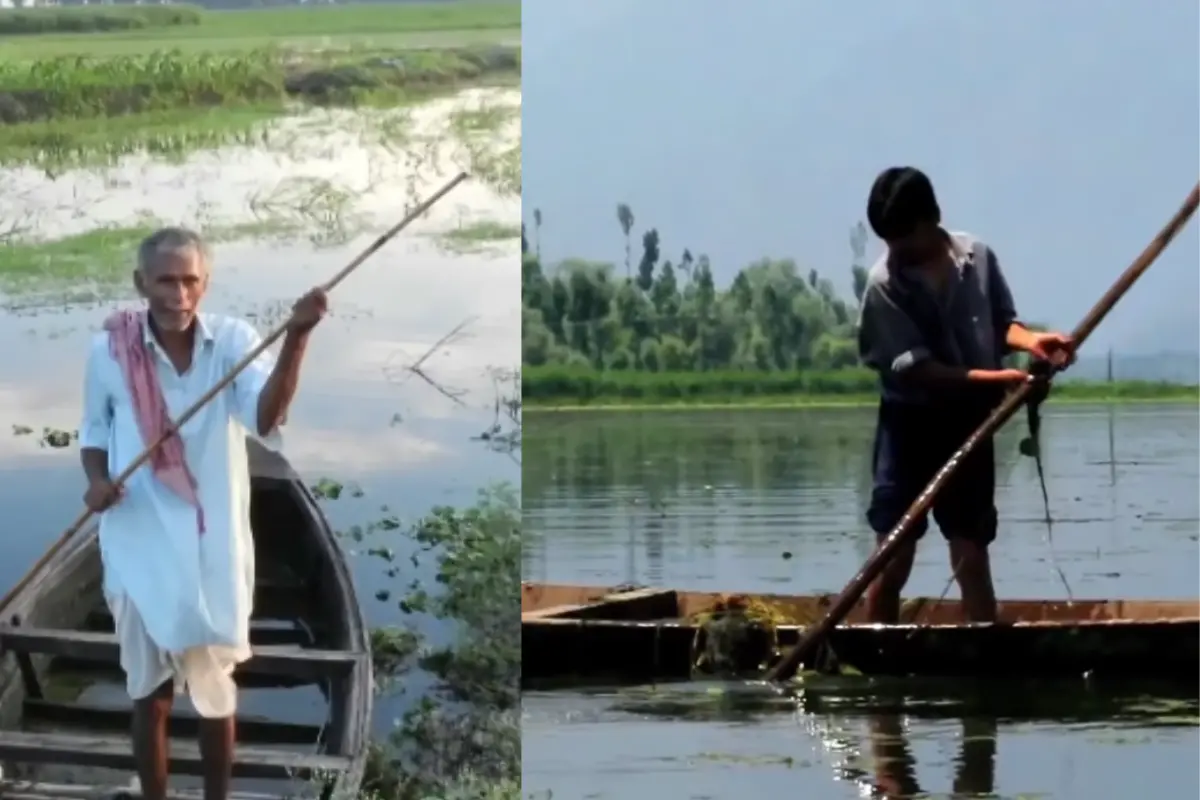
The National Green Tribunal (NGT) has stepped in to address the deteriorating ecological condition of Kanwar Lake (Kanwar Jheel) in Bihar, a wetland of international importance recognised as Asia's largest oxbow lake and the state's first Ramsar Site. Acting on a media report highlighting the lake's worsening health, the green tribunal has issued notices to the Centre, the Bihar government and several environmental authorities, seeking detailed responses before the next hearing on August 31.
The tribunal's intervention comes amid growing concerns that the lake, once a thriving wetland supporting biodiversity, fisheries and flood control, is rapidly shrinking due to encroachment, declining water levels and ecological degradation.
What is Kanwar Lake?
Located near Cheriya Bariyarpur and Manjhaul in Begusarai district, around 20 km north of Begusarai town, Kanwar Lake is a residual oxbow lake formed centuries ago when the Burhi Gandak River, a tributary of the Ganga, changed its course.
An oxbow lake is a U-shaped waterbody created when a river cuts off one of its meandering bends. Kanwar Lake represents one of the finest examples of this unique geological process.
Spread across 2,620 hectares (about 26.2 sq km) of the Indo-Gangetic plains, the wetland forms part of a larger floodplain complex consisting of 18 interconnected wetlands. During the monsoon, the lake stores floodwaters—an essential ecological service in Bihar, where nearly 70 per cent of the state's land is prone to flooding.
The lake was designated as Bihar's first Ramsar Site in November 2020, recognising its global ecological significance.
A haven for wildlife
Kanwar Lake is one of eastern India's most important freshwater wetlands.
Scientists have documented:
- 165 plant species
- 394 animal species
- 221 bird species
- More than 50 fish species
The wetland also serves as a crucial stopover along the Central Asian Flyway, where 58 species of migratory waterbirds rest and feed during their long migrations.
Among its most significant inhabitants are five critically endangered species
- Red-headed vulture (Sarcogyps calvus)
- White-rumped vulture (Gyps bengalensis)
- Indian vulture (Gyps indicus)
- Sociable lapwing (Vanellus gregarius)
- Baer's pochard (Aythya baeri)
For decades, the lake has also sustained thousands of local fishing families whose livelihoods depend on its rich aquatic ecosystem.
According to the media report examined by the NGT, Kanwar Lake has witnessed a steady ecological decline.
The tribunal noted that the wetland, which once covered nearly 63 square kilometres, has gradually fragmented into smaller water bodies as water levels have fallen and encroachments have increased.
The report highlights a series of alarming changes, including shrinking water spread, declining fish populations, loss of biodiversity, the disappearance of several native fish species, and worsening ecological degradation.
Experts say changing hydrology, reduced natural recharge, drainage, agricultural expansion, embankments and water diversion have altered the lake's natural character.
What did the NGT say?
Taking suo motu cognisance of the issue, a bench comprising NGT Chairperson Justice Prakash Shrivastava and expert member Afroz Ahmad observed that Kanwar Lake is an internationally important wetland requiring urgent conservation.
The bench noted, "The news item also details out various remedial measures which include linking to the Burhi Gandak River and conservation measures."
The tribunal further observed, "The lakes have to be delineated and mapped; the encroachment needs to be removed. There is also an embankment or check dam build The wetland for its survival requires monsoon recharge and groundwater seepage."
Highlighting the seriousness of the issue, the bench said, "The news item raises substantial issues relating to compliance with the environmental norms."
The tribunal observed that the matter attracts the provisions of the Environment (Protection) Act, the Biological Diversity Act and the Water (Prevention and Control of Pollution) Act
The NGT has issued notices to the Union Ministry of Environment, Forest and Climate Change, the Bihar government, the Central Pollution Control Board (CPCB), the National Biodiversity Authority, the Bihar State Pollution Control Board, the Principal Chief Conservator of Forests, Bihar, and other concerned authorities.
The tribunal directed all respondents to submit affidavits before the Eastern Zonal Bench in Kolkata ahead of the next hearing scheduled for August 31.
Why the case matters
Kanwar Lake is far more than a picturesque wetland. It acts as a natural flood buffer, replenishes groundwater, supports agriculture during dry months, sustains fisheries, provides habitat to hundreds of species and forms an important link in the migratory bird network across Asia.
Its degradation threatens biodiversity, local livelihoods and the ecological balance of the entire floodplain.