Drone scare shuts Amritsar airport, diverts 7 flights: Know what happened and why they pose risks
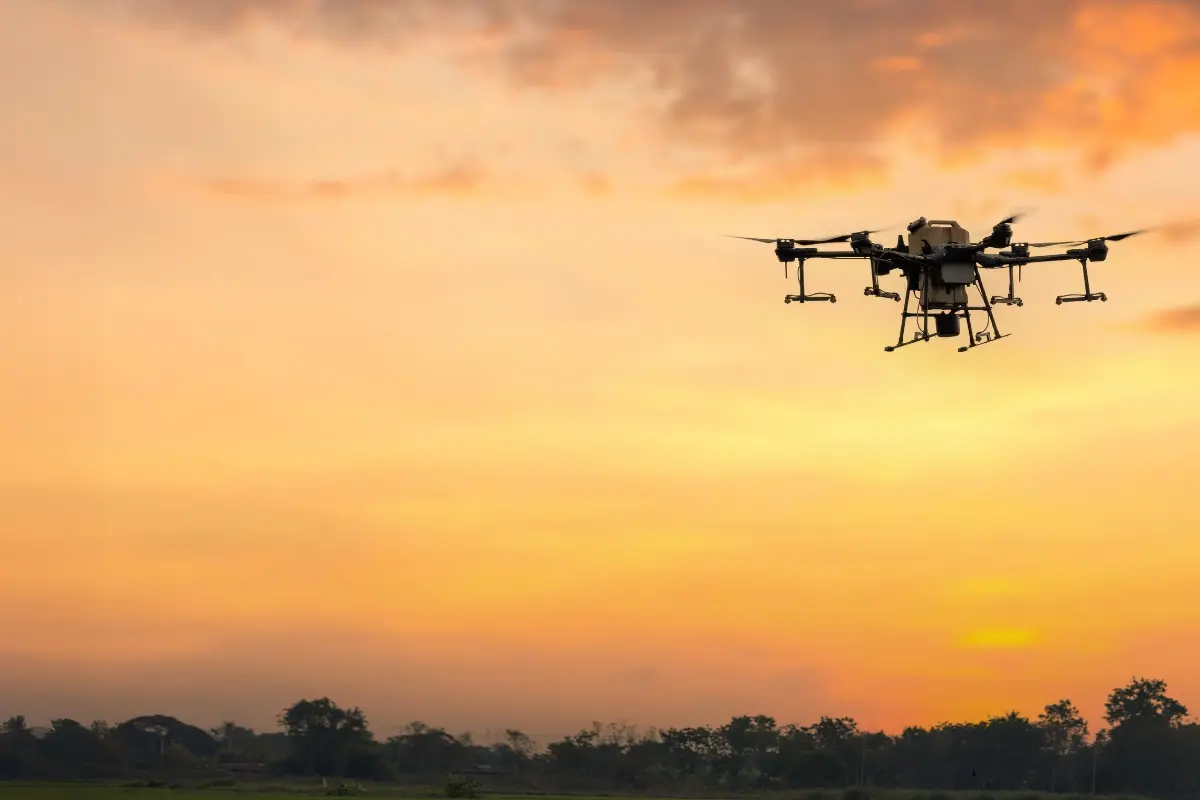
Imagine sitting in a passenger plane, circling high above airport, waiting to land. Below you, flight operations are frozen. You are stuck in the air because multiple suspected drones are hovering close to the runway area. On Sunday night, September 6, 2026, this became a reality for hundreds of travellers at the Shri Guru Ram Das Ji International Airport in Amritsar.
The trouble began late in the evening. Suspicious drone-like objects were detected buzzing close to the runway area, prompting an immediate security alert. Central security agencies and the Punjab Police were immediately called to action.
Drama in the sky
"At approximately 9:45 pm, the Air Traffic Control (ATC) unit received a report from the Indian Air Force stating that drones had been spotted across the airfield. By that time, several aircraft scheduled to land in Amritsar were already circling overhead. Following our Standard Operating Procedure (SOP) for drone sightings, a Joint Action Committee was activated and assembled in the control tower. They determined that the drone activity could disrupt scheduled landings, so the decision was made to close the airfield for operations," Airport Director Anirudh Kumar Sharma said.
Because of this threat, the airfield was shut down around 9:50 pm. For nearly an hour and a half, all flight operations came to a grinding halt. Seven flights, including two international services, had to be diverted to other cities because they could not land safely. Air India, IndiGo, Malaysia Airlines, and Air India Express flights were among those caught up in the disruption. Two of these flights were diverted to Chandigarh, and another five had to fly all the way to Delhi.
Eventually, the tension eased. "Airport operations were suspended around 9:50 pm. In the meantime, we had to divert aircraft that were holding overhead; there were approximately seven such aircraft. Two flights were diverted to Chandigarh, and five were diverted to Delhi. Around 23:00 hours (11:00 pm), the Joint Action Committee assessed that the situation was under control and--since there was no further drone activity--decided to resume normal operations; we declared operations open starting at 23:15 hours. Subsequently, the flights began returning. Of the seven diverted flights, five returned; one Air India flight that had gone to Delhi was cancelled, and the Malaysia flight is expected to arrive today. Everything has returned to normal. As for the investigation, that matter is being handled by the police," Anirudh Kumar Sharma added.
The quiet threat traditional radar misses
This is not just a one-off operational headache. It is an acute safety risk to civil aviation near airports. Experts warn that small, popular quadcopters are increasingly flying at high altitudes, leading to dangerous midair near-collisions. If a drone gets sucked into a jet engine, or hits a wing, it can punch a hole right through the structures, causing catastrophic consequences.
The biggest challenge is that many cheap, unregulated drones are incredibly hard to see. Because they are small and inexpensive, they have minimal radar signatures, allowing them to bypass traditional airport radar undetected. This means that when a drone creeps near a runway, airport authorities often have to rely on trained spotters on the ground to visually identify aerial intruders.
How India is fighting back
To protect passengers, Indian authorities are putting up a strong fight using multi-layered actions. Customs officers are working hard at airport checkpoints, seizing hundreds of smuggled and restricted drones to prevent thousands of unregulated drones from entering the illegal market. At the same time, the Directorate General of Civil Aviation (DGCA) uses a multi-agency standard operating procedure to detect and stop rogue drones.
But the real game-changer is the rollout of high-tech warfare-style defence systems. The Ministry of Home Affairs (MHA) and the Bureau of Civil Aviation Security (BCAS) are partnering to deploy anti-drone systems across all major and minor civil airports. It is said that the decision has been influenced by operational lessons from Operation Sindoor, as well as the wider use of unmanned aerial vehicles in modern warfare.
This is a historic first for India, installing warfare-style defence systems at passenger-only airports. The initial rollouts will target critical airports across the country, including Delhi, Mumbai, Jammu, Srinagar, and indeed, Amritsar itself.