Did you know? AI was mentioned a record 11 times in Union Budget 2026
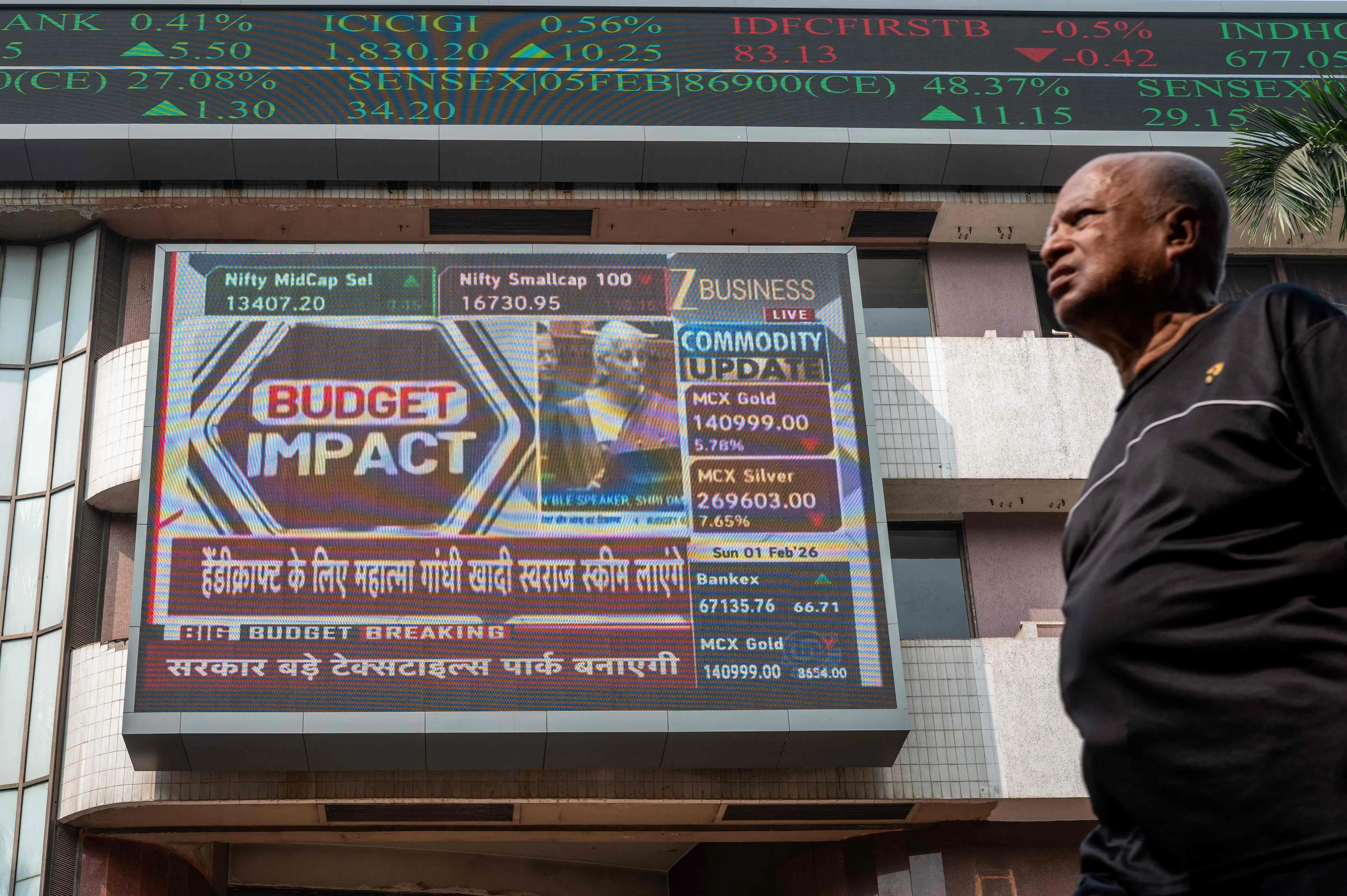
New Delhi: Artificial Intelligence emerged as one of the most dominant themes of the Union Budget 2026-27, with Finance Minister Nirmala Sitharaman referring to AI a record 11 times in her budget speech, the highest ever in any Indian budget address, according to an analysis by The Hindu. The repeated emphasis signals the government’s intent to place AI at the centre of India’s economic and technological transformation.
Reinforcing this focus, Sitharaman announced the launch of Bharat-VISTAAR, a multilingual Artificial Intelligence platform aimed at strengthening agricultural advisory services across the country. Speaking in the Lok Sabha while presenting the Budget, she said the platform would integrate AgriStack portals and the Indian Council of Agricultural Research (ICAR) package on agricultural practices with AI-driven systems.
Also read | Cigarettes, pan masala get costlier from Feb 1 after Budget 2026: Check new rates
“I propose to launch Bharat-VISTAAR—a multilingual AI tool that shall integrate the AgriStack portals and the ICAR package on agricultural practices with AI systems. This will enhance farm productivity, enable better decisions for farmers and reduce risk by providing customised advisory support,” Sitharaman said.
Also read | No AIIMS, no major rail projects: Kerala faces setback in Union Budget 2026
Bharat-VISTAAR, short for Virtually Integrated System to Access Agricultural Resources, is designed to support the development of a robust Digital Public Infrastructure (DPI) for agricultural extension. The initiative aims to empower farmers with actionable information, improve coordination among stakeholders and ensure the long-term sustainability of digital agriculture services.
The Budget document highlights emerging technologies and Artificial Intelligence as key enablers of the government’s second kartavya, fulfilling the aspirations of citizens and building their capacity to become strong partners in India’s path to prosperity.
Also read | Union Budget 2026 highlights: 20 takeaways from Finance Minister’s speech
Beyond agriculture, the Budget also unveiled measures to boost India’s global competitiveness in information technology services. Sitharaman proposed to club various inter-connected sub-segments of IT, including software development services, IT-enabled services, knowledge process outsourcing and contract R&D, under a single category with a common safe harbour margin of 15.5 per cent.
“All these services are proposed to be clubbed under a single category of Information Technology Services with a common safe harbour margin of 15.5 per cent applicable to all. The threshold for availing safe harbour for IT services is being enhanced substantially from Rs 300 crore to Rs 2,000 crore,” she said.
Also read | Union Budget 2026: Health Ministry gets Rs 1.06 lakh cr; 5 new regional medical hubs announced
The Finance Minister added that safe harbour approvals for IT services would be granted through an automated, rule-driven process, eliminating the need for discretionary tax scrutiny.
“Once applied by an IT Services company, the same safe harbour can be continued for a period of five years at a stretch at its choice,” she said.
Also read | Union Budget 2026 offers 6-month foreign asset disclosure relief for small taxpayers
Additional incentives announced in the Budget include raising the safe harbour threshold for IT services and offering tax holidays for cloud service providers leveraging India’s data centre infrastructure. Together, these measures aim to attract global technology firms, particularly from Europe and the United States, while ensuring tax certainty and alignment with international norms.
India, Sitharaman noted, continues to be a global leader in software development, IT-enabled services, knowledge process outsourcing and contract R&D, with these interconnected segments forming the backbone of the country’s digital economy.