Did Navarro mean ‘elite’ or ‘caste’? The history behind the term ‘Boston Brahmin’ | VIDEO
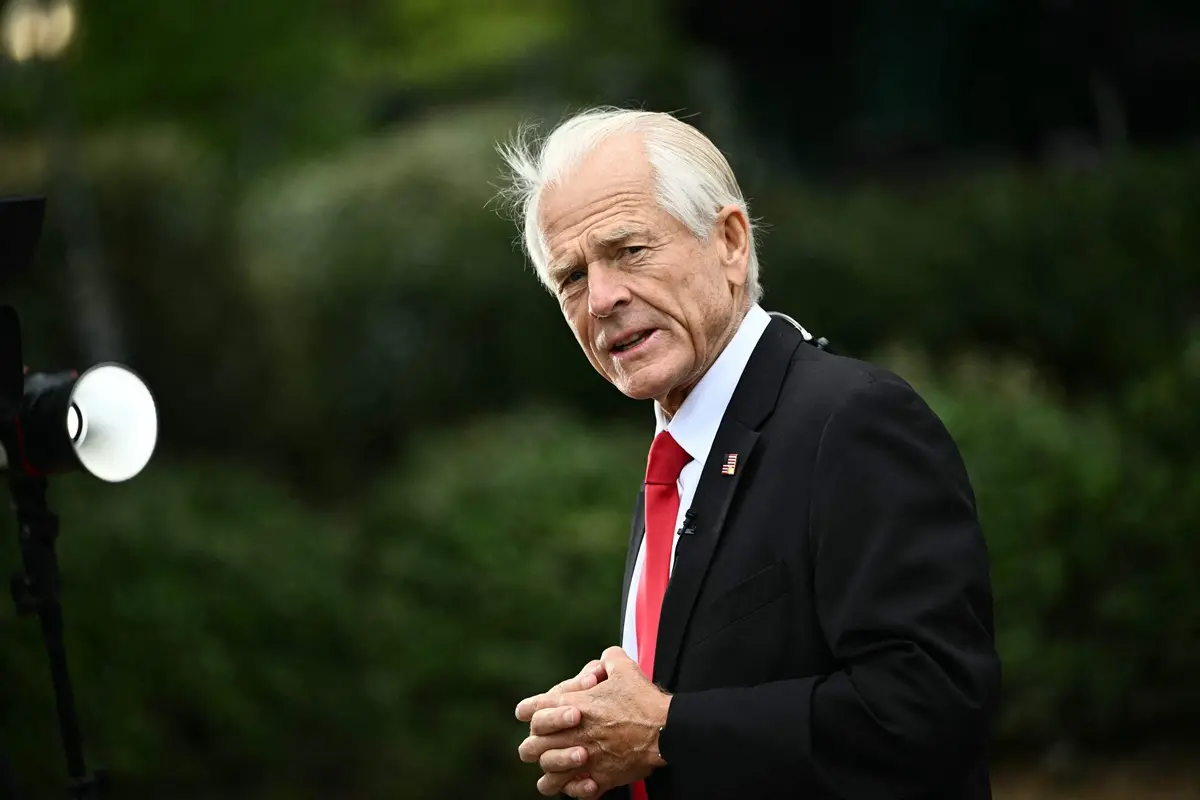
New Delhi: A political stir has erupted after White House trade advisor Peter Navarro used the word “Brahmins” while accusing elites of profiteering through trade with Russia. Navarro's statement, which referred to Brahmins in the context of oil trade and sanctions, drew swift reactions online and from Indian political leaders, who debated whether his use of the term was intentional or misunderstood.
At the centre of the controversy is the term “Boston Brahmin”, a phrase with a long history in American English, yet one that triggered confusion in India’s politically and culturally sensitive environment.
What does ‘Boston Brahmin’ actually mean?
The term “Boston Brahmin” refers to a wealthy, aristocratic elite class in New England, particularly in the Boston area. These families were seen as America’s version of a social upper caste, wealthy, highly educated, and historically influential in politics, literature, and academia. The phrase was coined by American physician and author Oliver Wendell Holmes Sr. in his 1861 novel Elsie Venner.
Holmes drew an analogy to India’s Brahmin caste, traditionally considered the highest in the Hindu varna system, to describe Boston’s educated elite who were perceived as having refined tastes, cultural superiority, and inherited social standing.
In modern usage, especially in the United States, "Brahmin" can colloquially denote elite status, often detached from its original caste-based meaning.
What did Navarro say?
Peter Navarro, known for his hawkish economic views, recently referred to India as “nothing but a laundromat for the Kremlin”, accusing it of enabling Russia's economy through discounted oil purchases. While commenting on trade ties between India, Russia, and China, he said, “Brahmins profiteering at the cost of Indian people.”
The statement meant to suggest that India’s economic elites were benefiting from international trade deals while common citizens bore the brunt of inflation and sanctions.
Political reactions in India
Navarro’s use of “Brahmins” set off a wave of political and social media commentary in India, where the word carries deep cultural and caste connotations.
TMC MP Sagarika Ghose took to X to clarify the term’s origin and global usage, “Boston Brahmin” was once a widely used term in the US to refer to the American New England wealthy elite. “Brahmin” is still a term used in the English speaking world to denote social or economic “elites” ( in this case the rich). The illiteracy on X is astonishing.”
However, Shiv Sena (UBT) MP Priyanka Chaturvedi took a different view, arguing that context matters, “The usage of the word Brahmin (yes elite Boston Brahmins US context am aware) by someone senior in US Administration cannot come out of the blue in India’s context, this was deliberate. So please sit out on explaining this one.”
Term resurfaced during viral Coldplay moment
Interestingly, the term "Boston Brahmin" also resurfaced just a week earlier during a Coldplay concert in Boston. A viral "kiss cam" incident involved Kristin Cabot, a member of the Cabot family, one of Boston’s oldest and wealthiest families. Social media users quickly identified her lineage, noting her connection to the Brahmin class of Boston’s elite, bringing the historical term back into public conversation.