Jantar Mantar out, costly and distant venues in: Delhi's protest dilemma explained
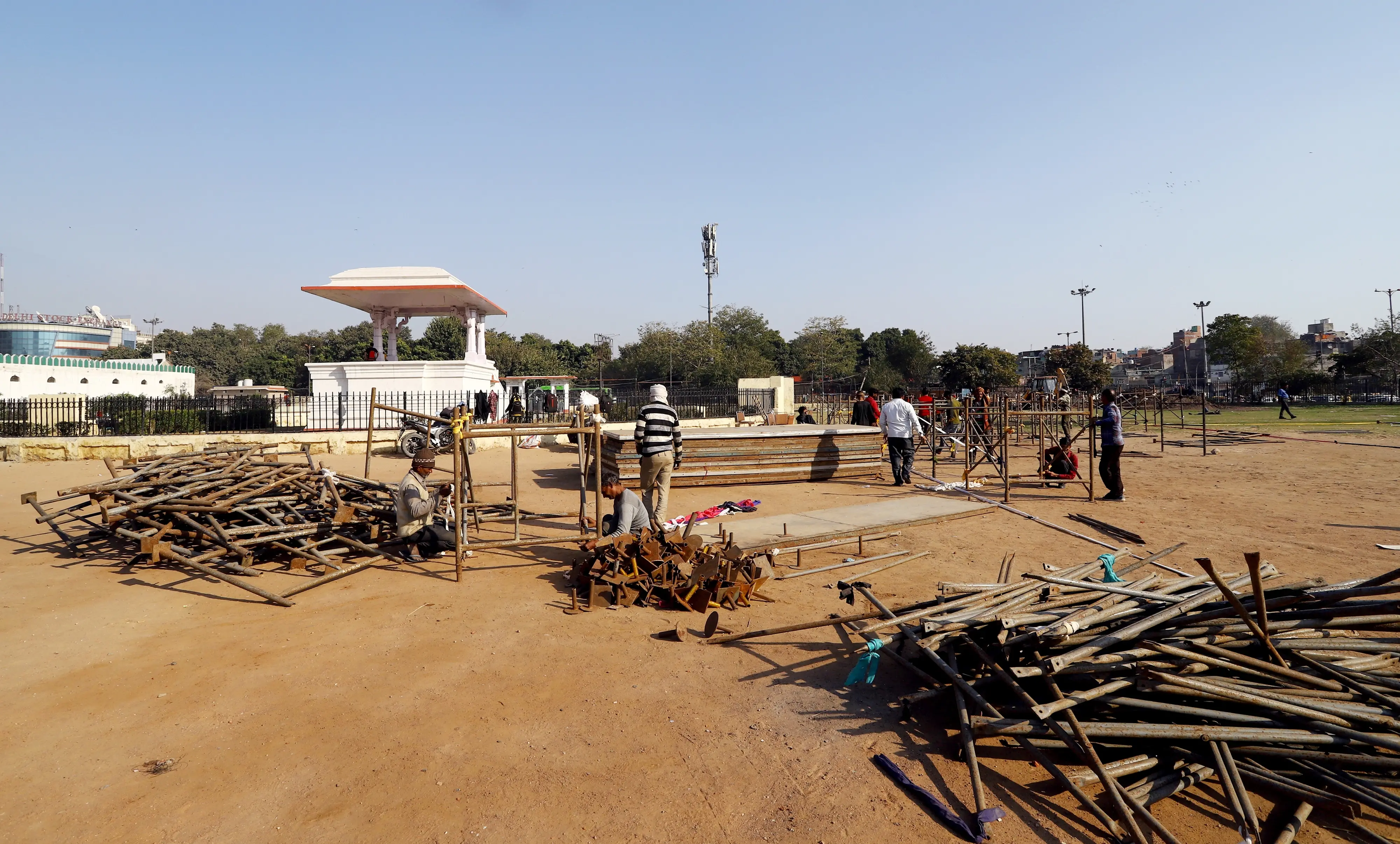
New Delhi: Delhi's newly designated protest venues have come under scrutiny over booking costs, limited availability and their distance from the national capital's administrative centre. Delhi Police has identified Ramlila Maidan, Burari Ground and CBD Ground in east Delhi as alternatives to Jantar Mantar, which was de-notified as a designated protest site in an order issued on October 11.
However, the three venues present different challenges for organisations seeking to hold demonstrations, including financial barriers, existing bookings, traffic congestion and concerns about the visibility of protests.
Ramlila Maidan: Rs 1.21 lakh for a day's booking
Ramlila Maidan, located around 4 km from Jantar Mantar, is the closest of the three venues to central Delhi. The 12-acre ground can accommodate approximately 50,000 people and has a long history of hosting political rallies and public gatherings.
According to officials, booking the ground costs Rs 50,000 per day, with a refundable security deposit of Rs 55,000. Including taxes, the initial payment amounts to Rs 1.21 lakh.
The venue is booked through the Municipal Corporation of Delhi's horticulture department. Applicants must obtain a no-objection certificate from Delhi Police before the civic body grants permission.
A small section of the ground is reportedly available free of charge for gatherings of around 150 people. However, a senior MCD official told Hindustan Times that the civic body does not permit bookings of smaller sections of the main ground, requiring applicants seeking the larger venue to book the entire available section.
The cost could pose a challenge for smaller organisations, resident groups and citizen-led movements that cannot afford the booking charges.
Availability is another concern. Officials said only December 29, 30 and 31 were available for booking over the next two and a half months, with the ground already committed to other programmes and seasonal festivities.
MCD data cited by Hindustan Times showed that the venue had been booked 27 times between January 2024 and September 2026.
Officials have also raised concerns about traffic congestion because the ground is situated in a busy commercial area near three hospitals and the MCD headquarters. Large gatherings can require traffic diversions on surrounding roads, including Asaf Ali Road and Jawaharlal Nehru Marg.
CBD Ground: Traffic and neighbourhood concerns
CBD Ground in Shahdara, east Delhi, covers approximately 12 acres and is maintained by the Delhi Development Authority (DDA).
The ground is used for weddings and other large events and is surrounded by residential and commercial establishments. Local representatives have questioned whether the area can accommodate protests without causing significant disruption to nearby neighbourhoods and traffic.
BS Vohra, head of the East Delhi RWA Joint Front, raised concerns about the surrounding hotels, shopping malls, wedding venues and residential colonies.
A DDA official said the authority would await clarification from Delhi Police on how protests would be conducted at the venue and whether any areas would be available free of charge.
The ground's existing use for commercial and social events could also affect its availability for demonstrations.
Burari Ground: Space comes with a distance problem
Burari Ground, also known as Nirankari Ground, is the largest of the three designated venues, covering approximately 50 acres in north-west Delhi. It is around 18 km from Jantar Mantar.
Its size offers greater capacity for large gatherings, but its location raises questions about whether demonstrations held there can attract the same public attention and political visibility as protests closer to the administrative centre.
During the 2024–2025 farmers' protests, the ground was proposed as a possible venue for demonstrators. Farmers' unions rejected the proposal, describing it as an “open jail” and expressing concerns about isolation, fencing and the possibility of protests being kept away from public view.
The distance could make it harder for protesters, journalists and members of the public to reach demonstrations, particularly when the objective is to draw the attention of policymakers in central Delhi.
Why are protesters concerned about the shift from Jantar Mantar?
Jantar Mantar has long served as a designated location for demonstrations in the national capital, providing a space for citizens and organisations to present demands to the government.
Author and city chronicler Sohail Hashmi questioned the move towards venues farther from the seat of power, arguing that the location of a protest can influence its visibility and ability to attract attention from elected representatives and the media.
The debate is therefore not limited to the availability of open space. It also concerns whether designated protest venues allow citizens to communicate their demands effectively.
Delhi Police has said a revised standard operating procedure for demonstrations at the three locations will be issued separately.
How the new protest sites could affect public demonstrations
The designation of alternative protest venues raises questions about the practical accessibility of demonstrations in Delhi.
At Ramlila Maidan, the upfront payment and limited booking dates could make organising protests difficult for groups with limited funds or urgent demands. The free area, with a capacity of around 150 people, offers a smaller alternative but may not meet the needs of larger gatherings.
At CBD Ground, the main concerns relate to traffic management and the impact on surrounding residential and commercial areas. Burari Ground offers significantly more space but is much farther from central Delhi, potentially affecting participation, media access and public visibility.
The central issue is whether the new arrangements can accommodate public demonstrations while addressing security, traffic and administrative requirements. The revised standard operating procedure will be important in clarifying the permissions process, access arrangements and any provisions for free use of the designated venues.
The change also renews a broader debate about the balance between regulating public assemblies and ensuring that citizens can exercise their right to peaceful protest. The practical impact will depend on how the venues are managed and how accessible they remain to groups seeking to demonstrate.