Delhi pollution: Ex-Digital India CEO slams ‘flawed’ CPCB metrics that hide true scale of toxic air
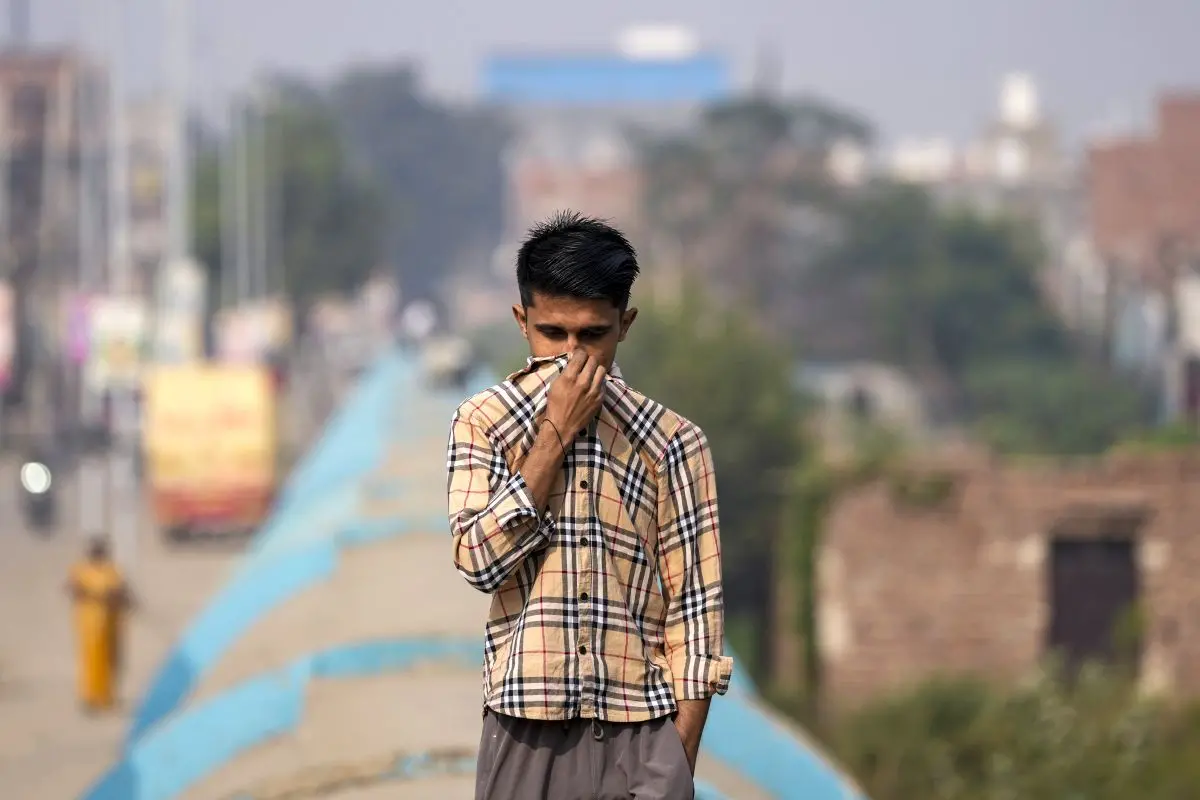
New Delhi: In the aftermath of severe post-Diwali air pollution across the National Capital Region, a major showdown has erupted over how India measures, calculates and reports its toxic air. Sanjeev Gupta, former President and Chief Executive Officer of Digital India and a superannuated IAS officer, took to X (formerly Twitter) to issue a detailed rebuttal against the Central Pollution Control Board (CPCB), accusing the regulator of using flawed technical justifications to conceal the true magnitude of Delhi’s air-quality crisis.
Gupta’s intervention comes in response to an official CPCB press note issued on November 10, 2026. The board had sought to defend its practice of capping the National Air Quality Index (NAQI) at 500, explain recurring data gaps at monitoring stations, and dismiss higher pollution figures published by independent community platforms.
Also Read: One city, many numbers: Why Delhi’s AQI reads 370 on government portals and 1000+ on private apps
Using official software tools downloaded from the CPCB’s own website, medical consensus from senior pulmonologists and monitoring data, Gupta argued that the regulator’s defence runs contrary to its own published guidelines. He said the board’s approach reinforces public suspicion that government systems conceal more than they reveal.
The official defence
The controversy follows intense criticism of air-quality reporting during and after Diwali in Delhi. Critics pointed out that official CPCB monitoring stations capped AQI figures at 500 despite surging pollutant concentrations, while several ambient stations experienced data blackouts during peak pollution hours.
Private tracking applications and global platforms reported significantly higher AQI values than official government portals, intensifying questions over whether the official system was capturing the full scale of the pollution emergency.
In its clarification issued on November 10, the CPCB presented a multi-pronged defence of its NAQI reporting methodology.
The board said the NAQI, developed in 2015 with experts from IIT Kanpur, AIIMS Delhi, Maulana Azad Medical College, Sri Ramachandra Medical College, NEERI and the India Meteorological Department, was intentionally designed to cap numerical readings at 500.
It argued that an AQI of 500 represents the upper boundary of the “Severe” health category, which may cause respiratory effects in healthy people and serious health impacts in people with lung diseases. The CPCB contended that extrapolating numbers beyond 500 would not alter the assigned health-impact category, and said the cap was modelled on the US Environmental Protection Agency’s AQI scale.
The board also emphasised that NAQI sub-indices are calculated using a 24-hour running average, or an eight-hour average for carbon monoxide and ozone. It said the calculation requires a minimum of 16 hours of data.
According to the CPCB, short-lived spikes caused by firecracker bursting are episodic, while prolonged exposure is the scientifically relevant measure for public-health advisories.
Explaining gaps in monitoring data, the board said its particulate-matter analysers were calibrated to measure concentrations up to 1,000 micrograms per cubic metre. Hourly readings exceeding this threshold are automatically flagged as outside range and excluded from calculations, resulting in station data gaps.
The CPCB also rejected the use of community and private monitors for official reporting. It said non-government applications use uncalibrated sensors, rely on instantaneous hourly readings and lack standard quality-assurance procedures.
It stressed that official reporting relies on its network of Continuous Ambient Air Quality Monitoring Stations, which has expanded from 30 stations nationally in 2014–15 to 634 today, including 59 stations operating in Delhi.
Gupta’s counter-attack
Sanjeev Gupta, an electronics engineering graduate from IIT Kanpur’s 1983 batch and a former Union senior officer in the Ministry of Home Affairs, issued a detailed rebuttal challenging the scientific, mathematical and administrative validity of the CPCB’s press release.
His first argument targeted the board’s assertion that the 500 AQI limit is an inherent and unyielding feature of the NAQI methodology.
Gupta pointed to the official AQI Calculator Excel spreadsheet downloadable from the CPCB website. He said the official mathematical model does not impose any upper cap on resulting AQI values.
Also Read: Delhi air pollution: Avoid morning walks, wear N95 masks, doctors advise residents
By entering real-world post-Diwali concentration figures for PM2.5, PM10, sulphur dioxide, carbon monoxide, ammonia, nitrogen dioxide, ozone and lead, he said the CPCB’s own software produces index numbers far exceeding 500.
Citing calculations for monitoring locations such as MBS Nagar Chaukhandi, Gupta said the software published by the regulatory authority generates uncapped numerical outputs. He argued that this directly refutes the board’s claim that numbers above 500 are mathematically invalid within its system.
Medical challenge
Gupta also criticised the CPCB’s claim that health impacts plateau once the AQI reaches 500. He challenged the board to produce written medical documentation from the All India Institute of Medical Sciences or any other institution supporting that position.
Following consultations with senior pulmonologists, including specialists who have served at AIIMS, New Delhi, Gupta said there is a clear medical consensus that health risks from particulate matter correlate directly with inhaled concentrations and exposure duration.
He said ultrafine PM2.5 particles infiltrate deep into the lungs and enter the bloodstream, causing systemic pulmonary and cardiovascular damage that intensifies continuously as concentrations rise.
Gupta further argued that exposure to severe pollutant spikes over just a few hours, such as venturing outdoors during peak post-Diwali celebrations, can trigger severe short-term, medium-term and long-term medical emergencies.
He condemned the exclusive reliance on 24-hour averages, saying they can mask acute pollution spikes. “The need for hourly reporting is best illustrated by the familiar anecdote of a mathematics student who drowned while crossing a river because he assumed it was safe, having calculated that its average depth was less than his height!” he said.
Imported standards
Gupta also questioned why American operational parameters were applied to Indian environmental conditions without contextual adaptation.
He noted that an AQI reading of 500 in the United States is an extraordinary and virtually unprecedented event. He said the US EPA scale permits higher numerical conversions at extreme concentration levels.
According to Gupta, importing a fixed ceiling from a nation with vastly lower baseline pollution levels into India -- where post-Diwali concentrations routinely exceed international safety limits -- defies scientific logic and administrative sense.
Community monitors
Gupta defended the utility of community-led monitoring networks while criticising official equipment constraints.
He said independent network AQI India alone operates roughly 600 community monitoring stations across Delhi and nearly 4,000 nationwide, dwarfing the CPCB’s deployment of 59 official stations in the capital.
While acknowledging that low-cost sensors may have lower precision for certain parameters and do not measure gaseous pollutants, Gupta said their sheer spatial density provides vital localised data that government networks fail to capture.
He described the CPCB’s admission that its particulate analysers are limited to a 1,000 micrograms per cubic metre calibration range as “outrightly ludicrous.”
He argued that when ambient pollution surges beyond equipment capacity, proper public administration requires recalibrating instruments or upgrading to high-range analysers—not discarding raw data and creating artificial monitoring blackouts.
Demand for transparency
In his final critique, Gupta raised concerns over the apparent shutting down or data blackouts at official monitoring stations precisely when post-Diwali pollution peaked.
He said scientific integrity requires regulatory authorities to report environmental crises transparently.
“Scientific integrity demands that we measure, report and confront the problem as it actually exists, not devise convenient methodologies or justifications that make the numbers look less alarming,” Gupta said.
“Public health cannot be protected by underplaying and hiding the data!” he added.
Gupta demanded that the CPCB immediately release raw monitored data or publish transparent explanations for station downtime during peak pollution windows.
What is at stake?
The clash between the former Digital India head and the central pollution regulator highlights systemic vulnerabilities in India’s air-quality governance framework.
Critics say restricting the public pollution index to 500 deprives citizens, medical professionals and vulnerable populations of critical data needed to assess real-time toxicity levels.
They also argue that relying on monitoring instruments capped at 1,000 micrograms per cubic metre during recurring severe pollution events leaves regulatory bodies effectively blind during acute environmental crises.
Environmental policy experts, according to the argument advanced in the dispute, advocate integrating high-density community sensors to complement official regulatory stations rather than summarily dismissing non-government monitoring networks.
As public scrutiny intensifies, pressure is mounting on the Ministry of Environment, Forest and Climate Change and the CPCB to audit reporting protocols, upgrade monitoring hardware and restore public trust through uncapped, real-time data dissemination.