Delhi-NCR air quality: Winds offer brief respite amid persistent pollution concerns
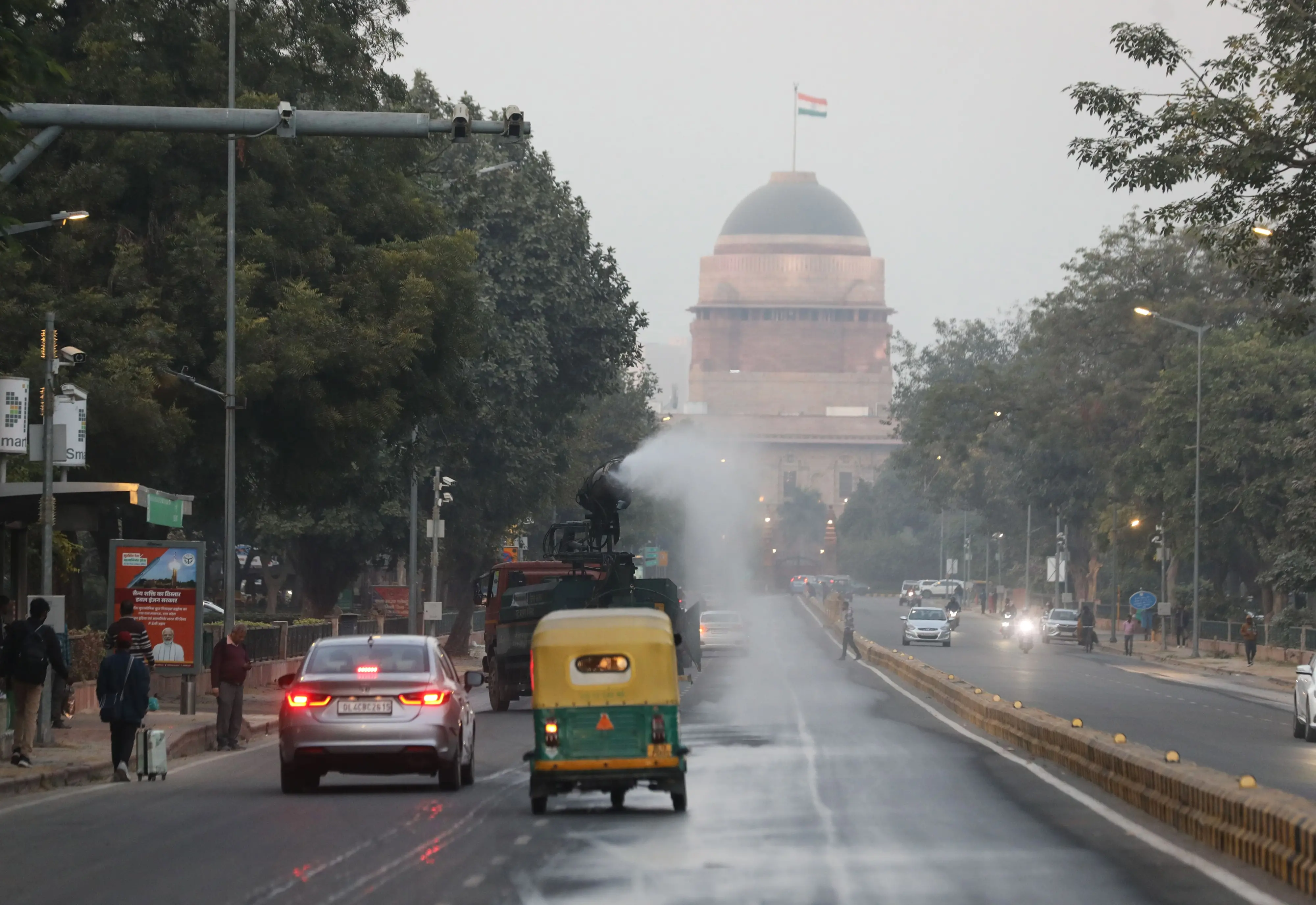
New Delhi: Strong surface winds provided slight relief to Delhi-NCR’s heavily polluted air on Tuesday morning, though the overall air quality continues to remain in the ‘poor’ range, according to the India Meteorological Department (IMD). Winds blowing between 15 and 25 kilometres per hour helped disperse suspended pollutants into the upper atmosphere, resulting in a marginal improvement in the Air Quality Index (AQI).
Despite the improvement, pollution levels across most parts of the capital have remained largely ‘very poor’ to ‘severe’ in recent weeks. Several monitoring stations on Tuesday recorded AQI readings below 300, signalling minor progress. In Noida, the AQI improved to 255 in Sector 62, while Sector 125 touched 313 and Sector 116 stood at 307, according to data from the CPCB and UP Pollution Control Board.
Some localities in Delhi saw similar patterns. Pusa recorded an AQI of 270, Shadipur 239, Vivek Vihar 323, Wazirpur 320 and RK Puram 313, indicating fluctuations between ‘poor’ and ‘very poor’ air quality.
Fog and lower wind speeds may push pollution up again
According to the IMD’s forecast for December 9, Delhi is likely to see light fog with a maximum temperature of 24°C and a minimum of 9°C, while wind speeds are expected to remain between 15 and 25 kmph in the morning. On December 10, shallow fog is likely, followed by dense fog on December 11, when temperatures are expected to fall to 7°C.
Officials warned that pollution levels may spike again as wind speeds weaken, and fog could further restrict the dispersion of pollutants, affecting visibility across the region.
AQI categories: What they mean
Experts reiterate that an AQI of 0–50 is considered ‘good’, 51–100 is ‘satisfactory’, 101–200 is ‘moderate’, 201–300 is ‘poor’, 301–400 is ‘very poor’, and 401–500 is ‘severe’, posing health risks to everyone. Prolonged exposure to poor air quality can trigger breathing discomfort, respiratory illness and cardiovascular stress, particularly among children, senior citizens and people with asthma or lung disease.
IANS