Delhi HC issues notice on plea challenging Atishi Marlena’s election
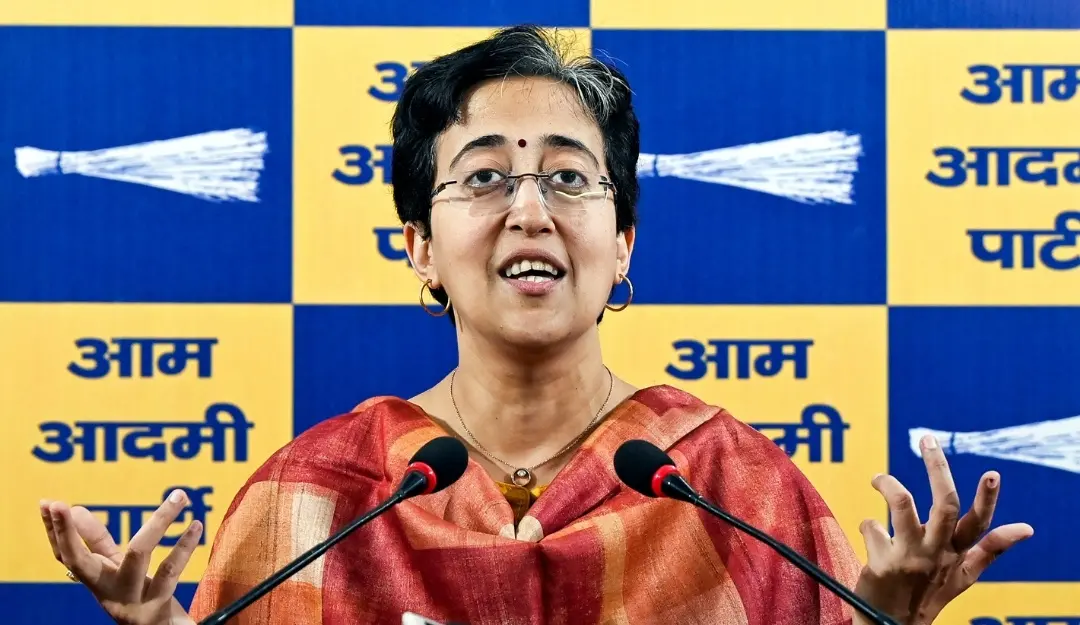
New Delhi: The Delhi High Court on Wednesday issued a notice on a petition challenging the election of Aam Aadmi Party (AAP) leader and former Delhi Chief Minister Atishi Marlena from the Kalkaji constituency, citing allegations of corrupt practices. The petition, filed by voters Kamaljit Singh Duggal and Ayush Rana, claims that Atishi and her associates engaged in bribery and electoral misconduct to influence the outcome of the recent Assembly elections.
Justice Jyoti Singh has sought responses from Atishi, the Election Commission of India (ECI), the Returning Officer, and the Delhi Police, listing the matter for hearing in July. The court also directed authorities to preserve all records related to the elections, stating that respondents may file applications for modifications if necessary.
Allegations against Atishi
The petitioners allege that, a day before polling, Atishi’s close associates were caught with ₹5 lakh in cash, allegedly intended to bribe voters in her favor. The plea claims this amounts to a violation of Section 123(1)(A) of the Representation of People Act, 1951, which defines bribery as a corrupt electoral practice.
Further, the petition accuses Atishi and AAP workers of publishing misleading videos falsely claiming that BJP candidate Ramesh Bidhuri’s supporters were involved in hooliganism in Kalkaji. According to the plea, women workers of AAP later confessed that these videos were staged under Atishi’s instructions to tarnish Bidhuri’s image.
The petition also alleges that Atishi, leveraging her then-official position as Chief Minister, used government resources to bolster her campaign, including official vehicles and staff, thereby gaining an unfair advantage over other candidates. Additionally, it claims she violated the 48-hour pre-election silence period and failed to disclose a pending criminal case in her election affidavit.
During the hearing, representatives of the Election Commission and the Returning Officer argued that they should not be made party to the petition, as per established legal precedent. The court acknowledged this and allowed them to present their opposition in their respective responses.
As India continues to strengthen its electoral framework, the case against Atishi brings attention to the significance of fair election practices. The Delhi High Court is set to further examine the case in July, with Atishi and other respondents required to submit their replies before the next hearing.
In a broader context, Chief Election Commissioner (CEC) Gyanesh Kumar emphasized the scale and transparency of India’s election process, describing it as the largest democratic exercise in the world. Kumar highlighted that the Election Commission has set up 10,50,000 polling booths across the country, with each booth managed by a booth-level officer (BLO) responsible for maintaining electoral rolls and verifying voter details.
For the first time, the Election Commission has initiated a training program for 1,00,000 booth-level officers to ensure smoother election management and prevent electoral malpractices. This move aims to enhance the efficiency of polling operations and uphold the integrity of India’s democratic system.