‘It is for Centre to decide’: Delhi HC rejects PIL seeking NIA probe into CJP protest
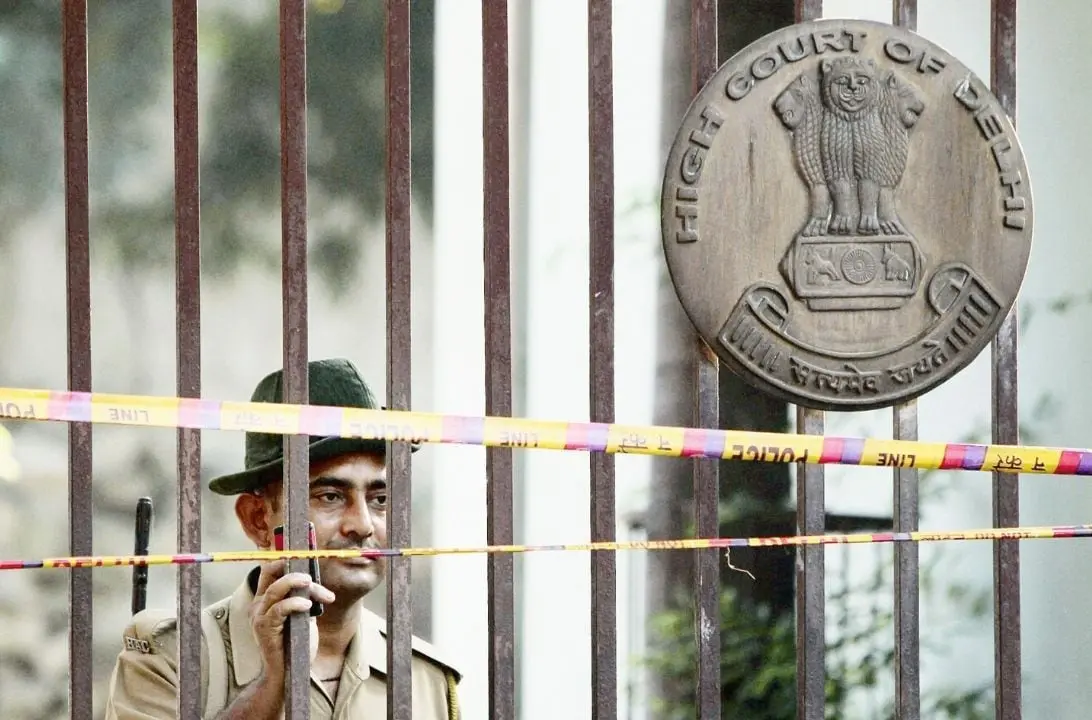
New Delhi: The Delhi High Court on Friday declined to intervene in a Public Interest Litigation (PIL) seeking a National Investigation Agency (NIA) or Central Bureau of Investigation (CBI) probe into the July 20 march to Parliament organised by the Cockroach Janta Party (CJP) over alleged irregularities in competitive examinations.
A division bench comprising Chief Justice DK Upadhyaya and Justice Tejas Karia said the court could not replace the satisfaction required from the Central Government under the National Investigation Agency Act, 2008.
The court said that deciding whether a case should be handed over to the NIA was a matter for the government authorities, provided the legal procedure was followed.
"We cannot substitute our satisfaction to satisfaction which is to be recorded by the Central Government," the Chief Justice observed during the hearing.
The petitioner later withdrew the PIL after the court made it clear that the decision to involve the NIA could not be directly ordered by the court at this stage.
PIL alleged larger conspiracy behind protest
The petition was filed by Satish Kumar Aggarwal, a former vice-president of the Akhil Bharat Hindu Mahasabha. It sought an investigation into the July 20 protest, alleging that the demonstration was not limited to student concerns and claimed there could be involvement of political groups and foreign-funded organisations.
The plea alleged that the protest, which began over demands linked to examination paper leaks and accountability from the government, later saw participation from political leaders and resulted in incidents of violence, disruption of public movement, damage to property and clashes with police.
The petitioner argued that the matter required investigation by a specialised agency due to the alleged scale and nature of the incidents.
However, the High Court questioned how it could direct an NIA investigation without the required legal process being followed.
"NIA is not an inquiry agency. It is an investigation agency. At this juncture, if there is an FIR, then recourse to Section 6 can be taken," the court said.
Court explains process for NIA investigation
During the hearing, the bench explained that the NIA can investigate only scheduled offences and that the process begins after registration of an FIR and a decision by the appropriate authorities.
The court noted that if the Central Government believes a case requires NIA intervention, the existing legal mechanism allows it to take the necessary steps. "There has to be a report and FIR. Thereafter, the officer in charge will forward information to the state, which will go to the Central Government. If the Centre finds it a fit case, then it can refer the matter to NIA," the court said.
The bench also clarified that a CBI investigation follows a different legal process and that courts generally consider transferring cases to the agency after examining the progress of an ongoing investigation.
"CBI also depends on the progress made in investigation by the primary agency. If the court is not satisfied, then a CBI probe can be ordered. That stage has not come," the court observed.
Government says it has authority to act
Solicitor General Tushar Mehta, appearing for the Centre, told the court that the matter involved issues of public law and requested that notice be issued.
The court, however, said the government already had the authority to examine the matter and decide whether any further investigation was required.
The bench also stated that it could not reach conclusions merely based on photographs or videos circulated publicly. "We cannot reflect upon anything merely by going through photos and videos," the court said.
Background: CJP protest and July 20 Parliament march
The PIL relates to the July 20 "Sansad Chalo" march organised by the CJP as part of its ongoing protest against alleged irregularities in national-level examinations.
The protests began after students and activists raised concerns over alleged paper leaks, demanding accountability, reforms in the examination system and action against those responsible.
The CJP has been demanding the resignation of Union Education Minister Dharmendra Pradhan, alleging that the government failed to prevent examination irregularities.
Social activist Sonam Wangchuk also joined the movement and went on a 26-day hunger strike before ending his protest after receiving written assurances from the Centre regarding examination reforms.
The issue has since become a major political flashpoint, with Opposition parties accusing the government of mishandling the crisis and demanding accountability. The government has said that investigations are underway and has promised stricter measures against those involved in paper leaks.
Legal battle continues over July 20 protest
The petitioner claimed that the Parliament march involved attempts to breach security arrangements and alleged damage to public and private property. The plea sought the transfer of all related FIRs from Delhi Police to a specialised agency.
The High Court, however, did not examine the factual allegations in detail and focused only on whether it could direct an NIA investigation at this stage.
With the PIL withdrawn, any decision regarding an NIA probe will now depend on the Central Government and the ongoing investigations by relevant authorities.