Delhi’s voter rolls see 32.9% exclusion in SIR, more than four times Bengal’s initial figure
Nearly 47.7 lakh names have been left out of Delhi’s draft electoral roll, meaning almost one in three voters from the capital’s original electorate of about 1.45 crore has not made it onto the new list.
The scale of the exclusion puts Delhi well apart from several other states undergoing the Special Intensive Revision (SIR) of electoral rolls.
At 32.9 per cent, the share of names left out in the capital is more than four times the 7.6 per cent recorded in West Bengal at the initial draft stage.
West Bengal, with about 7.66 crore electors before the exercise, had roughly 58.2 lakh enumeration forms left out of its initial draft roll.
The Bengal exercise has since become the centre of a major political and legal dispute, with questions over deletions eventually reaching the courts.
The SIR is considerably more extensive than the routine annual revision of electoral rolls.
The Election Commission says the exercise is intended to identify voters who have died, shifted residence, are enrolled more than once or are otherwise no longer eligible at a particular address.
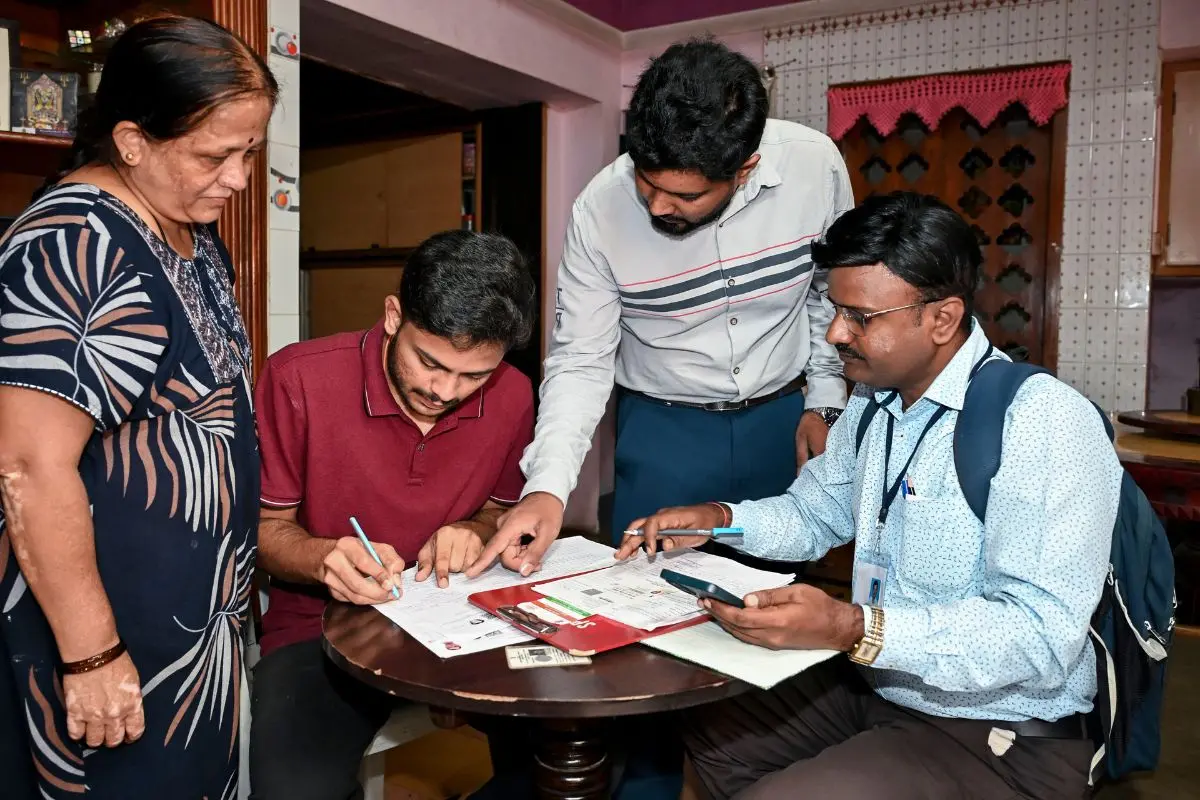
As part of the process, booth-level officials conducted house-to-house verification before the draft rolls were released.
What happened to the 47.7 lakh names?
In Delhi, the voters missing from the draft have been placed under the Election Commission's broad ASDDO classification: Absent, Shifted, Dead, Duplicate and Others.
However, the Election Commission has not provided a category-wise breakup of Delhi’s 47.7 lakh excluded voters.
That means the available figures establish the scale of the exclusions, but not how many names fall under each reason.
For voters who discover that their names are missing, the process is not necessarily over.
They can seek inclusion in the electoral roll by submitting Form 6, along with the required declaration and supporting documents. The deadline for doing so is September 30.
The final electoral roll for Delhi is scheduled to be published on November 4.
Delhi vs Bengal: a striking difference
The contrast with West Bengal is particularly stark. Of the 58.2 lakh cases left out of Bengal’s initial draft, the Election Commission said 24.16 lakh were listed as dead, 19.88 lakh as shifted, 12.2 lakh as absent, 1.38 lakh were already enrolled elsewhere and about 57,600 were removed for other reasons.
The numbers changed during the subsequent claims and objections process, when more names were added and deleted before the final roll was published.
The controversy, however, has continued. The Supreme Court was recently told that approximately 27 lakh deletions linked to so-called ‘logical discrepancies’ remained in dispute, while around seven lakh appeals had been filed.
Delhi's 32.9 per cent exclusion rate is also considerably higher than the figures reported in some other states undergoing SIR.
Around 22 per cent of voters have been struck off in Telangana, while the corresponding figure for Karnataka is about 19 per cent.
Tughlaqabad, Rohini show opposite ends of Delhi's SIR story
The capital's overall figure also masks significant differences between constituencies.
Tughlaqabad in south-east Delhi recorded the highest level of exclusions, with just over half of its voters making it through the revision process.
The constituency was once regarded as a largely minority area, although its demographic profile may have changed over the years as more migrants moved into the area.
Election officials have said minority voters appear to have been particularly careful about ensuring that their names remained on the electoral rolls.
The pattern is visible in constituencies such as Seelampur, where 76 per cent of voter-submitted forms were accepted, and Matia Mahal, where the acceptance rate stood at 75.5 per cent.
Yet the constituency-level picture does not fall neatly along demographic or socio-economic lines.
In RK Puram, a south Delhi constituency with large numbers of government officers and clerical staff, 44.46 per cent of voters were excluded.
Even Greater Kailash, an upmarket south Delhi constituency, recorded exclusions of 35 per cent.
At the other end of the spectrum, Rohini, the planned sub-city in north-west Delhi, recorded an acceptance rate of about 83 per cent. Shakur Basti, located on the border between north and west Delhi, followed closely with 81.3 per cent.
The result is a voter-roll map marked by sharp contrasts: while Delhi overall has seen nearly a third of its electorate left out of the draft, the intensity of exclusions varies dramatically from one constituency to another.
The next phase, claims, objections and applications for inclusion, will determine how much of that gap remains when the capital's final electoral roll is published on November 4.