Delhi blast probe: Was TATP, the ‘mother of satan’, used in deadly attack?
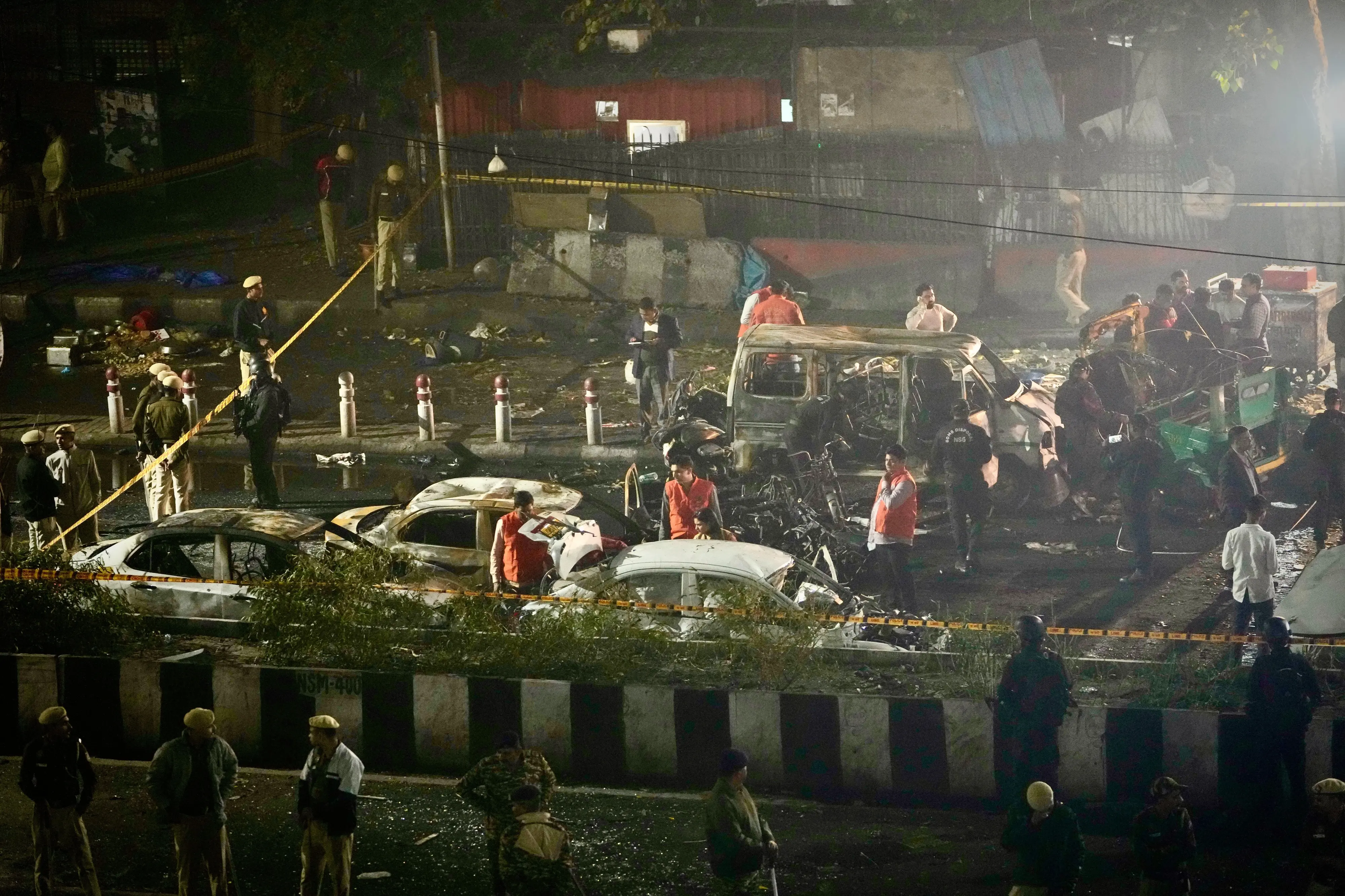
New Delhi: Investigators probing the November 10 car blast near the Red Fort increasingly suspect that Triacetone triperoxide (TATP), the highly unstable explosive infamously known as the “Mother of Satan”, may have triggered the deadly explosion that killed 13 people and injured nearly two dozen.
Forensic teams are analysing chemical traces to confirm their presence.
Why TATP raises alarm globally
Acetone peroxide, commonly referred to as APEX or the “Mother of Satan”, is an organic peroxide and a highly unstable primary explosive formed by combining acetone with hydrogen peroxide. It exists in several forms, of which the trimer, TATP, is the most notorious. Typically appearing as a white crystalline powder, it can detonate with extreme force when exposed to heat, friction, shock, static electricity, or strong UV radiation.
Peroxide-based explosives have long been favoured by terror networks due to their extreme instability, ease of synthesis, and devastating shockwaves. TATP first gained global infamy in 2001 when Richard Reid, the “shoe bomber,” attempted to detonate a TATP-triggered device on a Paris–Miami flight. It was later used in the 2005 London bombings, in Najibullah Zazi’s failed 2009 plot against the New York City subway, and in the 2015 Paris attacks. Its repeated use underscores how dangerous and unpredictable the compound can be; even minor friction, heat, or pressure can cause detonation without a detonator.
Delhi blast
Initially, police suspected ammonium nitrate in the i20 car blast. However, the damage pattern at the site now appears consistent with TATP’s powerful shockwaves. Investigators believe the driver, Umar Mohammad, an alleged operative linked to Pakistan-based Jaish-e-Mohammad, was aware of the explosive’s unstable nature when he drove into the crowded lanes of Chandni Chowk.
The probe has found that Umar drove through Old Delhi for an extended period before the blast. If TATP use is confirmed, investigators will examine how the compound remained stable inside the vehicle before detonating, and whether the explosion was accidental or part of a larger terror plot.