Delhi's AQI levels: Understanding the latest air quality report and new regulations
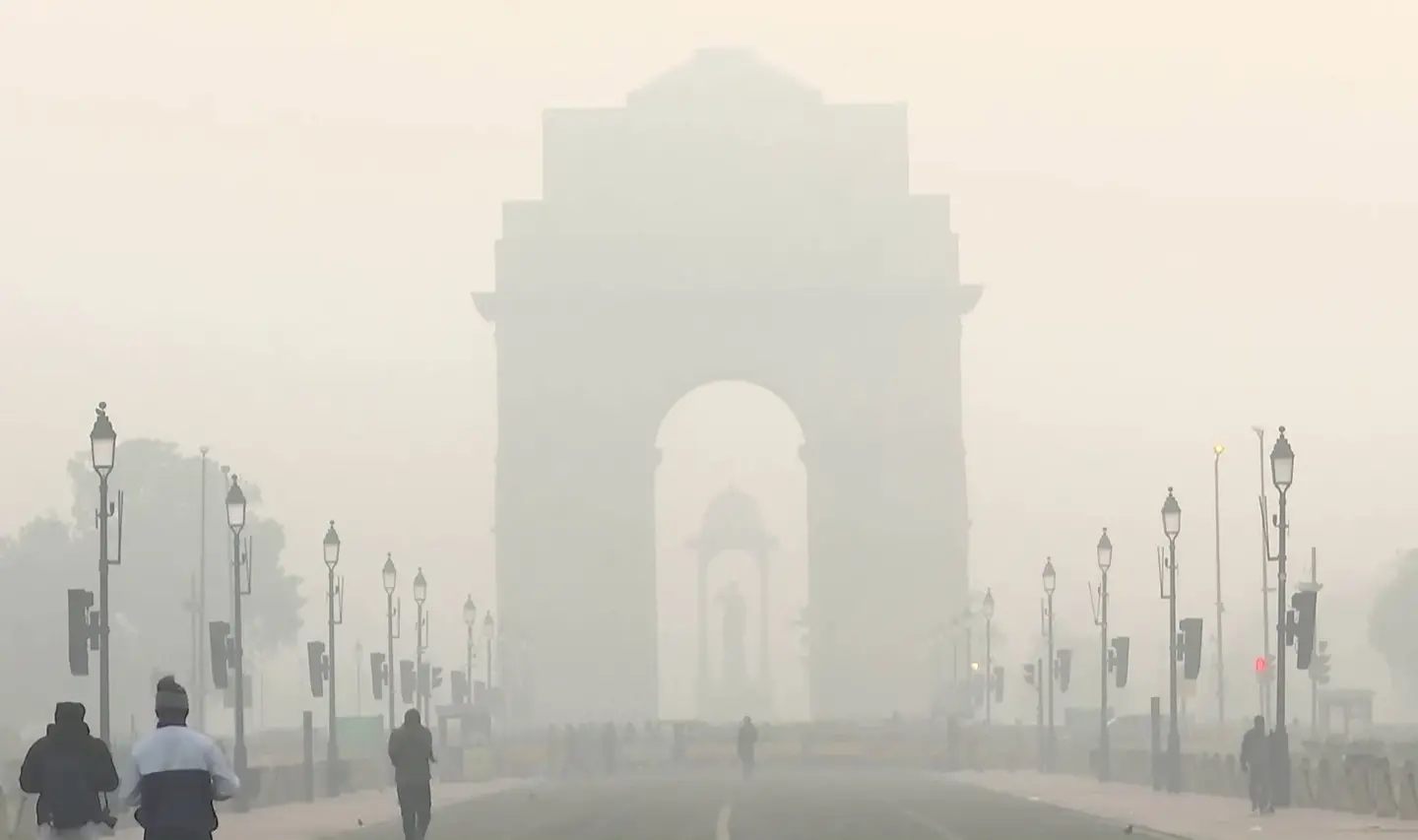
New Delhi: Delhi witnessed a marginal improvement in air quality on Wednesday morning, with the overall Air Quality Index (AQI) recorded at 328 at around 8 am, keeping it in the ‘very poor’ category, according to the Central Pollution Control Board (CPCB).
The AQI showed a slight improvement from Tuesday, when it was 354 at 4 pm, but large parts of the national capital remained enveloped in toxic smog. Anand Vihar registered an AQI of 341, while areas near IGI Airport, ITO, Dhaula Kuan, AIIMS and Ghazipur National Highway 24 were shrouded in heavy smog.
CPCB data revealed that several other localities continued to experience poor air quality. Bawana recorded an AQI of 376, ITO 360, Jawaharlal Nehru Stadium 324, Narela 342, and Wazirpur 359, all falling under the ‘very poor’ category.
Some areas reported slightly improved readings. Burari Crossing recorded an AQI of 298 (‘poor’), IGI Airport Terminal 3 263, IIT Delhi 300, and CRRI Mathura Road 297, indicating minor relief but still within the ‘poor’ bracket. CPCB categorises AQI as 0–50 ‘good’, 51–100 ‘satisfactory’, 101–200 ‘moderate’, 201–300 ‘poor’, 301–400 ‘very poor’, and 401–500 ‘severe’.
In a bid to tackle vehicular pollution, Delhi Environment Minister Manjinder Singh Sirsa announced strict measures to curb emissions. From December 18, vehicles without a valid Pollution Under Control Certificate (PUCC) will be denied fuel at petrol pumps across the city.
“To control tailpipe emissions from vehicles, all petrol/diesel/CNG pump dealers have been instructed to provide fuel only upon presentation of a valid PUCC,” Sirsa said.
He added that vehicles registered outside Delhi and below the BS-VI emission standard will be barred from entering the city during GRAP-III and GRAP-IV alerts. During GRAP-IV, even vehicles transporting construction material will be prohibited from entering Delhi. Verification of PUCC certificates and vehicle compliance will be conducted through Automatic Number Plate Recognition (ANPR) systems and on-ground inspections.
Sirsa urged vehicle owners to obtain valid PUCC certificates to avoid inconvenience and reiterated the government’s commitment to scientific, data-driven pollution control. “In eight out of eleven months, better air quality has been recorded compared to last year. Even in critical months like November, the average AQI remained approximately 20 points lower than last year. These improvements are the result of daily stringent actions and structural reforms,” the minister stated.
While noting that pollution cannot be entirely eliminated in 9–10 months, Sirsa emphasised that sustained daily efforts are reducing Delhi’s AQI. He called on residents to cooperate with the new regulations to ensure a cleaner, healthier environment for the national capital.
ANI