UNESCO-listed Darjeeling toy train shed roof collapses, 4 injured
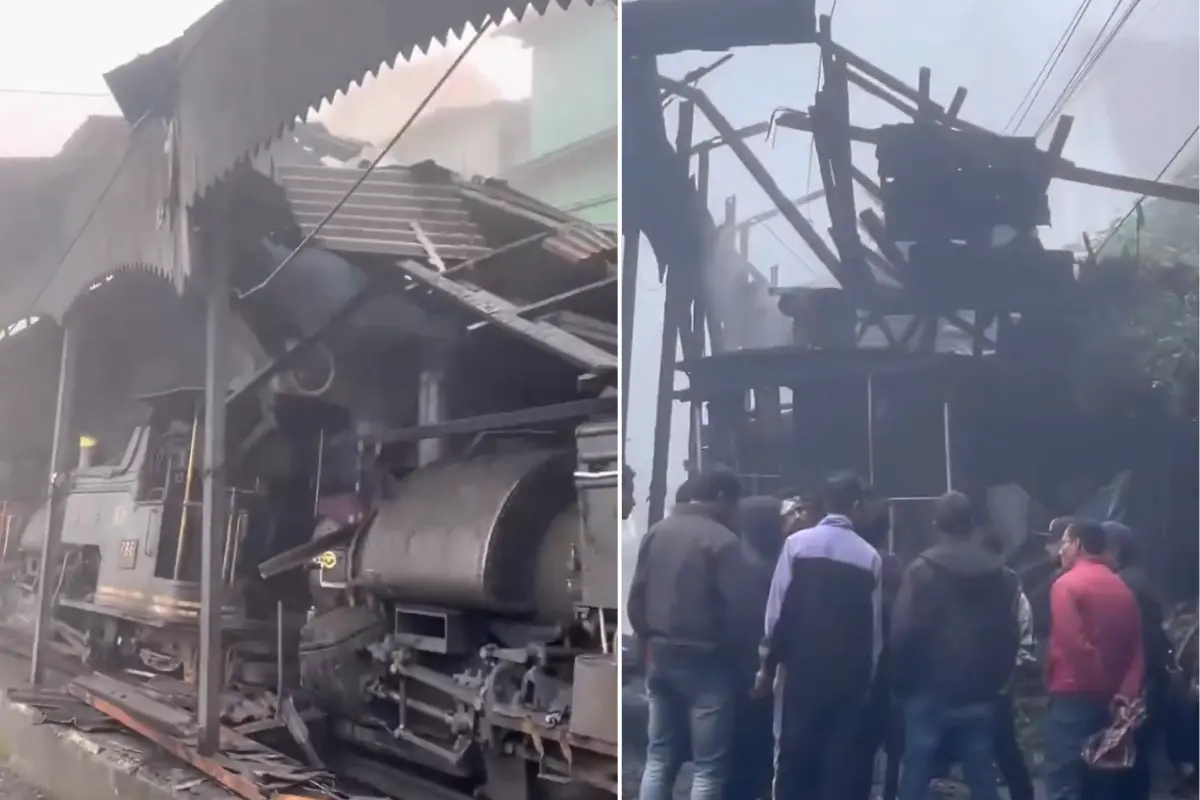
Darjeeling: A section of the roof of the historic Darjeeling Himalayan Railway's old locoshed collapsed on Wednesday morning amid heavy rain and gusty winds, injuring four railway workers and damaging a railway engine.
The incident also spilled debris onto the adjoining Hill Cart Road and led to the suspension of the popular DHR joyride service as officials assess the safety of the premises.
ALSO READ | Can we take a photo? Cristiano Ronaldo’s sister meets Kerala CM
What happened at the Darjeeling locoshed?
The incident took place at around 10 am on Wednesday at the old locoshed near Darjeeling railway station.
Railway staff and workers were carrying out routine activities inside the facility when a section of the tin roof collapsed. Four workers were injured, suffering injuries to areas including the head, back and hands.
They were taken to nearby medical facilities, including Darjeeling hospital and the railway hospital. Officials said none of the injured workers suffered serious or life-threatening injuries.
The locoshed houses several engines belonging to the Darjeeling Himalayan Railway (DHR), the historic mountain railway that forms part of a UNESCO World Heritage site.
ALSO READ | Parandur is out, CM Vijay’s airport hunt narrows to these 2 sites
Debris falls onto Hill Cart Road
The collapse was not confined to the railway premises. Rubble from the structure fell onto the adjacent Hill Cart Road, one of the key roads in the area.
The debris partially obstructed the road and disrupted vehicular movement.
According to DHR officials, the injured workers showed presence of mind after the collapse and helped clear debris from the roadside before going for medical treatment.
The collapse also damaged a railway engine inside the locoshed.
A fitter was among the injured workers, adding to concerns about the condition of the facility and the work required to assess and repair the affected railway equipment.
Senior DHR officials reached the location following the incident to inspect the damage and determine the next steps.
Joyride service suspended
The incident has also affected one of Darjeeling's most popular tourist attractions.
The Darjeeling Himalayan Railway joyride service has been stopped following the collapse while authorities assess the damage and safety of the premises.
It remains unclear when the service will resume.
The decision comes as authorities examine the structural condition of the historic locoshed and determine what restoration and safety measures are required.
Heavy rain in Darjeeling
The collapse occurred amid heavy rainfall and gusty winds in Darjeeling.
The India Meteorological Department recorded 37 mm of rainfall in Darjeeling in the 24 hours ending at 8.30 am on Wednesday.
The weather department has forecast heavy rainfall in Darjeeling district until Saturday morning.
The adverse weather conditions are therefore an important factor being examined in the aftermath of the incident, although the precise cause of the structural failure will need to be established through an official assessment.
Why the incident has raised maintenance questions
The collapse has renewed questions about the upkeep of infrastructure associated with the Darjeeling Himalayan Railway.
The DHR is an internationally recognised heritage railway and an important part of Darjeeling's tourism economy. The condition of its historic infrastructure is therefore significant not only for railway operations but also for heritage conservation and visitor safety.
The immediate priority is to establish why the roof section collapsed, assess the structural condition of the remaining shed and ensure that railway personnel and tourists are not exposed to further risk.
Questions over DHR revenue and spending
The incident has also prompted questions online about whether revenue generated by the DHR is being adequately reinvested in its infrastructure.
Claims circulating after the collapse point to DHR revenue of ₹3.95 crore in May 2026 and ₹3.98 crore in June 2026. They also cite annual revenue of ₹25.37 crore in FY 2025-26, compared with ₹22.12 crore in FY 2024-25.
However, revenue figures alone do not establish how much was available for capital expenditure, how funds were allocated, or whether the particular locoshed was scheduled for structural rehabilitation.
Therefore, the question of whether adequate capital expenditure was made on the old shed requires examination of official railway budgets, expenditure records, maintenance schedules and inspection reports.
Analysis: Heritage status versus infrastructure safety
The roof collapse highlights a broader challenge for heritage railways: maintaining historically significant structures while ensuring that they meet contemporary safety requirements.
The Darjeeling Himalayan Railway is one of India's best-known heritage railway systems, but its UNESCO status does not by itself guarantee that every structure associated with the railway is adequately maintained.
The collapse should not automatically be attributed to poor maintenance until an official structural assessment establishes the cause. At the same time, the incident makes a detailed review of the condition and maintenance history of the historic facility particularly important.
What happens next?
Railway officials are assessing the extent of the damage and the condition of the remaining structure.
The restoration of the locoshed, inspection of the damaged engine and safety assessment of the premises will be key before normal operations can resume.
For tourists, the immediate impact is the suspension of the DHR joyride service. For railway authorities, the larger task is to ensure that the historic infrastructure remains safe while preserving the character of one of India's most important mountain railway systems.