Cooking gas from dry leaves? IIT Bombay’s innovation could change everything
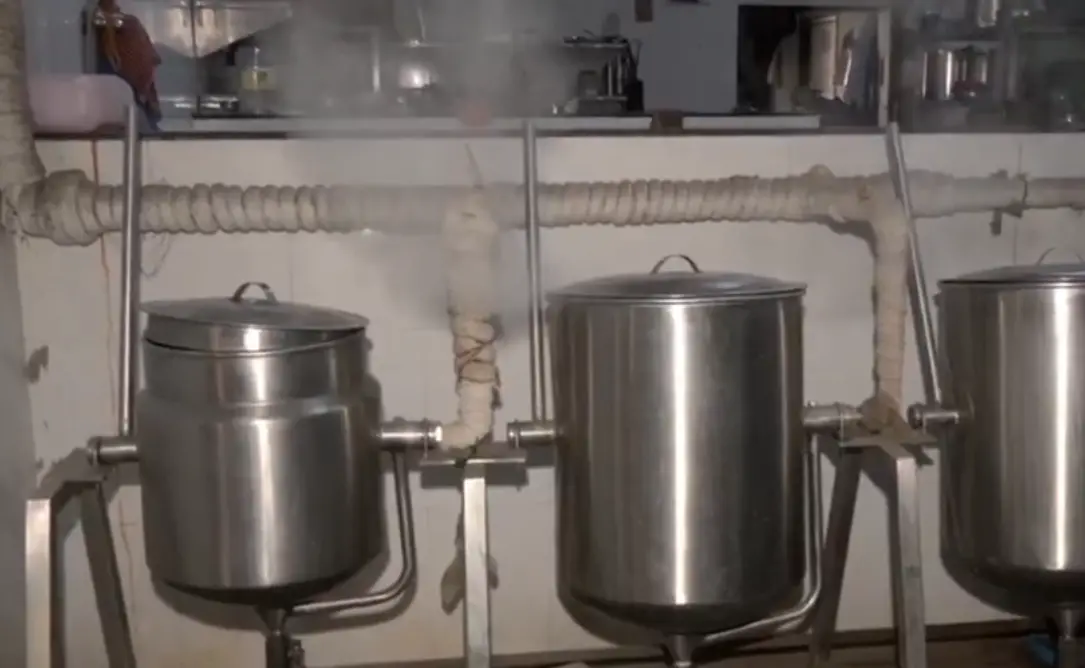
New Delhi: In a potential breakthrough to address rising LPG prices and supply uncertainties, the Indian Institute of Technology Bombay (IIT) has developed an indigenous biomass gasification technology that converts dry leaves into cooking fuel.
The patented technology, developed after nearly a decade of research led by Professor Sanjay Mahajani since 2014, comes at a time when global supply disruptions have raised concerns over cooking gas availability in India.
Sanjay Mahajani said his research focuses on gasification and energy conversion, and the idea for the innovation came from the institute’s own environment.
“These dried leaves and twigs, if we simply burn them, they do, in fact, yield energy. However, the situation here is that IIT Bombay possesses a vast green cover; consequently, a large volume of leaves and twigs fall onto the pathways and grounds… So, we reasoned that since this waste material inherently contains energy, why not harness it for our own internal applications? Given the extensive cooking activities and various thermal applications within the IIT campus, we decided to explore using this waste as a fuel source for those needs,” he said, adding that the process required significant research and development.
Explaining the technology, Mahajani said the process involves converting the leaves into pellets and feeding them into a specially designed gasification unit.
“Gasification involves first converting these leaves into pellets—essentially compressing them—and then feeding these pellets into the gasification unit that we have designed... Consequently, when combusted, it tends to generate significant emissions, particularly particulate matter. Therefore, we have engineered the gasifier's design in such a way as to drastically minimise these emissions. The gas produced through this process is known as "producer gas." It consists primarily of carbon monoxide and hydrogen; we combust this gas immediately, and when this combustion takes place, the resulting emissions are extremely low. And when this gas is combusted, the energy released is used to generate steam from water—essentially, we convert water into vapor. This steam is then channelled into the canteen, where it powers the steam-based cooking equipment and other utilities used for food preparation...,” he said.
The urgency has been heightened by tensions in West Asia, where attacks involving the US, Israel and Iran have disrupted shipping through the Strait of Hormuz, a key route for global oil and gas supplies. The situation has affected LPG shipments, as India sources a significant portion of its cooking gas imports through this narrow passage.
Amid these disruptions, the government has accelerated the expansion of piped natural gas (PNG) connections as a more reliable alternative to LPG cylinders. PNG is considered more convenient as it is supplied directly to households through pipelines, eliminating the need for refills.
According to an official statement, "During the month of March, more than 3.1 lakh connections, including domestic, commercial, hostel, mess, canteen etc., have been gasified. In addition to the above, more than 2.7 lakh new connections have been given and are being gasified."
India added over 3.1 lakh new PNG connections in March, while another 2.7 lakh connections are in the process of being activated, reflecting the push towards cleaner and more secure energy sources.
Officials said while LPG supplies have faced disruptions, about half of India’s natural gas requirements are met through domestic production, with the rest sourced from diversified international suppliers.
The IIT Bombay innovation could provide a sustainable and locally available alternative fuel option, particularly in times of global supply shocks, while also contributing to waste management by utilising dry biomass such as fallen leaves.