CJP Protest: Delhi Metro reopens all station gates; crackdown enters Day 2
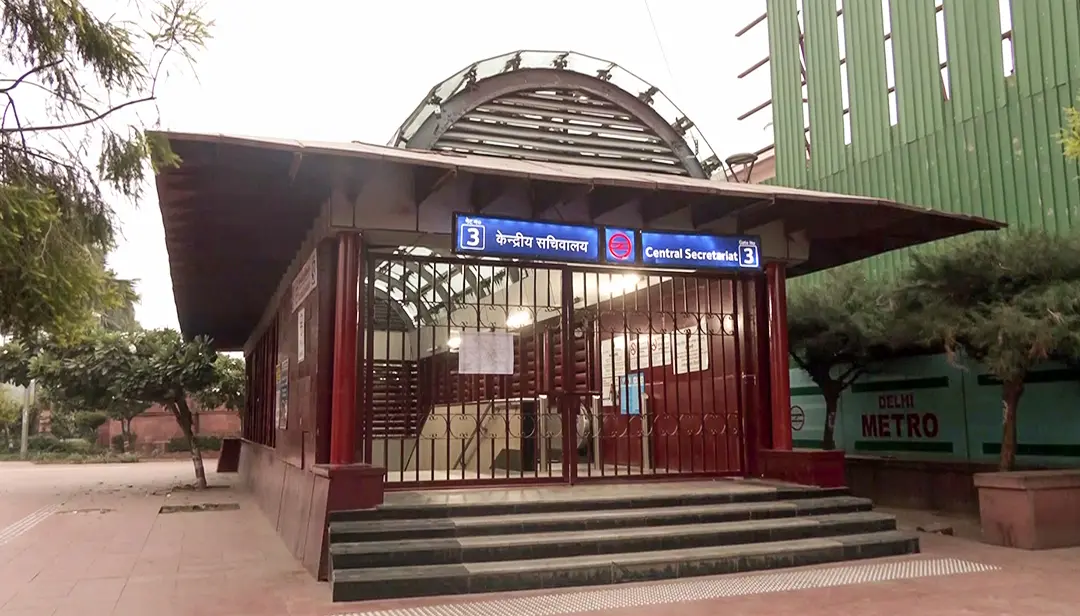
New Delhi: The Delhi Metro Rail Corporation (DMRC) on Sunday announced that entry and exit gates at all metro stations across the national capital have reopened, restoring normal passenger access after widespread restrictions imposed during Saturday's protests. Interchange facilities at all affected stations have also been restored, even as the police crackdown on demonstrators entered its second day.
The announcement comes a day after gates at 45 metro stations were closed amid heightened security arrangements to prevent protesters from reaching Jantar Mantar for a demonstration organised by the Cockroach Janta Party (CJP), demanding the resignation of Chief Election Commissioner (CEC) Gyanesh Kumar over alleged irregularities in the Special Intensive Revision (SIR) of electoral rolls.
Also read | Delhi mass detentions: Does Section 163 give police the power to stop protesters before a rally?
While metro services have returned to normal, tensions remain high in the national capital following the detention of more than 1,000 people, including prominent Opposition leaders, activists and CJP members, during Saturday's demonstrations.
Opposition leaders to march to Supreme Court on Monday
The INDIA bloc has announced a separate demonstration for Monday, with senior Opposition leaders planning to march to the Supreme Court to demand the speedy hearing of cases concerning the SIR exercise and the Election Commission.
Former West Bengal Chief Minister Mamata Banerjee, who was detained during a silent protest outside Trinamool Congress MP Abhishek Banerjee's residence on South Avenue on Saturday, said Congress leader Rahul Gandhi had asked her to remain in Delhi for Monday's march.
Banerjee was taken to Dwarka in a prison van following her detention.
The planned march is expected to keep political tensions high in the capital as Opposition parties intensify their campaign against the Election Commission.
Rahul Gandhi says Opposition will not back down
Leader of the Opposition in the Lok Sabha Rahul Gandhi criticised the police action and warned that the Opposition would continue its protests despite the detentions.
Also read | CJP accuses Delhi Police of ‘playing petty politics’ after Abhijeet Dipke’s grandmother dies
“Mr. Modi, do whatever you want. Call out all the police: 10,000, 20,000, 50,000, whatever you want. Arrest all the leaders. Arrest all the young people. Arrest us all. We are surrounding you, and we are not going to back down,” Gandhi said.
Congress president Mallikarjun Kharge also condemned the government's handling of the demonstrations, accusing it of turning the “Mother of Democracy” into a “Muzzled Democracy”.
India rejects UN concerns over mass detentions
The police action has also drawn international attention, with the United Nations Human Rights Office expressing concern over reports of mass detentions of demonstrators, protest leaders, civil society representatives, lawyers and journalists.
However, India rejected the criticism on Saturday, describing the concerns raised by the Office of the United Nations High Commissioner for Human Rights (OHCHR) as "misplaced" and an "unwarranted interference" in its internal affairs.
In a statement shared on X, India at UN, Geneva, defended the country's democratic institutions and constitutional protections.
Also read | Was garbage dumped on Delhi roads to block CJP protesters? Viral video debunked
"We have seen the OHCHR’s remarks about today’s events in New Delhi. India is the world’s largest democracy, where the right to peaceful assembly is guaranteed by our Constitution and safeguarded by robust institutions, an independent judiciary and a free media," the post read.
India maintained that the right to peaceful assembly was subject to reasonable restrictions in the interest of public order.
"The authorities, for their part, act in accordance with the law, and our courts remain available to all for redressal of any grievances," it said.
Rejecting the UN body's intervention, India said the concerns amounted to interference in its domestic affairs.
"The OHCHR’s concerns are therefore misplaced and constitute an unwarranted interference in the internal affairs of India," the statement said.
"In this context, OHCHR would also do well to devote comparable attention to large-scale protests elsewhere, consistent with its mandate of impartiality and non-selectivity," it added.
UN calls for release of arbitrarily detained protesters
UN Human Rights spokesperson Thameen Al-Kheetan urged Indian authorities to respect the right to peaceful assembly and ensure that restrictions on demonstrations were necessary and proportionate.
"We are concerned by reports of mass detentions in India of demonstrators, protest leaders, members of civil society organisations, lawyers and journalists, before and during today’s large-scale demonstrations in Delhi," the statement read.
"We call on the authorities to ensure that the right to peaceful assembly is fully respected and fulfilled. Restrictions on peaceful protests must meet strict tests of necessity and proportionality," the statement added.
The UN Human Rights Office also called for the immediate release of those it described as arbitrarily detained and urged law enforcement agencies to exercise restraint.
"The Indian authorities should also ensure law enforcement forces exercise utmost restraint in response to peaceful protesters, consistent with the country’s democratic traditions and human rights obligations. All those arbitrarily detained must be immediately and unconditionally released," it further said.
"We also urge the authorities to engage in meaningful dialogue to address the broadly held concerns expressed," it added.
Over 1,000 detained during Saturday's protests
Saturday's demonstrations witnessed extensive security restrictions across Delhi as police attempted to prevent protesters from gathering at Jantar Mantar.
More than 1,000 people were detained across the capital, including Opposition leaders Arvind Kejriwal, Pinarayi Vijayan and Mamata Banerjee.
CJP leaders Abhijeet Dipke, Ashutosh Ranka and Saurav Das were also detained from an aircraft.
The large-scale police deployment and restrictions on movement disrupted normal activities across parts of the capital, with the closure of metro station gates adding to commuters' difficulties.
Although DMRC has now reopened all station gates and restored interchange facilities, the political confrontation is set to continue, with Opposition leaders preparing for Monday's march to the Supreme Court.