CJP protest: Delhi HC seeks Centre, police reply over alleged excessive force
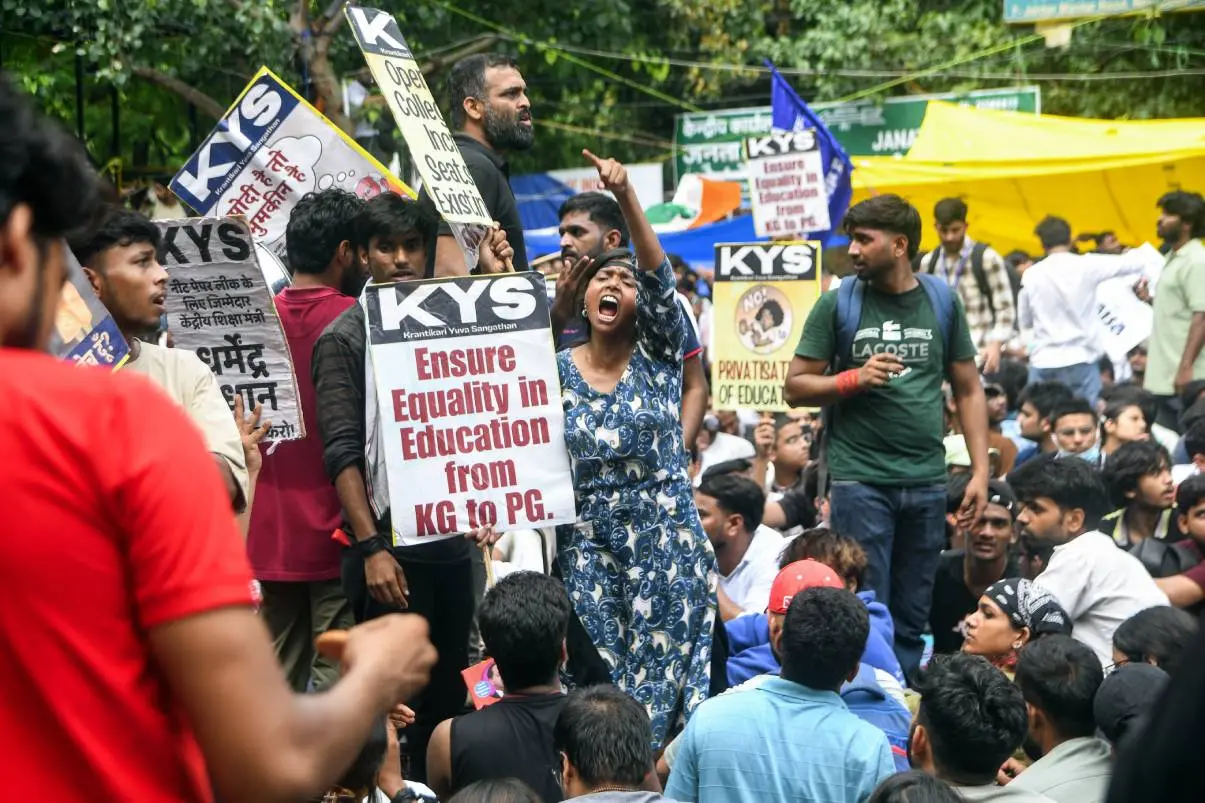
New Delhi: The Delhi High Court on Wednesday sought responses from the Centre and Delhi Police on three public interest litigations (PILs) alleging excessive use of force during the July 20 Cockroach Janta Party (CJP) protest and directed authorities to preserve CCTV footage and all other relevant electronic records linked to the incident.
A Division Bench comprising Chief Justice D K Upadhyaya and Justice Tejas Karia granted the respondents four weeks to file their replies and listed the matter for further hearing on September 11.
The court directed that CCTV footage and other relevant records be preserved in accordance with the applicable Standard Operating Procedure (SOP).
During the hearing, the Bench questioned the Centre's objection to the maintainability of the petitions, observing that even if the gathering had been an unlawful assembly, the authorities were required to follow a prescribed legal procedure.
"We have some questions for you. Was this an isolated incident? Perhaps not. Even if this was an unlawful assembly, there is a procedure to deal with it," the bench observed while hearing Additional Solicitor General S V Raju.
The court also said that when a PIL raises allegations of police excess, it cannot simply ask every affected individual to file a separate FIR. However, it clarified that it was not expressing any opinion at this stage on whether the allegations were correct or whether the videos presented before it were authentic.
Referring to Supreme Court precedent, the Bench observed that apart from individual criminal liability, such incidents could also give rise to a public law remedy.
Petitioners seek independent probe
Senior Advocate N Hariharan, appearing for one of the petitioners, argued that the protest at Jantar Mantar had initially been peaceful and that students were exercising their constitutional rights to peaceful assembly and association.
He argued that any state action must satisfy the constitutional requirements under Articles 14 and 21. He also submitted that no proclamation or public notice prohibiting the gathering had been issued and that, even if the situation became difficult to control, the police were required to follow due process, including issuing warnings before using force.
Hariharan alleged that unarmed protesters were subjected to excessive and punitive force and sought an investigation by a Special Investigation Team (SIT) or another independent agency, arguing that the Delhi Police should not investigate allegations against its own personnel.
The petitioners also sought preservation of CCTV footage, videos, PCR logs, body-camera recordings and records relating to orders authorising the use of force, besides a high-level inquiry into the incident.
Senior Advocate Gopal Sankaranarayanan told the court that he had reviewed around 130 verified videos of the incident. He claimed that some people involved in the police action were either not in uniform or were not wearing mandatory name badges. Referring to one video, he alleged that Additional DCP Sandeep Lamba slapped a woman protester.
Citing the Supreme Court's 2012 Ramlila Maidan judgment, Sankaranarayanan argued that the police had failed to follow the required procedure before using force, including making announcements asking protesters to disperse.
Senior Advocate Vikas Singh also argued that the gathering had been organised to peacefully raise concerns related to public examinations and education.
Centre opposes PILs
Appearing for the Centre, ASG S V Raju opposed the petitions, arguing that they were based on selective facts and social media videos that could potentially be manipulated.
Raju said the videos also showed police personnel being injured and alleged that the crowd had turned violent, damaged police vehicles and resorted to stone-pelting, forcing the police to intervene.
He argued that the petitioners had not exhausted remedies available under criminal law, including approaching a magistrate, and described the PILs as publicity-oriented and not maintainable.
After hearing both sides, the High Court issued notice to the Centre and Delhi Police and ordered the preservation of all relevant records and electronic evidence.
(With agency inputs)