CJI says ‘SC doors open to all’, rules out meeting Rahul Gandhi and opposition leaders
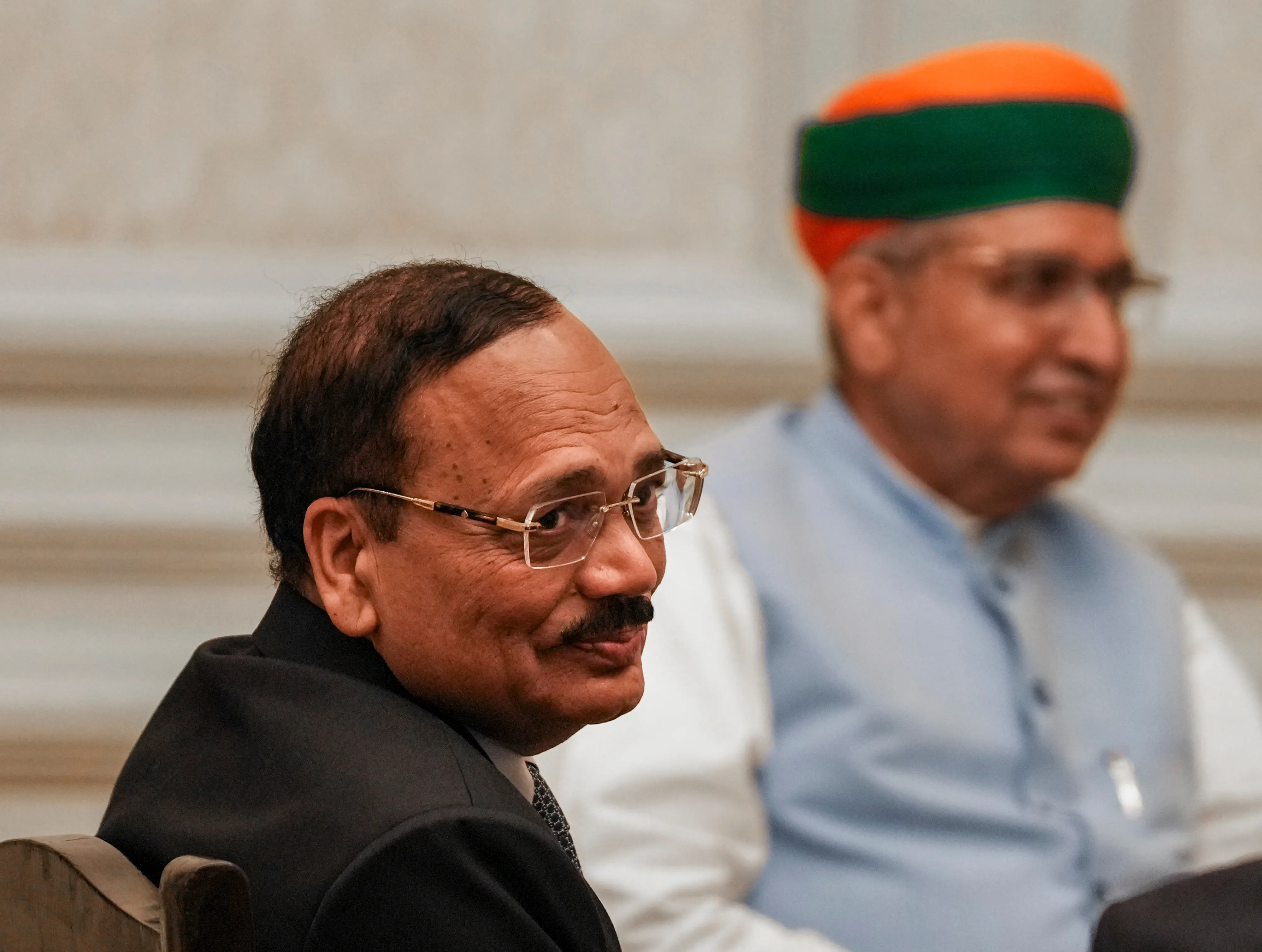
New Delhi: Chief Justice of India (CJI) Justice Surya Kant on Monday, October 12, said every Indian citizen has the right to approach the Supreme Court and seek relief in accordance with the law. He declined to disclose the contents of his correspondence with Congress leader Rahul Gandhi after refusing a meeting with opposition leaders who wanted to submit a memorandum concerning alleged electoral irregularities.
Speaking to reporters after attending the National Human Rights Commission's 33rd Foundation Day function in Delhi, the CJI said he had received the meeting request on Sunday and responded to it that night.
“I received a letter yesterday regarding a meeting request, and I responded to it last night, outlining the reasons why I will be unable to meet,” he said.
When asked to elaborate on the reasons, Justice Surya Kant said he had maintained the confidentiality of the correspondence and suggested that the contents be sought from Rahul Gandhi.
The CJI reiterated that the Supreme Court remained accessible to ordinary citizens and elected representatives alike.
“The Supreme Court's doors are open to everyone. Any petition from any common citizen or member of an elected body is welcome,” he said, adding that the court would consider grievances and grant relief wherever it was warranted under the law.
Why the CJI declined to meet opposition leaders
Rahul Gandhi, the Leader of the Opposition in the Lok Sabha, and Mallikarjun Kharge, the Leader of the Opposition in the Rajya Sabha, had sought an appointment with the CJI between 4 pm and 5 pm on Monday. They intended to submit a memorandum raising concerns over alleged electoral irregularities and demanding action against Chief Election Commissioner Gyanesh Kumar.
The opposition's demands include an end to what it describes as “vote chori”, the resignation of the CEC, a halt to the Special Intensive Revision (SIR) of electoral rolls and a return to paper ballots.
According to people aware of the development, the CJI's response stated that the issues raised would be more appropriately addressed through judicial proceedings rather than by submitting a memorandum through the administrative route. The response reportedly noted that the matter was already sub judice.
The CJI did not publicly disclose the full contents of the letter on Monday.
CJI explains decision on One Nation One Election JPC visit
Justice Surya Kant was also asked about the cancellation of a visit to the Supreme Court by the joint parliamentary committee examining the One Nation One Election proposal.
Explaining the distinction, he said the circumstances surrounding that visit raised a potential conflict-of-interest concern, prompting discussions on the administrative side of the court.
“There are comparatively more grounds in this case because in that issue (One Nation One Election JPC meeting), there was a possibility of a conflict of interest arising in court, which led us to discuss the administrative side. My senior judicial colleagues and I shared the collective view that we should avoid any conflict of interest,” he said.
His remarks highlighted the judiciary's concern about avoiding situations that could give rise to questions about impartiality or institutional propriety.
CJI refuses to comment on Delhi protests
Asked about the situation in Delhi and the opposition's planned march towards the Supreme Court, Justice Surya Kant declined to comment, describing it as a law-and-order issue.
The Congress and other INDIA bloc parties planned to march to the Supreme Court on Monday as part of their continuing protest against the Election Commission over alleged irregularities in the electoral process.
Security was tightened across parts of central Delhi, with barricades installed at several locations and personnel from the Delhi Police, Rapid Action Force and Central Reserve Police Force deployed. Entry and exit at selected Metro stations were scheduled to remain closed until 4 pm on October 12 for security reasons.
Security personnel were also deployed near Barakhamba Road and Mandi House as authorities prepared for the planned demonstration.
What the CJI's remarks mean
The CJI's statement that the Supreme Court's doors are open to all reinforces the distinction between access to justice and an administrative meeting with the head of the judiciary. Citizens and elected representatives can seek judicial intervention by filing petitions, but a request for a meeting does not itself establish a formal route for obtaining legal relief.
Where a matter is already before the courts, the appropriate course is generally to pursue it through judicial proceedings. This allows submissions to be considered within established legal procedures, with the parties' arguments and applicable law assessed through the judicial process.
The dispute also places the opposition's concerns about electoral processes within a broader institutional debate involving the Election Commission, political accountability and judicial oversight. Allegations of electoral irregularities remain claims that require examination through appropriate legal or administrative mechanisms.
The CJI's comments on the One Nation One Election committee visit separately underline the importance of avoiding potential conflicts of interest. His explanation was limited to the circumstances of that issue and should not automatically be treated as the stated reason for declining the opposition leaders' meeting.