Chinese military aircraft enters Indian airspace in Sikkim, hovers for 20-25 minutes: Reports
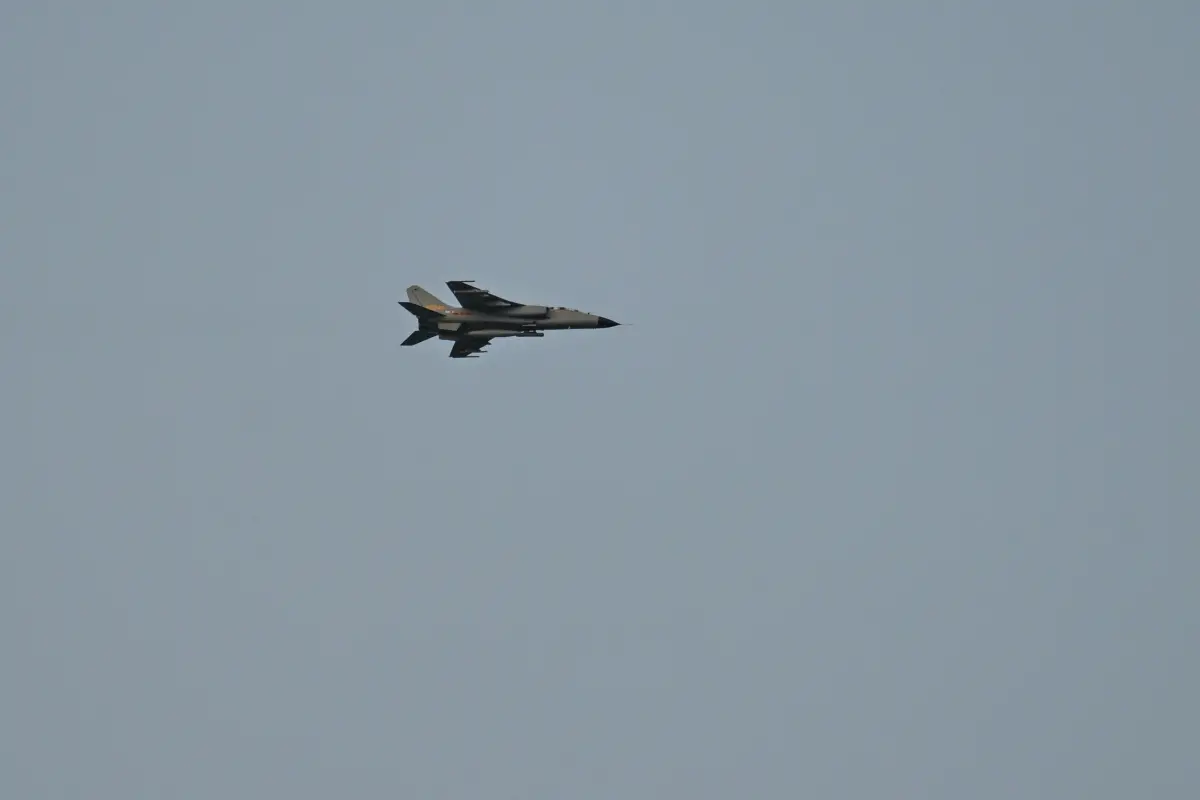
New Delhi: A Chinese military aircraft reportedly entered Indian airspace over Sikkim on November 12 and remained in the area for around 20 to 25 minutes, according to a source quoted by Outlook.
The reported intrusion assumes significance as the area overlooks the strategically sensitive Siliguri Corridor, a narrow stretch of land connecting India's northeastern states with the rest of the country.
According to the report, the Indian Air Force (IAF) detected the aircraft's movement at around 8 am on November 12 and repeatedly issued warnings, asking it to return to Chinese territory. However, the aircraft reportedly continued hovering over the area despite the warnings.
The aircraft was detected at an altitude of approximately 25,000 feet. Its type, precise flight path and the time at which it eventually left Indian airspace remain unknown.
The reported incident comes amid heightened attention to India's border security and military preparedness along the Line of Actual Control (LAC).
Speaking at an interactive session at the HT Leadership Summit on Saturday, External Affairs Minister S Jaishankar said India's border with China had become "more alive" and required a significantly greater commitment of troops on a sustained basis.
He also said India had strengthened its military capabilities along the LAC following the deadly clashes between Indian and Chinese troops in the Galwan Valley of eastern Ladakh in 2020.
Jaishankar's remarks came as New Delhi and Beijing continue efforts to normalise bilateral relations, which deteriorated sharply following the prolonged military stand-off in eastern Ladakh that lasted more than four years.
Highlighting India's infrastructure development along the frontier, Jaishankar pointed to the increasing pace of construction of tunnels, bridges and airfields.
"Just think about the last few years. How often do you now read - a new tunnel has been built, some new bridge has been built, another airfield has been commissioned. You're getting this news with greater and greater frequency," he said.
"What has happened today is the border with China has become more alive in a way. It has required a much greater commitment of troops on a sustained basis."
"The fact is that the work we had already done allowed that kind of numbers to be deployed out there, and the work we continue to do will maintain those numbers," he added.