Why China backed Pakistan during Operation Sindoor: US Panel flags bid to 'suppress India's rise'
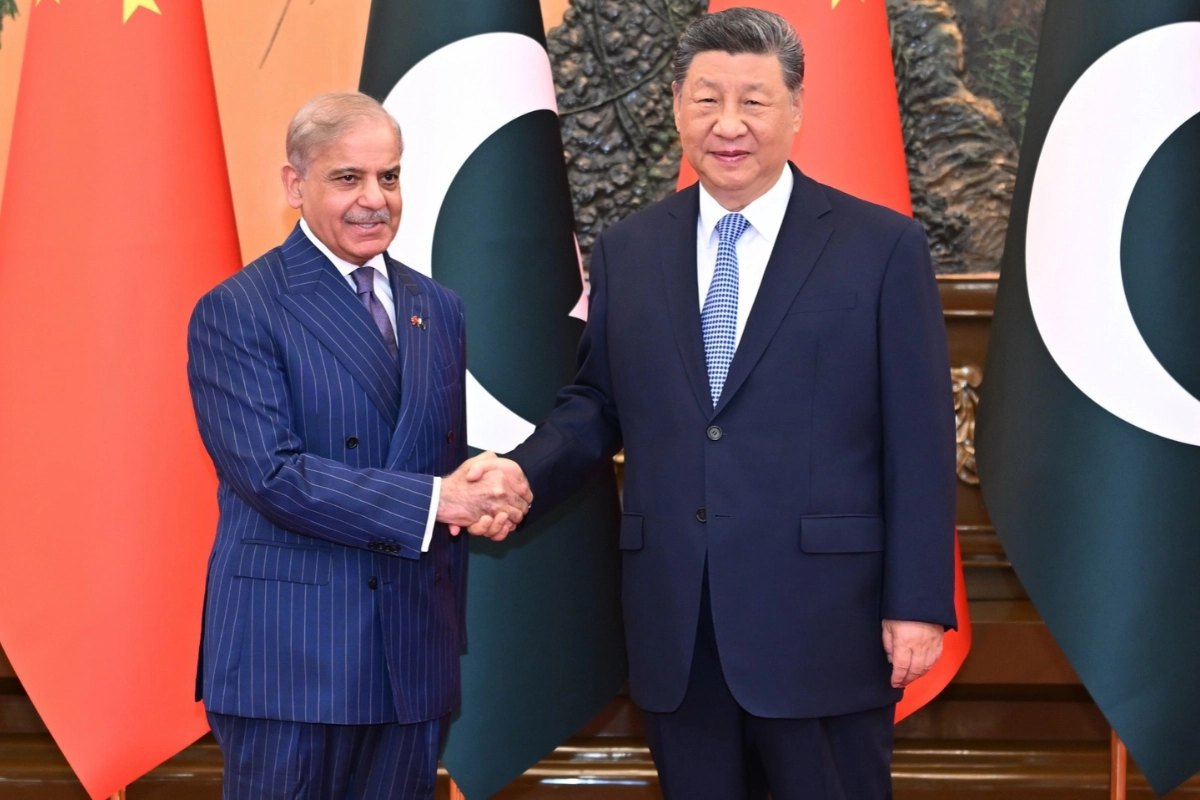
China's military support to Pakistan during Operation Sindoor was part of a broader strategy to contain India's growing influence, a US congressional commission has warned, flagging Beijing's efforts to challenge New Delhi on military, economic and diplomatic fronts.
In its 2026 annual report to the US Congress, the US-China Economic and Security Review Commission said Beijing was actively working to "suppress India's rise across multiple domains". It identified China's backing of Pakistan during the May 2025 conflict, its military expansion along the disputed border and its control over critical industrial supplies as key elements of this strategy.
The commission called for stronger US-India cooperation in defence, intelligence sharing, maritime security and manufacturing to counter China's growing influence in the region.
How China backed Pakistan during Operation Sindoor
The report identified Operation Sindoor as an example of how China could strengthen Pakistan's military capabilities during a crisis without directly entering the conflict.
India launched Operation Sindoor in May 2025 in response to the Pahalgam terror attack. During the subsequent hostilities, Pakistan reportedly deployed Chinese-made military equipment, while Beijing's wider support raised concerns about the possibility of India facing pressure on two fronts.
"China's evolving military partnership with Pakistan has made a two-front contingency an increasingly critical concern for India," the commission said.
China supplied 81 per cent of Pakistan's arms imports between 2020 and 2024, according to the report. It also highlighted China's role in strengthening Pakistan's military capabilities through advanced weapons systems and technical assistance.
In May 2026, Chinese state broadcaster CCTV aired an interview with Zhang Heng, an engineer associated with the Chengdu Aircraft Design and Research Institute. He said he and other personnel from China's Aviation Industry Corporation provided on-site technical support to the Pakistan Air Force during Operation Sindoor.
The engineer's remarks offered a public account of Chinese technical assistance during the conflict. The report also cited concerns that Beijing could have provided intelligence support to Pakistan.
It referred to reports of Chinese survey vessels operating around India's exclusive economic zone and in the Bay of Bengal during the hostilities, raising concerns about the collection of maritime information that could potentially benefit Pakistan.
The commission also flagged cyberattacks and online disinformation targeting India during the conflict. However, it acknowledged that it could not independently establish attribution for the cyberattacks.
Also read | China building nuclear weapons at 'hot and heavy' pace, says Trump
China's military build-up along India's border
The commission said China's strategy extended well beyond its military partnership with Pakistan.
Along the disputed India-China border, Beijing has continued expanding infrastructure, including airfields, railways and logistics facilities, particularly across the Tibetan Plateau. These developments could allow Chinese forces to mobilise more rapidly in the event of a conflict, the report warned.
The commission also highlighted China's activities in Arunachal Pradesh, including infrastructure development near Tawang and its attempts to assert territorial claims by assigning Chinese names to places within the Indian state.
Although India and China reached an agreement in 2024 to end their four-year military standoff in eastern Ladakh, tensions have continued along other parts of the border.
The report noted that China's military expansion was forcing India to divert resources towards border security, potentially affecting its economic development and naval modernisation plans.
China's economic pressure on India
Beyond military pressure, the commission identified China's control over critical industrial supplies and technology as one of its most significant tools against India.
It said Beijing had restricted exports of key industrial inputs, recalled engineers and withheld equipment, affecting India's efforts to expand domestic manufacturing.
The report specifically flagged restrictions involving rare earth magnets, specialised fertilisers, tunnel-boring machines and equipment required by electronics manufacturers.
Although some restrictions were lifted in August 2025, the commission said barriers to technology transfers, particularly in battery manufacturing, continued to affect India's industrial ambitions.
China's pricing strategy was another concern. The report pointed to lower prices of Chinese pharmaceutical inputs, which make it difficult for emerging Indian manufacturers to compete with established Chinese suppliers.
It also warned that China's restrictions on battery technology could slow India's efforts to build domestic clean-energy manufacturing capacity."India's efforts to build domestic supplier networks will require substantial capital, technology, and time," the commission observed.
Also read | What the Trump-Putin-Xi summit means for India and the global balance of power
Why the US wants closer ties with India
The commission described India as a strategically important power in the Indo-Pacific, capable of influencing the balance of power in Asia despite not being part of the US alliance system.
"India is one of the few powers outside the US alliance system with the scale to materially affect the long-term competition with China," the report said.
It also identified India as an important alternative to China in global manufacturing and supply chains.
To strengthen this partnership, the commission recommended deeper cooperation between Washington and New Delhi in intelligence, surveillance, defence technology and maritime security.
It urged the US to move beyond joint military exercises towards sustained cooperation, including coordinated monitoring of Chinese naval and submarine activities in the Indian Ocean.
The report also proposed greater cooperation in pharmaceutical supply chains and the creation of an Indo-American Strategic Leadership Exchange Programme.
However, the commission acknowledged that India would continue to protect its strategic autonomy and make decisions based on its own national interests.
It said India's response to China's growing influence included modernising its military, strengthening domestic manufacturing, improving border infrastructure and expanding partnerships with the US and other countries.
The report's central warning was that China's efforts to contain India were not limited to the border or its partnership with Pakistan, but extended across the military, economic and strategic spheres.