He died on a train: Cancer patient’s body allegedly left onboard for 12 hours
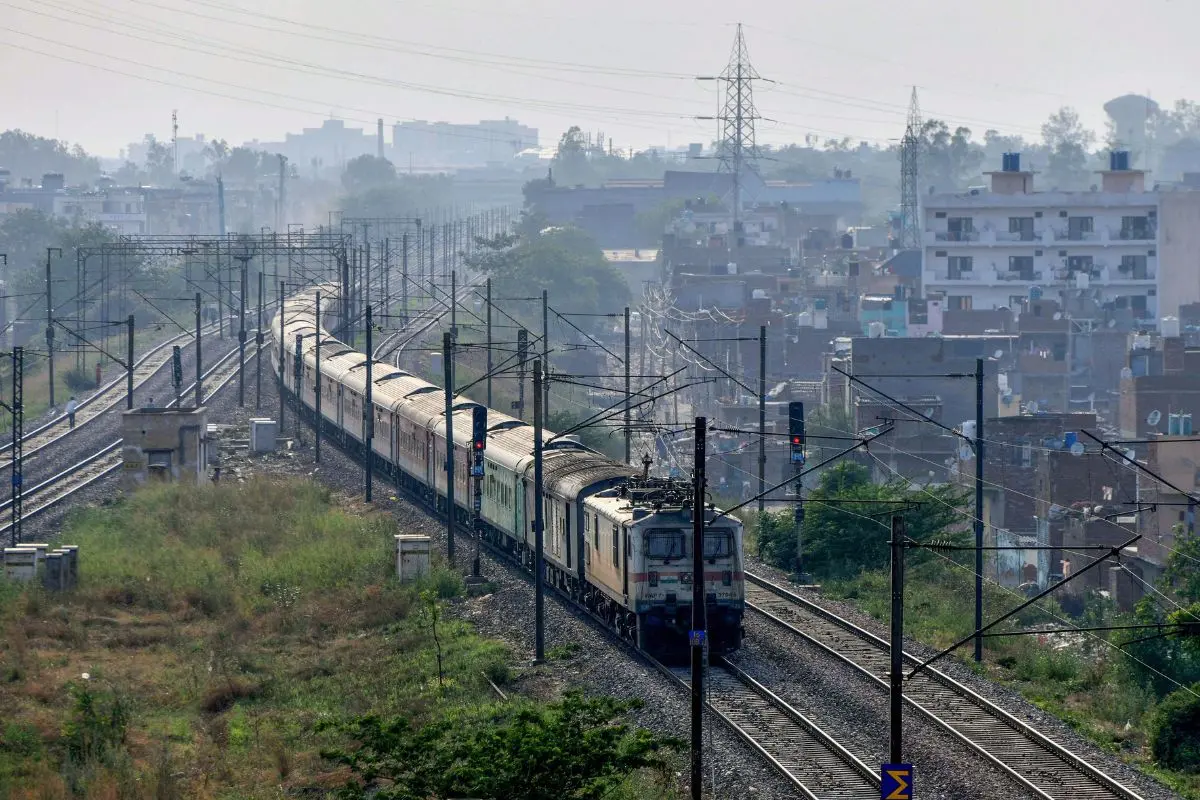
Mumbai: A 45-year-old cancer patient died while travelling on the Gitanjali Express from Mumbai to Howrah on Saturday, October 24. The deceased, Binod Paswan, was a resident of Bhatpara in West Bengal and was returning home after receiving treatment at Mumbai’s Tata Memorial Hospital.
Passengers alleged that his body remained inside the train’s M-2 coach for around 12 hours, despite railway staff being informed of his death in the morning. The body was eventually removed at Tatanagar Junction in Jamshedpur, Jharkhand, on Saturday night.
Passengers allege delay in removing the body
According to passengers, Paswan died on Saturday morning while the train was running approximately 12 hours behind schedule. They claimed that the train ticket examiner (TTE) was informed about the incident at around 8 am and that passengers were told a medical examination would be conducted to confirm the death.
However, passengers alleged that no effective action followed for several hours. The body remained inside the coach as other travellers continued their journey, prompting passengers to demand medical assistance and its early removal.
After their complaints allegedly went unresolved, a passenger raised the issue on social media at around 7 pm, tagging Railway Minister Ashwini Vaishnaw and using the Rail Madad grievance platform.
The Gitanjali Express reached Tatanagar Junction at approximately 8.30 pm. A doctor at the station examined Paswan and declared him dead, according to railway officials.
Railway officials give a different account
Aditya Chaudhary, Senior Divisional Commercial Manager of the Chakradharpur railway division, disputed the passengers’ account of when railway authorities were informed.
According to Chaudhary, officials received information at 7.45 pm that a passenger was lying unconscious in the train’s M-2 coach. After the train arrived at Tatanagar, a doctor examined the passenger and declared him dead.
The official said the matter was being investigated.
The difference between the passengers’ account and the railway’s version raises questions about when staff were first alerted, how the complaint was handled and why the passenger’s condition was not addressed earlier, if the allegations about the morning notification are established.
Passengers also complain about train conditions
The incident prompted further complaints about the conditions aboard the delayed train. Passengers alleged that the coaches were poorly maintained and that the toilets were in an unsatisfactory condition.
They also complained about difficulties accessing food and drinking water during the prolonged journey, particularly for children, elderly passengers and women.
According to passengers, limited food availability forced some travellers to purchase items from unauthorised vendors at high prices.
Jharkhand Mukti Morcha (JMM) leader Kunal Sarangi also raised the incident on social media, tagging Railway Minister Ashwini Vaishnaw and criticising the handling of the situation.
The incident has drawn attention to emergency response procedures on long-distance trains, particularly when a passenger becomes seriously ill or dies during a journey.
The key issue is the discrepancy between the accounts of passengers, who said railway staff were informed at around 8 am, and the railway official’s statement that authorities received information at 7.45 pm. Establishing the timeline will be essential to determining whether there was an avoidable delay in responding.
The train’s reported 12-hour delay and passengers’ complaints about food, water and sanitation have also highlighted concerns about passenger welfare during prolonged journeys. However, these complaints and the circumstances surrounding Paswan’s death require separate examination.
The railway investigation is expected to clarify when the incident was reported, what action was taken and whether established procedures were followed.