Setback for TMC: Calcutta HC rejects plea to block central staff from vote counting
Kolkata: The Calcutta High Court on Thursday dismissed a petition filed by the Trinamool Congress challenging a mandate from the Election Commission of India to utilise central and public sector undertaking employees for the tabulation of votes in the West Bengal Assembly elections.
The court affirmed the legitimacy of the directive, which requires Central Government and PSU staff to serve as counting supervisors and assistants. In its ruling, the court held that such appointments fall squarely within the discretionary powers of the Election Commission and do not constitute an illegal act.
The bench further rejected the TMC's assertions that federal employees might operate under partisan influence, characterising the claims as unsubstantiated apprehensions lacking evidentiary support. The court noted that any formal grievances regarding the process could be addressed through an election petition under Section 100 of the Representation of the People Act, 1951.
Election Officials Defend Discretion
Manoj Kumar Agarwal, the Chief Electoral Officer of West Bengal, welcomed the decision, emphasising the independence of the electoral process.
"The writ petition has been dismissed. We have received a copy," Agarwal told ANI. "No political party can decide who has to be included and who is not to be included. It is the discretion of the Returning Officer; he/she can include whoever he/she wants in counting or the entire election process."
Allegations of Intimidation
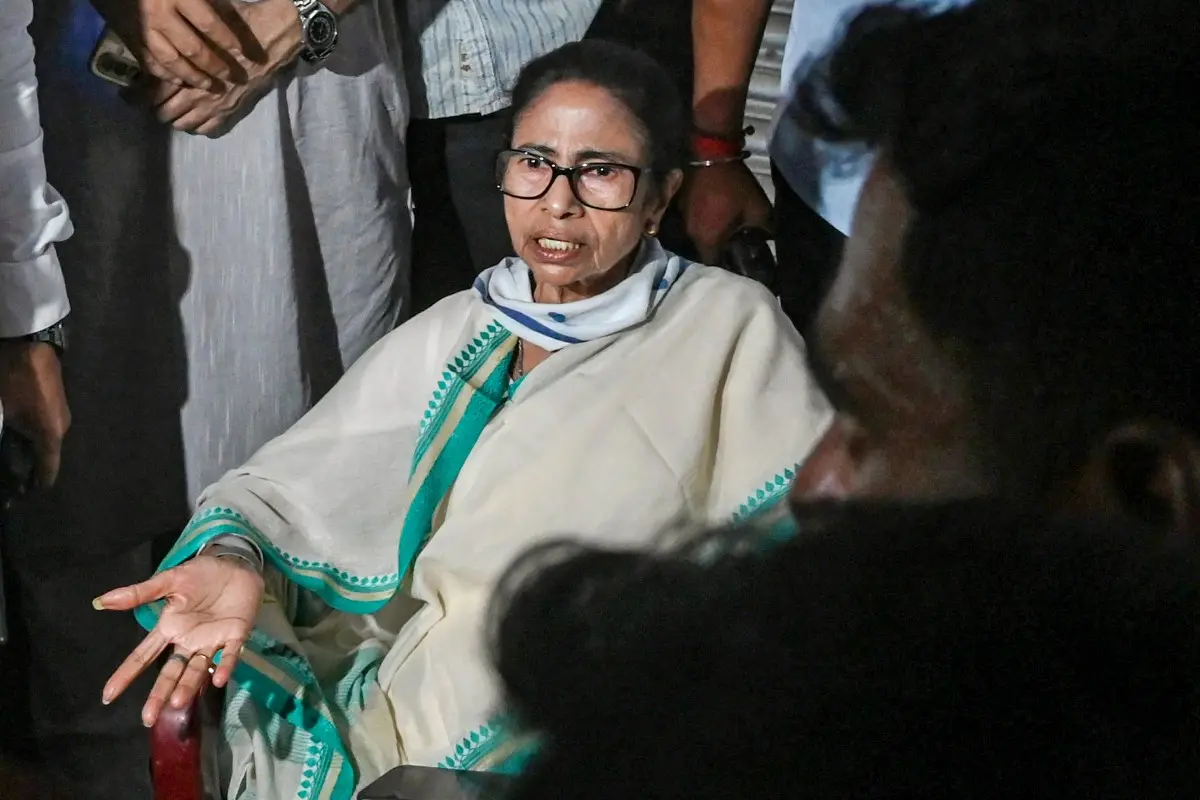
The legal setback for the TMC comes amid a flurry of allegations from West Bengal Chief Minister Mamata Banerjee. The Bhabanipur candidate claimed Wednesday that "observers from outside" and law enforcement officials unfamiliar with the region’s nuances were being deployed to specifically target Trinamool Congress activists during the second phase of polling.
Banerjee highlighted the early-morning arrest of her party's youth wing president and alleged that Central Reserve Police Force (CRPF) personnel had entered the home of a TMC councillor late at night without local police accompaniment, reportedly assaulting family members.
Legal Challenge to 'Encounter Specialist'
The electoral friction has also reached the nation's highest court. A Public Interest Litigation (PIL) was filed in the Supreme Court of India calling for the immediate ouster of Ajay Pal Sharma, a prominent Uttar Pradesh-cadre IPS officer serving as a Police Observer.
The petitioner alleged that Sharma—frequently referred to as the "Singham of UP" due to his reputation as an encounter specialist—has compromised the neutrality essential to his role. The plea asserts that during his tenure in South 24 Parganas, Sharma has participated in "acts of intimidation" and exerted "undue influence" against political candidates.
The petition argues that the officer’s continued presence "vitiates the electoral environment," threatening the public’s faith in the integrity of the 2026 Assembly Elections.
With inputs from ANI