Cabinet clears fresh delimitation bill, Lok Sabha seats to rise 50%, allocation frozen till 2051: Report
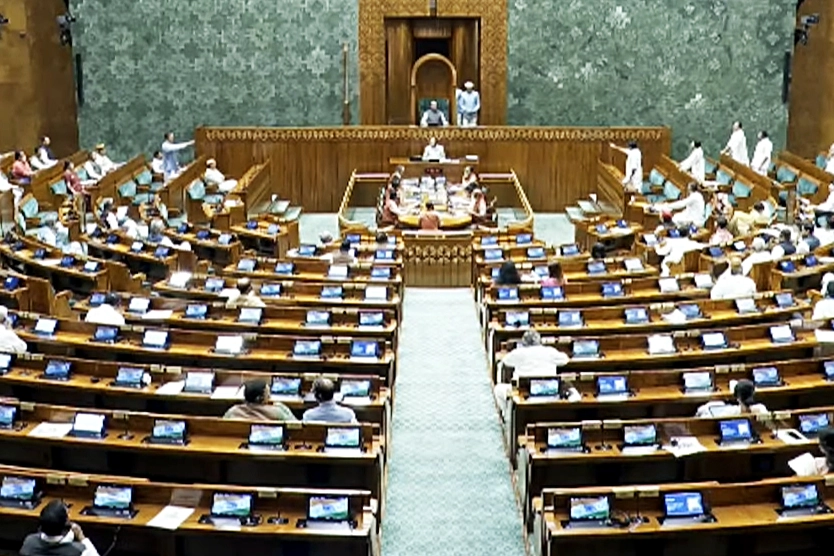
New Delhi: The Union Cabinet on Friday approved a fresh proposal linked to the implementation of 33 per cent women's reservation in Parliament, with the government planning to introduce the revised legislation during a special sitting of Parliament beginning November 30.
The Cabinet meeting, chaired by Prime Minister Narendra Modi, was held at Sewa Teerth at 1 pm to consider amendments to the delimitation-linked legislation.
According to reports, the revised proposal provides for a 50 per cent uniform increase in the strength of the Lok Sabha across all states. It also proposes freezing the allocation of seats for the next 25 years, until 2051.
The changes are aimed at addressing concerns, particularly among southern states, that a fresh delimitation exercise based on population could reduce their relative representation in the Lok Sabha.
The government is seeking to link the revised delimitation framework with the implementation of the 33 per cent reservation for women in the Lok Sabha and state legislative assemblies.
Why has the government brought a fresh delimitation bill?
The government had introduced the legislation during a special sitting of Parliament in April, but the bill failed to secure passage in the Lok Sabha.
The Centre is now preparing a revised version with amendments intended to address objections over the distribution of parliamentary seats among states.
One of the major concerns surrounding delimitation has been that states which have performed better in population control could face a disadvantage if parliamentary representation is redistributed primarily on the basis of population.
The proposed uniform 50 per cent increase in Lok Sabha seats, along with a freeze on state-wise allocations until 2051, is intended to address these concerns.
The revised proposal is expected to be tabled during the special parliamentary sitting beginning November 30.
Government claims it has numbers to pass the bill
The government has expressed confidence that it has sufficient parliamentary support to get the legislation passed.
Since the proposal involves a constitutional amendment, it requires a special majority in both Houses of Parliament.
A constitutional amendment bill must secure the support of at least two-thirds of members present and voting in each House, along with a majority of the total membership of the House.
According to sources, the DMK, NCP and BRS are expected to support the revised legislation.
However, the opposition INDIA bloc has opposed the proposal and is scheduled to meet on Saturday to discuss its strategy ahead of the parliamentary sitting.
Why are southern states concerned about delimitation?
The proposed delimitation exercise has become a politically sensitive issue because of concerns over the relationship between population growth and parliamentary representation.
Southern states have argued that redistributing Lok Sabha seats primarily according to population could penalise states that have achieved lower population growth through family planning and other development measures.
The concern is that states with faster population growth could gain a larger share of parliamentary representation, potentially changing the political balance between northern and southern India.
The government's proposed uniform expansion of Lok Sabha seats by 50 per cent is intended to address these apprehensions while enabling the implementation of women's reservation.
How the revised proposal could change India's parliamentary representation
The fresh proposal attempts to address two politically significant issues simultaneously: women's representation in legislatures and the redistribution of parliamentary seats through delimitation.
The proposed 50 per cent expansion of the Lok Sabha would increase the number of elected representatives across states. However, the decision to freeze seat allocations until 2051 could be particularly significant for states concerned about losing their relative political influence because of population-based delimitation.
1. A compromise over southern states' concerns
The proposed uniform increase in seats seeks to address apprehensions that southern states could be disadvantaged by population-based redistribution. However, the actual impact will depend on the detailed allocation formula and the provisions of the final legislation.
2. Women's reservation and delimitation remain linked
The government is seeking to move forward with 33 per cent women's reservation alongside the revised delimitation framework. The legislation could determine how the expansion of parliamentary representation and women's reserved seats are implemented.
3. A crucial parliamentary numbers test
The government needs a two-thirds majority of members present and voting, as well as the support of a majority of the total membership, in both Houses. The expected positions of regional parties could therefore prove important.
4. Political contest ahead of the special sitting
The opposition INDIA bloc's scheduled meeting on Saturday indicates that the legislation is likely to become a major political issue during the parliamentary sitting.
The debate is expected to revolve around women's representation, federal balance, population-based delimitation and the distribution of political power among states.