Black box of Air India flight AI171 recovered from Ahmedabad crash site
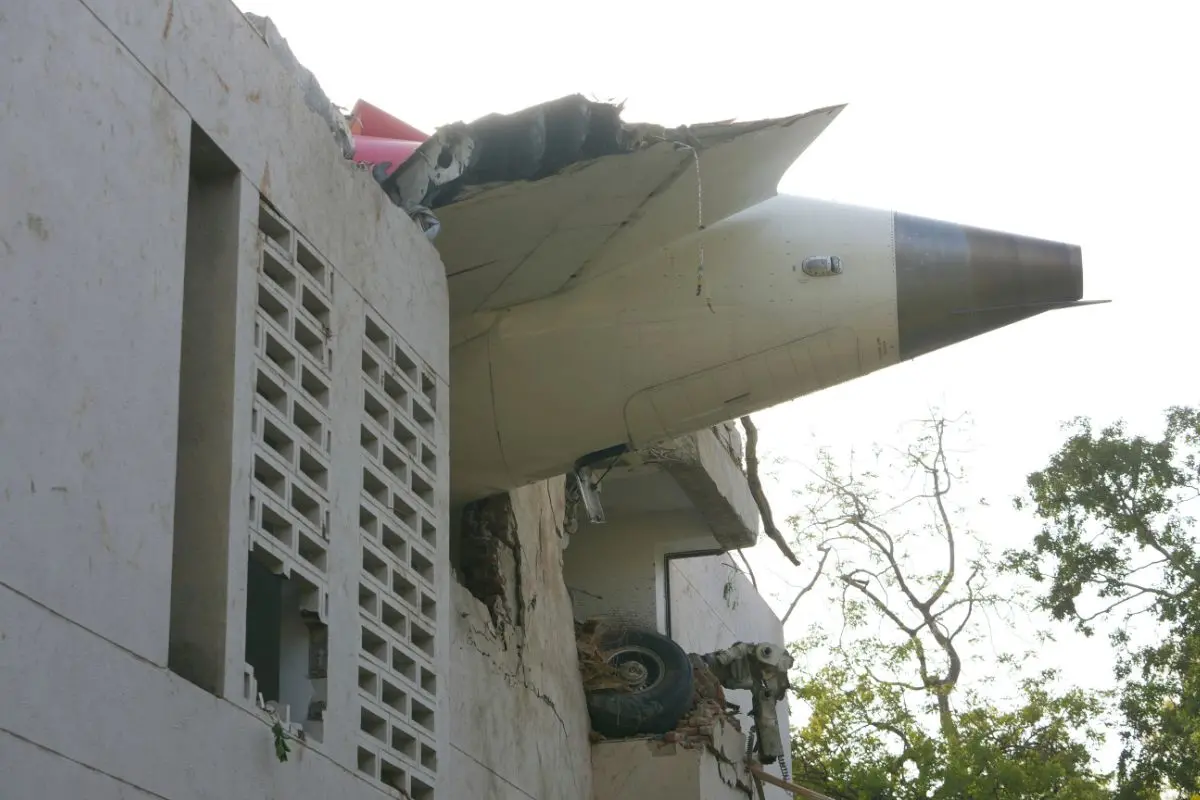
Ahmedabad: The Digital Flight Data Recorder (DFDR), commonly referred to as the black box of the ill-fated Air India flight AI-171 has been recovered from the rooftop of the building struck by the aircraft, Aircraft Accident Investigation Bureau (AAIB) confirmed on Friday. The crucial flight data recorder is expected to provide key insights into the cause of the catastrophic crash that claimed 241 lives.
Investigators believe the analysis of the black box will offer critical evidence to determine what led to the Boeing 787-8 Dreamliner’s sudden descent shortly after takeoff from Ahmedabad’s Sardar Vallabhbhai Patel International Airport on Thursday afternoon.
A dedicated team from the Ahmedabad Fire Brigade, equipped with advanced tools including metal cutters, had been searching through the wreckage in Meghaninagar, just outside the airport perimeter, where the aircraft crashed into a multi-storey hostel building. After a focused operation, the black box was discovered on the building's rooftop.
What does a black box do?
A black box, essential to air crash investigations, consists of two main components: the cockpit voice recorder (CVR) and the flight data recorder (FDR).
The CVR captures all audio from within the cockpit, including pilot conversations, radio transmissions, engine sounds, warning alarms, and various cockpit clicks and noises. Investigators often rely on these recordings to identify system failures, engine behaviour, or other critical events leading up to an accident. Sounds such as stall warnings or changes in engine pitch can help experts piece together what went wrong, even when visual data is unavailable.
How a black box survives crashes?
Black boxes are built to endure some of the most extreme conditions during an air crash, including high-impact forces, intense fires, and deep-sea pressure. They are typically constructed using highly durable materials such as titanium or stainless steel, ensuring the data inside remains protected.
The flight data recorder (FDR) is usually installed in the tail section of the aircraft—an area considered more likely to survive the initial impact. This strategic placement improves the chances of recovery following a crash.
In the event of a water crash, black boxes are equipped with underwater locator beacons that automatically activate on contact with water. These beacons are capable of transmitting signals from depths of up to 14,000 feet, guiding rescue teams to their location.
When a black box is retrieved from the sea, it undergoes an extensive cleaning process to remove corrosive salt. The device is then dried thoroughly, often over several days, before engineers examine the internal electronics and memory components. Any necessary repairs are carried out, and memory chips are closely analysed to extract valuable flight data.
While the cockpit voice recorder (CVR) is positioned inside the aircraft's cockpit, it is also engineered to survive catastrophic events, playing a crucial role in post-crash investigations.
The FDR, on the other hand, continuously tracks key flight information such as altitude, airspeed, and heading. According to the US-based National Transportation Safety Board (NTSB), modern aircraft must record at least 88 parameters, offering a detailed timeline of the plane’s final moments. This combination of audio and flight data gives investigators a comprehensive picture of a flight’s final trajectory and any anomalies that may have occurred.
Details of the crash
The flight, bound for London’s Gatwick Airport, had 242 people on board—229 passengers and 12 crew members—according to Air India. Only one individual, a British-Indian businessman seated in the front section of the economy cabin, survived the crash.
The aircraft was under the command of Captain Sumeet Sabharwal, an experienced Line Training Captain with over 8,200 flight hours, and First Officer Clive Kundar, who had logged 1,100 hours.
According to data from Air Traffic Control, the plane departed from runway 23 at 1.39 p.m. (0809 UTC). Shortly after takeoff, a Mayday call was received, but all subsequent attempts by ATC to re-establish contact went unanswered. Moments later, the plane crashed into the nearby hostel complex, producing thick black smoke visible from a distance.
Union Civil Aviation Minister Ram Mohan Naidu confirmed that the Aircraft Accident Investigation Bureau (AAIB) has officially launched an inquiry into the disaster, which is being described as the deadliest single-aircraft crash in India in recent decades.
Authorities are now expected to begin detailed analysis of the flight data and cockpit voice recordings to reconstruct the final moments of the flight and determine whether technical failure, human error, or external factors were involved.
(With inputs from ANI)