Goa family's voter names deleted despite Form 8 applications; High Court gives EC 10 days to restore them
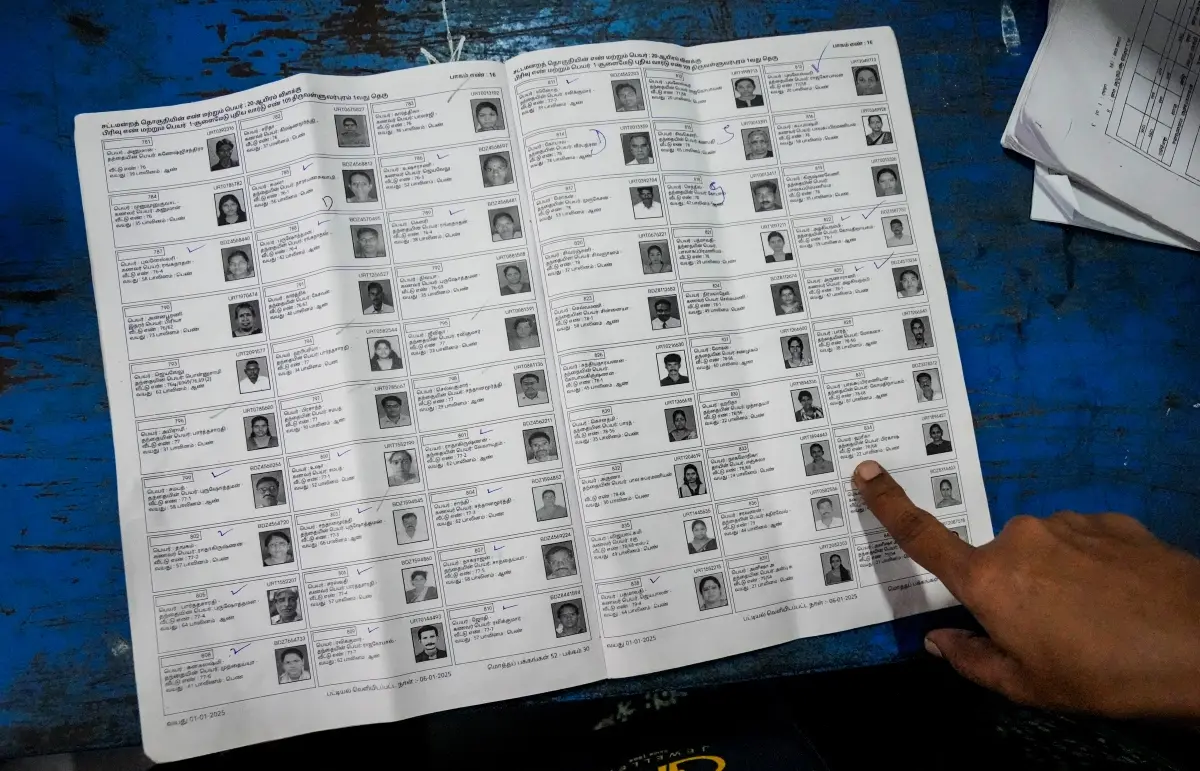
Mumbai: The Goa bench of the Bombay High Court on Thursday directed the Election Commission of India (ECI) to restore the names of six members of a family in the electoral rolls within 10 days, subject to verification of their new residential address.
The division bench of Justices Valmiki Menezes and Amit Jamsandekar rejected the Election Commission's request to stay the order so that it could challenge the decision before the Supreme Court.
The court clarified that the petition concerned the deletion of existing voters' names following an address change and was separate from the wider legal questions surrounding the Special Intensive Revision (SIR) of electoral rolls currently being examined by the Supreme Court.
"We are allowing the petition. The Supreme Court is hearing the SIR issue, this is not about SIR," the bench observed while delivering its decision.
How did six registered voters lose their names?
The petition was filed by Paresh Vasant Salgaonkar and five members of his family, who live in the Santa Cruz Assembly constituency in North Goa.
The family had shifted to a new residential address within the same constituency before the enumeration phase of the SIR exercise.
Following instructions from their local Booth Level Officer (BLO), they submitted Form 8 applications to update their residential addresses in the electoral records.
However, when the draft electoral roll was published, the family discovered that all six names were missing.
They subsequently received automated notifications stating that their Form 8 applications had been rejected by the Electoral Registration Officer (ERO). By then, the deadline for filing claims and objections had also passed.
The family approached the authorities for a solution but was asked to submit Form 6 applications instead.
Why did the family challenge the Form 6 requirement?
The dispute centred on the difference between two forms used in the electoral registration process.
- Form 8: Used by existing registered voters to request corrections, including changes to their residential addresses.
- Form 6: Used by individuals applying for inclusion in the electoral roll as new voters or seeking fresh enrolment.
The petitioners argued that they were already registered voters and had only shifted their residence within the same constituency. Therefore, asking them to submit Form 6 would require them to make a declaration that did not accurately reflect their existing voter registration status.
They maintained that an administrative or technical problem should not deprive existing voters of their electoral rights.
What was the Election Commission's explanation?
The Election Commission argued that the SIR was a fresh, or de novo, exercise and was different from the regular Special Summary Revision of electoral rolls.
According to the poll body, the family's enumeration slips had not been completed at their previous residential address.
As a result, its software could not map their Form 8 applications against their existing Electors Photo Identity Card (EPIC) records. This reportedly led to the automatic rejection of their applications.
The petitioners, however, argued that software-related difficulties and procedural complications could not justify removing the names of people who were already registered voters.
Why did the High Court refuse to grant a stay?
During the hearing, the Election Commission's advocate, Gaurish Agni, requested the court to suspend the operation of its order to allow the poll body to approach the Supreme Court.
The High Court declined the request and directed the commission to complete the address verification and restore the six names within 10 days.
The decision provides immediate relief to the family and requires the Election Commission to act within the stipulated period rather than making the petitioners pursue another round of enrolment procedures.
Why the Goa voter deletion case matters beyond six names
The Bombay High Court's order raises an important question about electoral roll revisions: can existing voters lose their registration because of technical or procedural difficulties when they seek to update their details?
1. The difference between updating voter details and fresh registration
The case highlights why Form 8 and Form 6 serve different purposes. An existing voter changing their address is not necessarily a new applicant seeking registration. The petitioners argued that forcing them to apply through Form 6 failed to recognise this distinction.
2. Technology cannot replace procedural accountability
The Election Commission attributed the rejection of the applications to its software's inability to map the family's records. The case brings attention to the risks of relying on automated systems without an effective mechanism to correct errors.
Electoral technology can help manage large databases, but citizens need a way to challenge incorrect deletions and have their records verified.
3. The SIR debate involves more than adding and removing names
The Supreme Court is separately examining broader legal questions surrounding the Special Intensive Revision. The Bombay High Court specifically clarified that the family's petition was distinct from those issues.
Nevertheless, the case highlights a practical concern associated with electoral roll revisions: how should authorities protect the voting rights of existing electors whose details cannot be matched during the verification process?
4. The burden of administrative errors should not fall on voters
The family had followed the instructions of its local BLO and submitted the prescribed Form 8 applications. Yet it found its names missing from the draft roll.
The High Court's intervention reinforces the importance of providing an effective remedy when procedural or technical complications affect electoral registration.
5. The order does not settle the wider SIR controversy
The ruling is specific to the six petitioners and their address verification. It should not be interpreted as a final judicial decision on the legality or constitutionality of the wider SIR exercise, which remains a separate matter before the Supreme Court.