Bhagavad Gita, Natyashastra enter UNESCO's Memory of the World Register
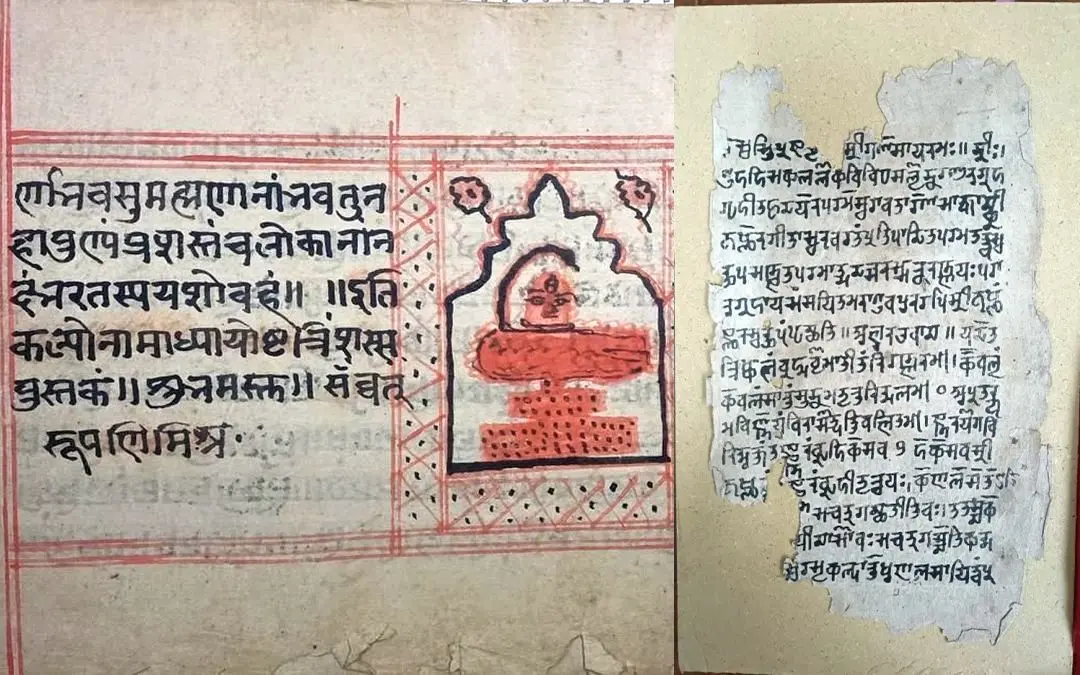
In a landmark moment celebrating India's rich cultural and philosophical heritage, UNESCO has added the Bhagavad Gita and Bharat Muni's Natyashastra to its prestigious Memory of the World Register.
Prime Minister Narendra Modi hailed the announcement. He posted on X, "A proud moment for every Indian across the world! The inclusion of the Gita and Natyashastra in UNESCO's Memory of the World Register is a global recognition of our timeless wisdom and rich culture. The Gita and Natyashastra have nurtured civilisation, and consciousness for centuries. Their insights continue to inspire the world."
The UNESCO note on the Bhagavad Gita read: 'Bhagavad Gita is a central text in the continuous, cumulative ancient intellectual Indian tradition, synthesizing various thought movements such as, Vedic, Buddhist, Jain and Carvaka. Due to its philosophical breadth and depth, the Bhagavad Gita has been read for centuries across the globe and translated into many languages.'
On Natyasahastra, UNESCO noted: 'Preserved at the Bhandarkar Oriental Research Institute and codified around the 2nd century BC, the Nāṭyaśāstra of Bharatamuni is an epitome of the Nāṭyaveda, an oral body of knowledge of performing art containing 36,000 verses known as the Gāndharvaveda.'
'The Nāṭyaśāstra embodies a comprehensive set of rules that define nāṭya (drama), abhinaya (performance), rasa (aesthetic experience), bhāva (emotion), saṅgīta (music), among others, thus articulating the character of Indian theatre, poetics, aesthetics, dance and music. Bharatamuni makes a groundbreaking statement in Nāṭyaśāstra, asserting that ‘no meaning can blossom forth without rasa’, a profound contribution to world literature,' the note further said.
What is the Memory of the World Register?
Established in 1992, UNESCO's Memory of the World Programme seeks to safeguard and promote universal access to the documentary heritage of humanity -- treasures that are often fragile and vulnerable to deterioration or disasters.
The Bhagavad Gita and Natyashastra are among the 74 newly inscribed collections from 72 countries and 4 international organizations to join the Memory of the World Register. With these additions, the register now holds 570 documentary heritage collections that span critical moments in human history, from the scientific revolution to milestones in multilateralism and the contributions of women to global progress.
The register encompasses a wide range of materials -- books, manuscripts, maps, photographs, and audiovisual recordings -- that collectively testify to humanity’s shared legacy. Each entry is carefully selected by UNESCO’s Executive Board, following a rigorous evaluation by an independent international advisory committee.
New Enteries in Memory of the World Register
Among the newest inscriptions, fourteen highlight major scientific achievements. These include Itḥāf Al-Mahbūb (Egypt), chronicling early Arab advancements in astronomy and celestial studies; the archives of Charles Darwin (United Kingdom) and Friedrich Nietzsche (Germany); Wilhelm Conrad Roentgen’s pioneering X-ray photographs (Germany); and groundbreaking disease research by Carlos Chagas (Brazil).
The latest cohort also features collections documenting the memory of slavery, submitted by Angola, Aruba, Cabo Verde, Curaçao, and Mozambique, as well as archives centered on historical women—an area still underrepresented on the register—such as Raden Ajeng Kartini (Indonesia and the Netherlands), Katherine Mansfield (New Zealand), and Swiss travel writers Annemarie Schwarzenbach and Ella Maillart.
Key milestones in international cooperation have also been recognized, including the archives of the Geneva Conventions (1864–1949) and their protocols (1977–2005) from Switzerland, the Universal Declaration of Human Rights (United Nations), and the Windhoek Declaration (1991, Namibia), a foundational document for global press freedom.