Flying has never been safer, so why did more people die in air accidents last year?
Commercial aviation carried more passengers than ever before in 2025, yet the number of accidents fell to one of its lowest levels in recent years. At first glance, the latest safety report from the International Civil Aviation Organization (ICAO) paints a reassuring picture for travellers. Airlines operated more flights, accident rates declined, and fatal accidents dropped sharply.
However, the report also highlights a sobering reality. Despite fewer accidents, the total number of people who lost their lives in aviation accidents actually increased. The reason lies in a small number of rare but catastrophic events that had devastating consequences.
For passengers flying continues to be one of the safest ways to travel. But for regulators, airlines and aircraft manufacturers, the challenge is no longer simply preventing accidents, it is preventing the very few accidents that can claim hundreds of lives.
More people flew than ever before
According to ICAO, commercial airlines carried nearly 5 billion passengers on approximately 38 million flights during 2025, both higher than the previous year. Despite this record growth in air travel, the industry recorded only 85 accidents, down from 95 accidents in 2024.
The global accident rate also improved significantly, falling from 2.6 accidents per million departures in 2024 to 2.2 accidents per million departures in 2025, a reduction of nearly 13%. For travellers, these figures reinforce a positive trend. Even as airports become busier and airlines add more flights, commercial aviation continues to become safer.
Few fatal accidents but more lives lost
One of the most striking findings in ICAO's report is that fatal accidents fell sharply, yet the number of fatalities increased. Fatal accidents dropped from 10 in 2024 to just four in 2025, while the fatal accident rate declined by around 60%. However, total fatalities rose from 296 to 387 people. How is that possible?
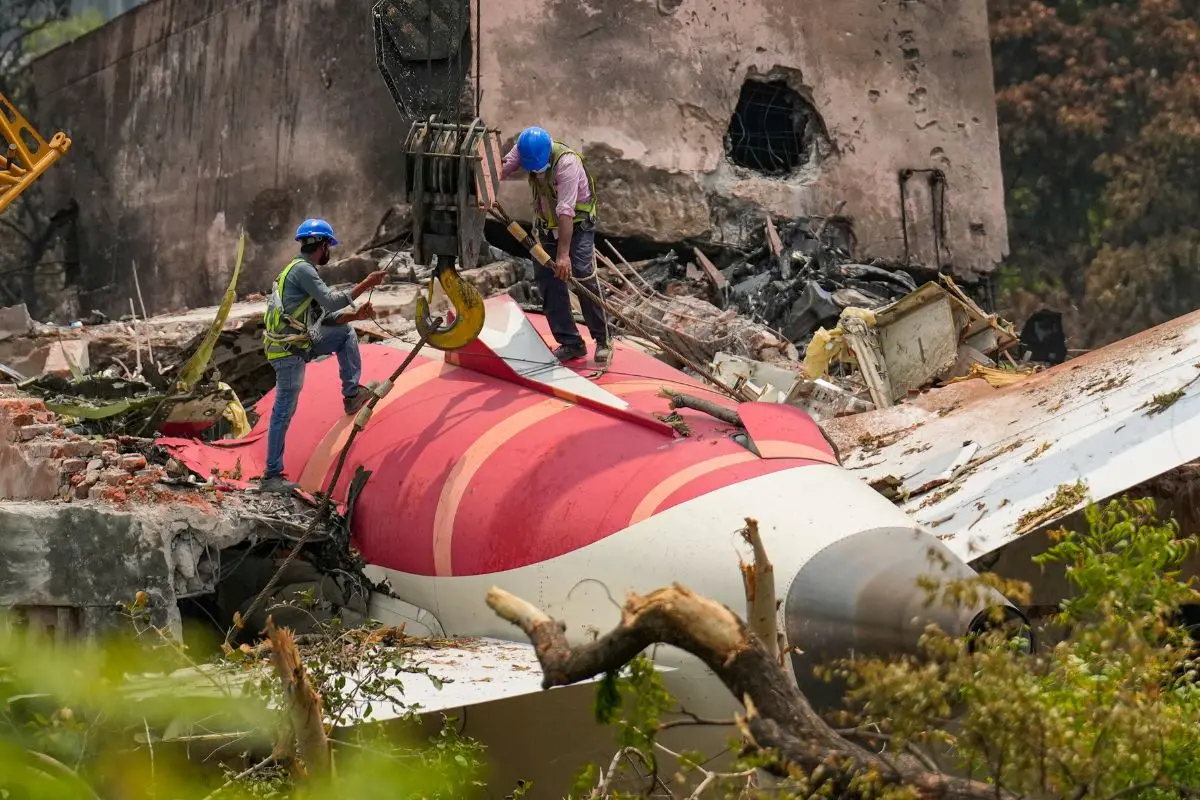
The answer lies in the nature of modern aviation. When accidents occur today, they are extremely rare. But if a major accident involves a large commercial aircraft carrying hundreds of passengers, the loss of life can be substantial. ICAO noted that one accident alone claimed 260 lives, accounting for a significant share of all aviation fatalities during the year.
This illustrates an important reality: aviation has become exceptionally good at preventing accidents, but eliminating the few catastrophic accidents that still occur remains the industry's greatest challenge.
The cause of more serious aviation accidents?
ICAO continues to focus on five accident categories that have historically resulted in the greatest number of fatalities worldwide. These include loss of control in flight, where pilots are unable to maintain control of the aircraft, secondly, controlled fight into terrain, where an aircraft unintentionally flies into mountains, terrain or water despite being fully operational. Then comes the mid-air collision involving aircraft colliding or narrowly missing each other while flying. Fourth is the runway excursions, where aircraft overshoot or leave the runway during take-off or landing and lastly, runway incursions, where aircraft, vehicles or people mistakenly enter an active runway.
Together, these categories accounted for more than half of all fatal accidents in 2025.
Among them, loss of control in flight remains the industry's biggest concern because these accidents often develop rapidly, leaving pilots with very little time to recover.
Technology factor
The report also highlights how advances in technology continue to reduce aviation risks. Modern aircraft are equipped with sophisticated terrain warning systems, collision avoidance technology, weather radar and increasingly advanced flight management systems.
These technologies have dramatically reduced accident rates over the past two decades. ICAO also noted encouraging progress in runway safety.
For the first time in 2025, there were no commercial aviation accidents caused by runway incursions, suggesting that investments in airport procedures, pilot training and airport technology are delivering positive results. Although runway excursions still occurred, the absence of runway incursion accidents demonstrates how targeted safety initiatives can make a measurable difference.
Safety depends on more than aircraft
Aircraft technology is only one part of aviation safety. ICAO's report also evaluates how effectively countries regulate their aviation sectors.
This includes assessing whether national aviation authorities have enough trained inspectors, clear regulations and strong oversight systems to monitor airlines, airports and maintenance organisations.
The report found that the global average safety oversight score improved to 69%, indicating that many countries continue strengthening their regulatory systems.
However, ICAO identified three areas requiring greater attention:
• Recruiting and retaining qualified aviation professionals.
• Improving inspection and safety surveillance programmes.
• Resolving identified safety issues more quickly.
Strong regulators, the report says, are just as important as safe aircraft in preventing accidents.
The next challenge
Global aviation is entering a new phase. Passenger numbers continue to grow, airlines are expanding their fleets and entirely new aircraft, including drones, electric air taxis and advanced air mobility vehicles are beginning to share airspace with traditional commercial aircraft.
This means the aviation industry must manage increasingly complex skies while maintaining its remarkable safety record.
ICAO believes future safety improvements will depend not only on better aircraft but also on smarter air traffic management, stronger international cooperation, improved pilot training and greater use of data-driven safety systems.
Conclusion
For passengers, ICAO's latest report should be reassuring rather than alarming. Although the increase in fatalities naturally attracts attention, the broader trend remains overwhelmingly positive. Commercial aviation today carries billions of people every year while experiencing fewer accidents than ever before.
Every accident, inspection finding and operational report is analysed in detail so that lessons can be shared across the global aviation industry. This continuous cycle of learning is one of the reasons flying remains the safest form of long-distance transport.
The ICAO report offers an important reminder that aviation safety is not measured simply by the number of flights or passengers carried. It is measured by the industry's ability to learn, adapt and continuously improve.
As air travel continues to grow at record levels, airlines, regulators, manufacturers and airports are shifting from reacting to accidents to preventing them before they happen. Data analytics, predictive safety systems, enhanced pilot training and stronger global oversight are becoming the foundations of modern aviation safety.
For passengers, the numbers tell an encouraging story. Billions of journeys are completed safely every year because behind every flight is a global system committed to constant improvement. The industry's next milestone is not just reducing accidents further, but eliminating the rare catastrophic events that still account for most aviation fatalities. That is the challenge ICAO and the global aviation community is now determined to meet.