Election schedule out: Can BJP secure a proud third straight term in Assam?
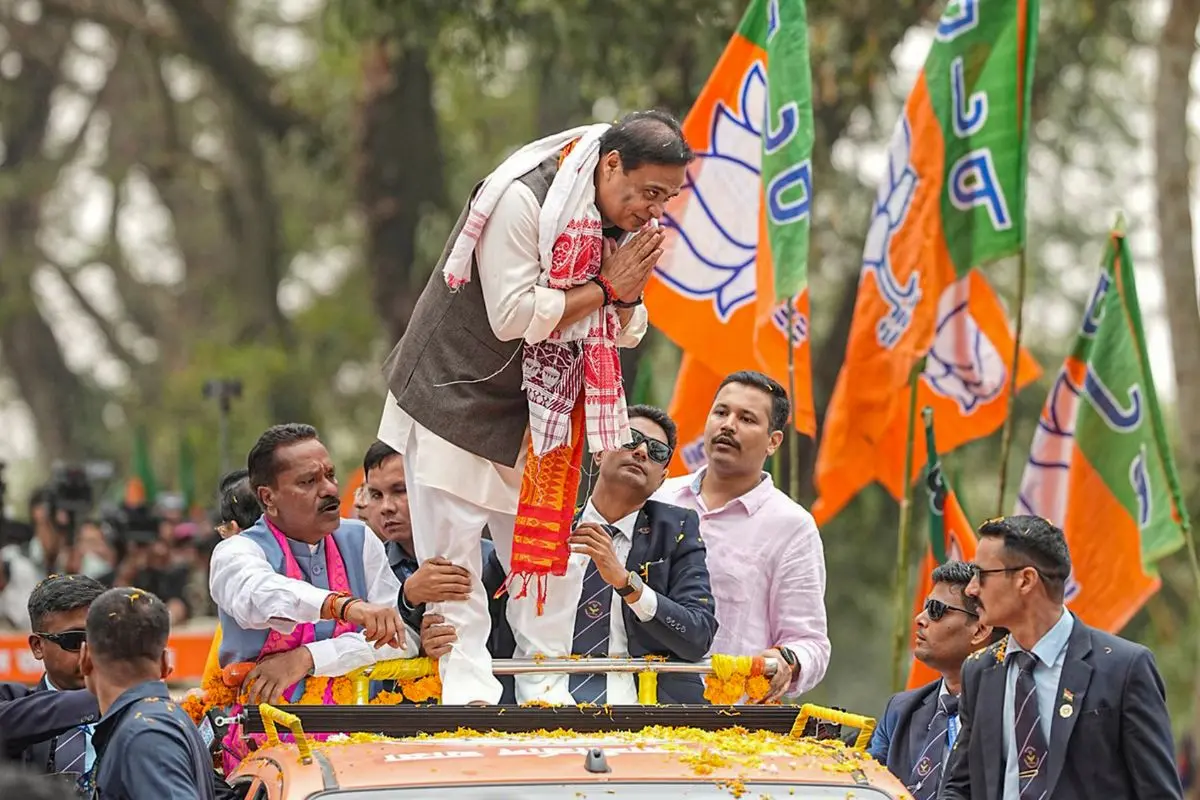
The announcement of Assembly elections across five regions has placed Assam at the centre of the BJP’s immediate political calculations. While the party is aiming to expand its influence in West Bengal, Kerala and Tamil Nadu, its primary objective is to hold on to power in Assam — the only state among the five where it currently has a clear electoral foothold.
The Election Commission on Sunday declared that polling in Assam will be held on April 9. Voting in Kerala and Puducherry will also take place that day, while Tamil Nadu will vote on April 23. West Bengal will go to the polls in two phases on April 23 and April 29. Counting of votes for all five will take place on May 4.
For the BJP, the Assam contest carries particular weight as the party attempts to secure a third consecutive term in the 126-member Assembly.
BJP enters polls banking on decade in power
The BJP’s rise in Assam has unfolded over the past decade. After gaining momentum during the 2014 Lok Sabha election, the party formed its first government in the state in 2016 with 60 Assembly seats. Its position strengthened further in the 2021 election when it increased its tally to 64 seats.
Going into the upcoming contest, the ruling BJP-led NDA is highlighting its record in government. Development projects, welfare programmes targeting various social groups and a series of peace agreements with insurgent groups are among the achievements being projected during the campaign.
Chief Minister Himanta Biswa Sarma’s high-profile role in state politics and his extensive outreach across Assam have also become central to the party’s campaign efforts. Senior national leaders — including Prime Minister Narendra Modi and Union Home Minister Amit Shah — are expected to campaign in the state to reinforce the party’s “double-engine government” message.
The BJP’s organisational network across much of the state is also considered a major advantage as campaigning intensifies.
Key electoral pressures and vote dynamics
Despite these advantages, the ruling alliance faces several challenges as it seeks another term. After two terms in office, voter fatigue and dissatisfaction in some constituencies could emerge as factors, particularly where development concerns remain unresolved or sitting legislators face local criticism.
Opposition parties are also trying to put the government under pressure on issues such as unemployment, alleged corruption and concerns raised by minority communities.
Voting patterns among Bengali-speaking Muslims could also shape the outcome in several seats. According to the 2011 Census, Muslims make up about 34 per cent of Assam’s population. If these votes consolidate behind the Congress, the contest could become more competitive. A division of votes between the Congress and Badruddin Ajmal’s AIUDF, however, could work in the BJP’s favour.
The BJP has long campaigned against illegal immigration from Bangladesh, an issue that has found support among sections of Assamese Hindus who link migration with economic and cultural pressures.
Internal challenges may also arise during candidate selection. Discontent among ticket aspirants, unresolved demands by six communities for Scheduled Tribe status, and criticism over eviction drives are among the issues that could feature during the election campaign.