PM Modi heads to ASEAN Summit 2026: Trade, China tensions and maritime security on India's agenda
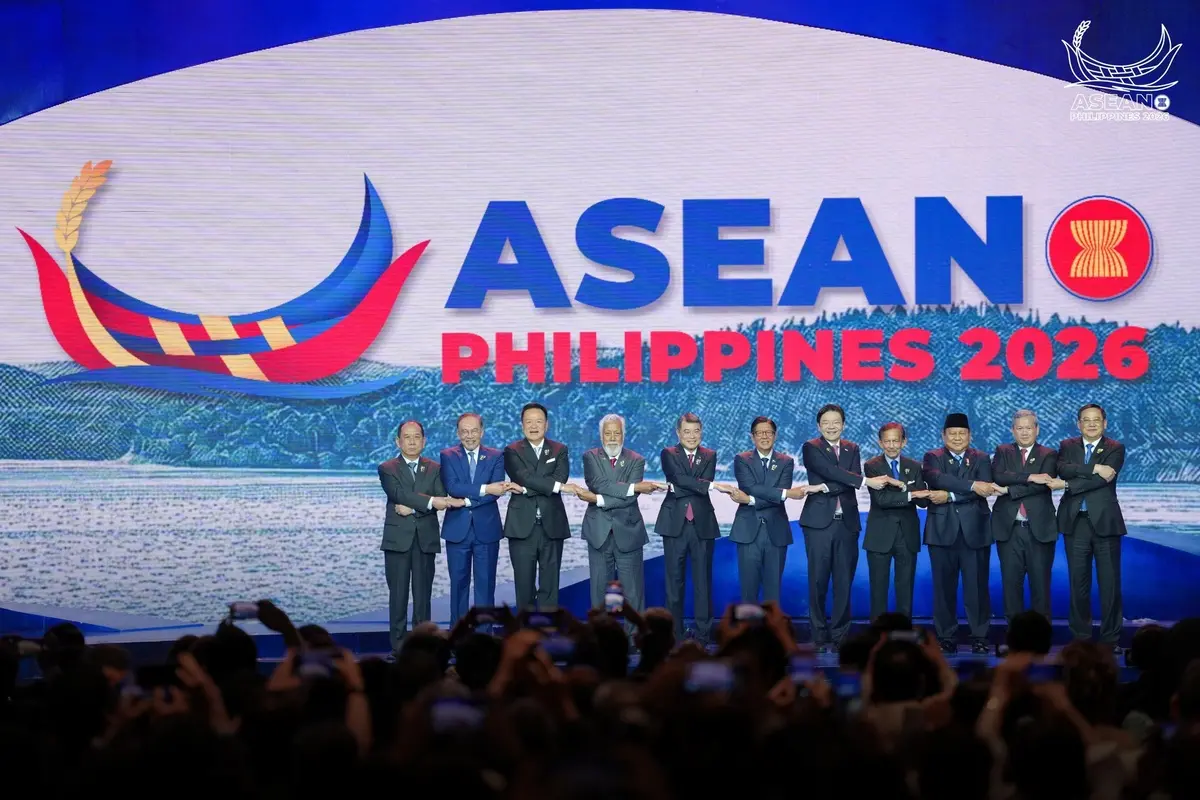
New Delhi: As Southeast Asia emerges as an increasingly consequential arena in global geopolitics, the 49th ASEAN Summit takes on significance beyond routine diplomatic engagement.
As regional powers navigate economic uncertainty, maritime disputes and intensifying strategic competition, India is looking to strengthen its position in the Indo-Pacific through deeper engagement with the Association of Southeast Asian Nations (ASEAN).
Prime Minister Narendra Modi is scheduled to visit the Philippines from November 16 to 17 to attend the 23rd ASEAN-India Summit and the 21st East Asia Summit on November 17, as Manila hosts the 49th ASEAN Summit and Related Summits from November 15 to 18, 2026.
The meetings are expected to provide an important platform for discussions on regional security, trade, connectivity and economic cooperation.
The summit comes at a time when questions surrounding maritime security, particularly in the South China Sea, and China's expanding regional influence continue to shape the strategic landscape.
For New Delhi, the engagement is an opportunity to reinforce diplomatic partnerships, explore economic opportunities and advance its broader Indo-Pacific priorities.
But what exactly is ASEAN, why is it important to India, and what key issues are likely to dominate the 2026 summit?
What is ASEAN?
Established on August 8, 1967, in Bangkok, Thailand, the Association of Southeast Asian Nations is a regional intergovernmental organisation aimed at promoting economic growth, political stability and cooperation among Southeast Asian countries.
Initially founded by five nations, ASEAN has expanded to include 11 members: Indonesia, Malaysia, the Philippines, Singapore, Thailand, Brunei Darussalam, Vietnam, Laos, Myanmar, Cambodia and Timor-Leste. The latter became its 11th full member on October 26, 2025.
The grouping operates through three broad pillars: political-security cooperation, economic integration and socio-cultural collaboration.
These encompass everything from regional conflict resolution and trade facilitation to education, healthcare, environmental protection and cultural exchanges.
Unlike military alliances such as NATO, ASEAN does not function as a collective defence arrangement. It is guided largely by consensus, diplomatic dialogue, respect for sovereignty, and non-interference in member states' domestic affairs.
Why does ASEAN matter to India?
For India, ASEAN represents a significant economic and strategic gateway to Southeast Asia.
Its importance extends beyond geographical proximity, making the grouping a central component of New Delhi's Act East Policy and its broader Indo-Pacific engagement.
India's association with ASEAN began in 1992, when it became a Sectoral Dialogue Partner.
The relationship subsequently evolved into a Dialogue Partnership in 1995, summit-level engagement in 2002, a Strategic Partnership in 2012 and a Comprehensive Strategic Partnership in 2022.
There are several reasons why India considers ASEAN an important regional partner.
1. Trade and economic opportunities
ASEAN is among India's significant trading partners, with bilateral merchandise trade reaching $106.83 billion in 2024. India was the grouping's eighth-largest trading partner during the year. The relationship provides opportunities for Indian businesses across pharmaceuticals, information technology, electronics, manufacturing, agriculture, renewable energy and infrastructure. Stronger commercial engagement can also help Indian businesses access Southeast Asian markets and integrate into regional supply chains. For New Delhi, improving trade relations with ASEAN is an important part of diversifying economic partnerships.
2. Strategic significance in the Indo-Pacific
The Indo-Pacific has become a crucial theatre of international trade and geopolitical engagement. ASEAN's geographical position gives it considerable importance, particularly because several major maritime routes connecting the Indian and Pacific Oceans pass through the region. India has consistently emphasised the importance of freedom of navigation, respect for international law and an open, inclusive Indo-Pacific. Closer engagement with ASEAN countries allows New Delhi to strengthen maritime partnerships and expand its diplomatic presence in a region of growing strategic importance.
3. China's expanding influence
China's growing economic and strategic footprint across Southeast Asia remains an important factor in the region's geopolitical calculations. For India, stronger engagement with ASEAN offers an avenue to expand regional partnerships and deepen cooperation with countries that occupy strategically important positions in the Indo-Pacific. However, ASEAN is not an anti-China alliance. Its member countries maintain different economic and diplomatic relationships with Beijing, making regional consensus on geopolitical questions particularly important.
4. Connectivity with Southeast Asia
India's northeastern region offers considerable potential for improving connectivity with Southeast Asian markets. Road, maritime and trade connectivity projects can facilitate the movement of goods, strengthen commercial exchanges and create opportunities for businesses across the region. India's Act East Policy seeks to transform geographical proximity into stronger economic and strategic partnerships with Southeast Asia.
What is at stake at the ASEAN Summit 2026?
The summit comes against a complicated regional backdrop, with several economic and geopolitical issues likely to shape discussions.
1. South China Sea tensions and maritime security
Maritime security is among the most consequential issues confronting Southeast Asia. The South China Sea remains a contested maritime region, with overlapping territorial and maritime claims involving China and several ASEAN members. The Philippines, which is hosting the 2026 summit, is among the countries directly involved in these disputes. India has a significant interest in maintaining secure maritime trade routes and upholding freedom of navigation under international law. Any escalation in the region could affect international shipping, commercial activity, and broader Indo-Pacific stability. For New Delhi, maritime cooperation with ASEAN is therefore an important component of its regional engagement.
2. India-ASEAN trade agreement review
Economic cooperation is another key agenda item, particularly the review of the ASEAN-India Trade in Goods Agreement (AITIGA). Signed in 2009 and implemented in 2010, the agreement was intended to reduce tariffs and facilitate the exchange of goods between India and ASEAN. However, India has pushed for a review to make the arrangement more balanced and beneficial for businesses on both sides. Concerns over trade imbalances and market access have added urgency to the negotiations. The 15th meeting of the AITIGA Joint Committee was held in October 2026, with both sides discussing progress on the review.
The outcome of these negotiations could have implications for India's exporters, manufacturers and broader commercial engagement with Southeast Asia.
3. Regional conflicts and geopolitical uncertainty
The Myanmar crisis, continuing tensions in the South China Sea and wider geopolitical competition present considerable challenges for ASEAN. The grouping has traditionally relied on dialogue and consensus to address regional disputes. However, differing national interests among its members can complicate efforts to formulate a common response. The summit will give regional leaders an opportunity to discuss these challenges and explore avenues for diplomatic cooperation.
4. Digital economy, energy and emerging technologies
Beyond traditional security and trade concerns, India and ASEAN are seeking to expand cooperation in emerging sectors. Digital transformation, renewable energy, digital payments, food security, the blue economy and science and technology are among the areas offering scope for deeper engagement.
The ASEAN-India Plan of Action for 2026-2030 provides a framework for strengthening cooperation across these sectors.
What is PM Modi's agenda at the summit?
Modi's participation in the 23rd ASEAN-India Summit and the 21st East Asia Summit is expected to reinforce India's engagement with regional partners. The discussions will focus on reviewing the Comprehensive Strategic Partnership and identifying opportunities to expand cooperation across economic, political and security sectors. Key areas of India's engagement include maritime security, trade, investment, regional connectivity, digital technology and renewable energy.
The visit also coincides with the ASEAN-India Year of Maritime Cooperation in 2026. Both sides are looking ahead to 2027, which will mark 35 years of ASEAN-India Dialogue Relations.
For India, the meetings offer an opportunity to articulate its regional priorities while strengthening cooperation with Southeast Asian countries amid considerable geopolitical uncertainty.
Why is the Philippines hosting the summit?
The Philippines is chairing ASEAN in 2026 under the organisation's rotating chairmanship arrangement, under which member countries take turns leading the grouping.
Manila is hosting the 49th ASEAN Summit and related meetings under the theme 'Navigating Our Future, Together'.
The theme reflects the challenges confronting the region, including geopolitical tensions, economic uncertainty, climate change, technological disruption and transnational security threats.
As chair, the Philippines will play an important role in steering discussions and facilitating cooperation among ASEAN members.
What makes the 2026 summit important?
The significance of the 2026 ASEAN Summit extends beyond the meetings themselves. It comes at a time when Southeast Asia is navigating competing strategic interests, shifting economic relationships and growing maritime security concerns.
For India, ASEAN remains an important partner in strengthening its economic presence, expanding regional connectivity and advancing its Indo-Pacific engagement.
However, the extent to which these objectives translate into concrete outcomes will depend on sustained diplomatic engagement, progress in trade negotiations and the ability of regional countries to find common ground on security challenges.
As global attention increasingly shifts towards the Indo-Pacific, India's relationship with ASEAN is likely to remain an important part of its regional diplomatic and economic strategy.