BJP’s Agnimitra Paul secures landmark victory in Bengal’s Asansol Dakshin
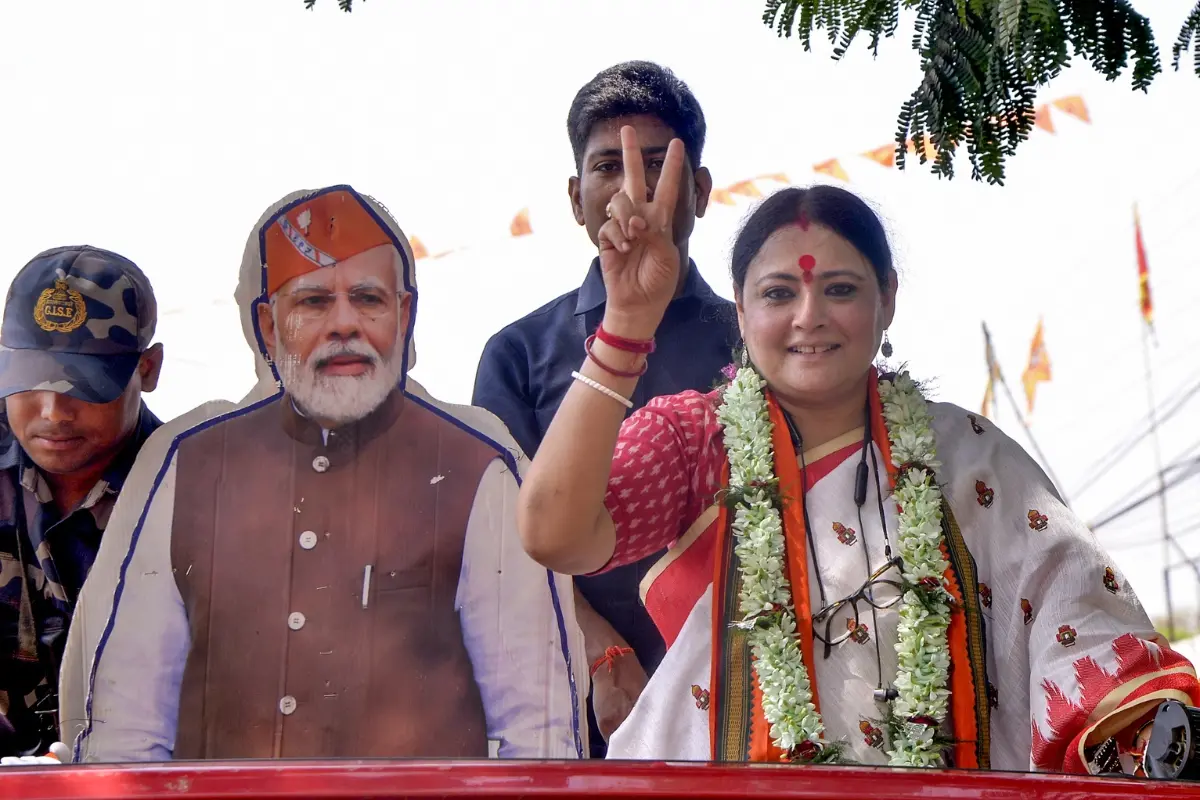
Asansol Dakshin: Incumbent Bharatiya Janata Party (BJP) legislator Agnimitra Paul has successfully defended her seat in the Asansol Dakshin assembly constituency, securing a victory over the Trinamool Congress (TMC) candidate Tapas Banerjee by a margin of 40,839 votes, the Election Commission confirmed Monday.
Following 15 rigorous rounds of counting, Paul finished with a total of 1,19,582 votes. Her primary opponent, Banerjee, garnered 78,743 votes. The victory solidifies the BJP’s influence in the industrial heartland of West Bengal as the party continues to show strength in the state’s 2026 general assembly elections.
ALSO READ: 'EVMs hacked' says TMC's Madhuparna Thakur
The ‘Silent’ Mandate of the Coal Belt
The electoral cycle in this industrial corridor was defined by what regional analysts termed a "silent" voting pattern. Throughout the various polling phases, the electorate within the colliery districts reportedly maintained a high degree of secrecy regarding their political inclinations.
This characteristic discretion made the industrial belt exceptionally difficult for pollsters to project. Ultimately, the "silent" mandate delivered by the coal mine workers proved to be the pivotal factor in the final tally for the Paschim Bardhaman district.
ALSO READ: Did SIR really bring down Mamata Banerjee in West Bengal election 2026?
The 2026 Field of Candidates
The final results emerged from a competitive field that included:
- Agnimitra Paul (BJP)
- Tapas Banerjee (TMC)
- Souvik Mukherjee (INC)
- Silpi Chakraborty (CPIM)
- Bibekananda Sadhu (AB)
- Anup Bhattacharya (SUCIC)
- Independent Candidates: Dipika Bauri and Asgar Ali.
Constituency Profile and Strategic Stakes
Asansol Dakshin is an essential industrial centre, marked by its sprawling coal mines, steel production plants, and a large demographic of Hindi-speaking migratory workers. The outcome in this region is traditionally regarded as a definitive test of a party’s credibility with the working class and its ability to navigate the complex socio-economic demands of a major manufacturing hub.
The 2026 campaign saw a clash between the BJP’s robust organisational infrastructure and the TMC’s welfare-centric platform. Paul, a well-known fashion designer who transitioned into high-profile politics, aimed to demonstrate the BJP's enduring appeal among the non-Bengali workforce. Conversely, Banerjee—who previously held the seat in 2011 and 2016—focused the TMC’s efforts on regional development and labour initiatives in an attempt to recover the former stronghold.
ALSO READ: 'Victory for PM Modi': BJP leaders say people of Bengal have voted for change
Historical Significance
In the previous assembly election cycle, Asansol Dakshin served as a landmark acquisition for the BJP. Paul’s initial victory signalled a significant realignment of political loyalties within the industrial belt, establishing the area as a vital stronghold for the opposition in the western reaches of the state.
While statewide exit polls published on April 29 had anticipated a precarious, "neck-and-neck" struggle for the 148-seat majority, Paul’s comfortable margin suggests the BJP successfully insulated its industrial vote bank against the ruling party’s outreach efforts.
With inputs from PTI