‘Almost eradicated’: Amit Shah declares Chhattisgarh’s Bastar free from Naxalism in Lok Sabha
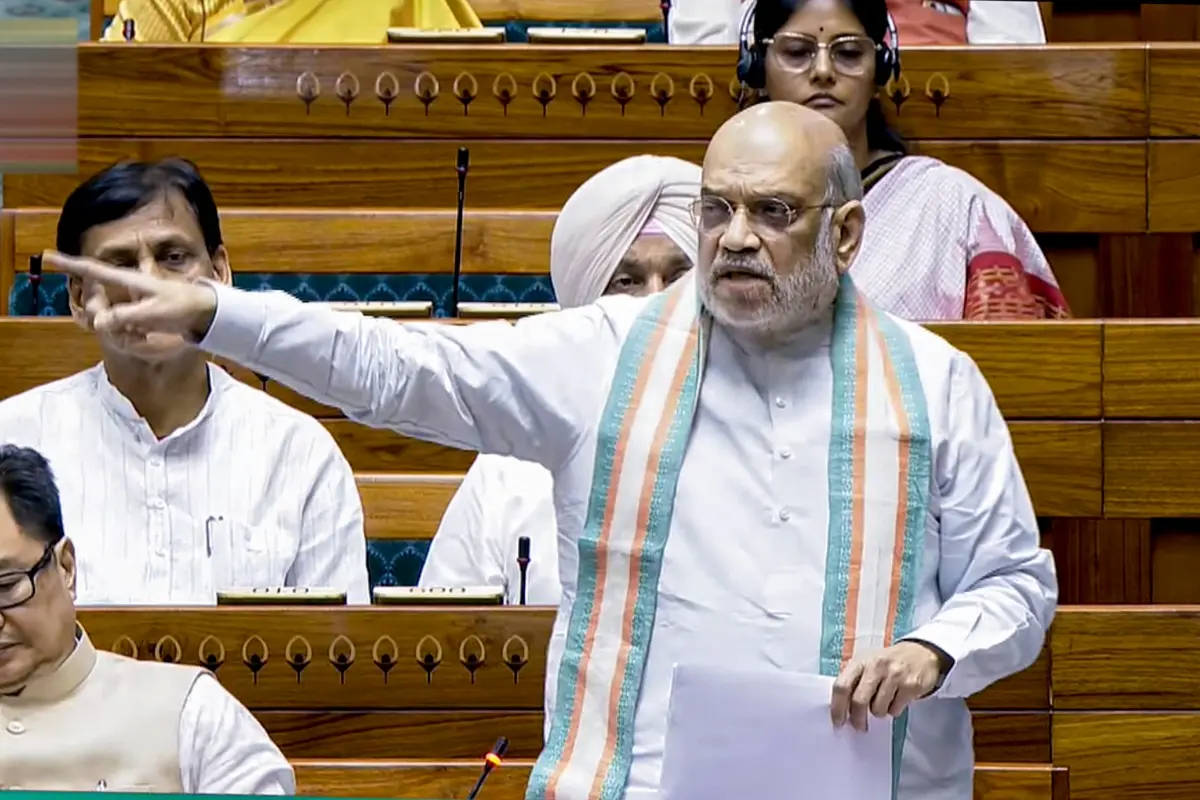
New Delhi: Union Home Minister Amit Shah declared in the Lok Sabha on Monday that Naxalism has been "almost eradicated" from Chhattisgarh’s Bastar region, asserting that the area has finally transitioned from the "shadow of Red Terror" to a path of modern progress.
Replying to a high-profile debate on the government's mission to eliminate Left Wing Extremism (LWE), Shah launched a pointed critique of the Congress party, questioning why tribal communities remained marginalised during their decades in power. The Home Minister’s remarks come as the government nears its self-imposed March 31 deadline for the total elimination of Naxalism in India.
Development in the "Red Corridor"
Shah argued that for years, development parameters in Bastar were stunted by the presence of insurgent violence. He credited the administration of Prime Minister Narendra Modi with systematically replacing the influence of extremist ideology with essential state services.
"Today, Naxalism has been almost eradicated from Bastar. A campaign was launched to establish a school in every single village across Bastar. A drive was undertaken to open a ration shop in every village within the region," Shah told the House. He noted that Primary Health Centres (PHCs) and Community Health Centres (CHCs) now operate in every Tehsil and Panchayat, while residents are finally receiving Aadhaar cards, ration cards, and guaranteed food grains.
"I simply wish to ask those who were here advocating on behalf of Naxalism: Why have the people not received these benefits till now?" he asked. "The people of Bastar were left behind precisely because the shadow of 'Red Terror' loomed over the region; that is why development failed to reach them. Today, that shadow has been lifted."
Political Accountability
The Home Minister emphasised that grievances should be addressed through constitutional channels rather than violence. He challenged the opposition to account for the lack of infrastructure in tribal belts during their 60-year tenure.
"For sixty years, you failed to provide them with homes or access to clean water; you built no schools for them; you prevented mobile towers and banking facilities from reaching their areas, and yet, now you are the ones demanding accountability?" Shah said.
He further alleged that the root of the insurgency was not a lack of resources, but a specific political history. "The root cause of Naxalism is not the demand for development. It is an ideology--an ideology that Indira Ji embraced back in 1970 in order to win the presidential election. Naxalism has spread precisely because of this Leftist ideology," Shah claimed.
The Human Cost
Reflecting on the scale of the conflict, Shah noted that a "Red Corridor" once stretched across 12 states, including Chhattisgarh, Telangana, Odisha, and West Bengal. He stated that this lawlessness trapped 12 crore people in poverty and resulted in the loss of thousands of young lives.
"Twelve crore people lived in poverty for years, and no one showed any concern. Thousands of young lives were lost. Many were left permanently disabled or crippled for the rest of their lives. Who is responsible for this?" he asked.
The debate concluded with a reaffirmation of the government’s commitment to securing the final vestiges of the LWE-affected zones.
With inputs from ANI