Delhi blast: Al-Falah University calls website errors ‘unintentional’ after NAAC flags misleading accreditation
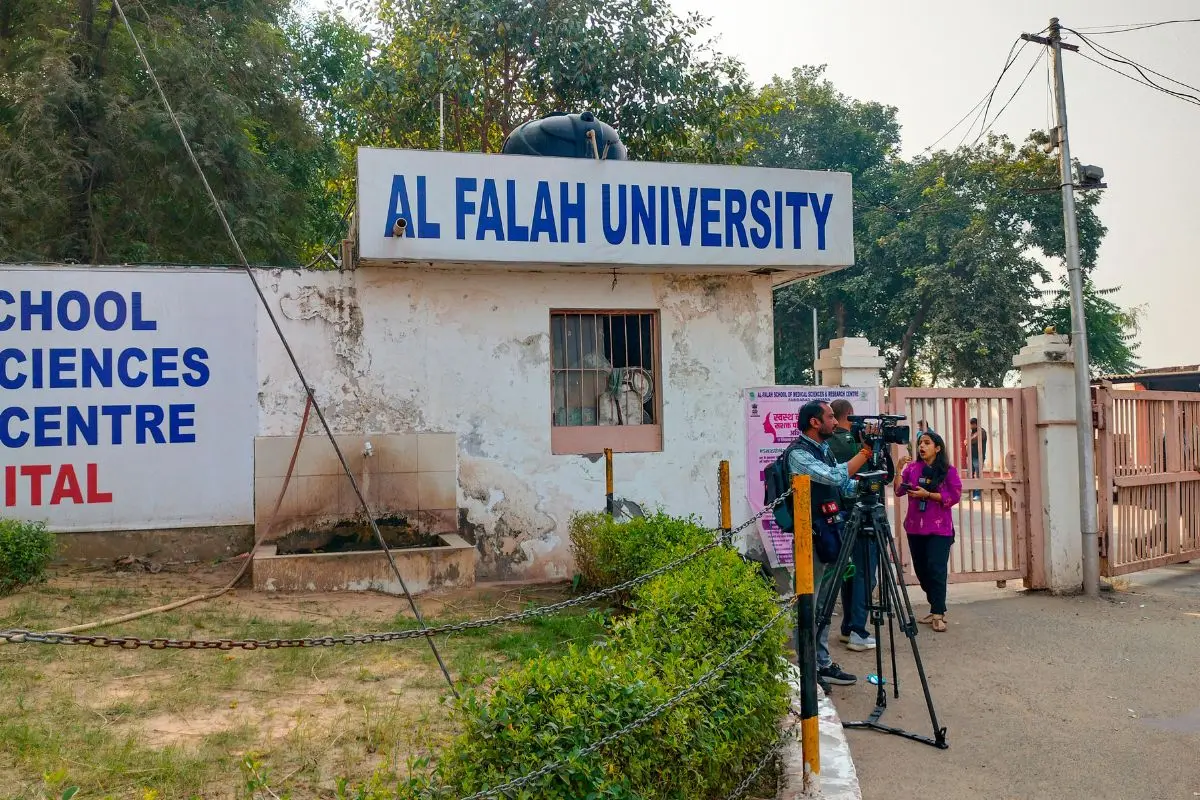
Faridabad’s Al-Falah University, already under sharp scrutiny after investigators linked members of its medical college to the 10 November Red Fort blast has submitted its formal response to the National Assessment and Accreditation Council (NAAC). The council had issued a show-cause notice on 12 November, and two senior officials confirmed on Friday that the institution has now replied.
According to the officials, the university acknowledged that outdated accreditation information on its website resulted from “oversight,” “website-design errors,” and “unintentional lapses.” They said the university appeared “apologetic” and confirmed that all misleading material had been removed. No further action is currently under consideration.
NAAC Flags Misleading Accreditation Claims
The notice was issued just two days after several doctors from the university’s medical college were linked by investigators to the Red Fort explosion, which killed at least 12 people. NAAC had found the university was displaying “absolutely wrong and misleading” accreditation details, including an “A Grade” for its engineering college from 2013 and accreditation for its teacher education school dating to 2011, despite both having expired after five years.
The council ordered the institution to take down all inaccurate claims, provide a compliance report, and respond within seven days.
A senior NAAC official said the university gave a “long explanation” for the presence of outdated information, maintaining that it was due to oversight and website errors. “They said the pages have now been taken down,” the official stated.
Officials Say University’s Response Lacked Clarity
A second NAAC official noted that the reply “was not entirely straightforward.” He said the university attributed the issue to old webpages that had been overlooked and to a staff member who failed to remove expired material. “They were apologetic and insisted it was not intentional,” he said, adding that manually monitoring thousands of institutions is difficult, especially when obsolete details are hidden on internal pages.
Following the Al-Falah incident, NAAC has issued similar notices to around 25 other institutions found displaying expired accreditation grades, part of a wider effort to strengthen transparency.
NAAC Strengthens Oversight
Officials said the notices form part of NAAC’s ongoing push to ensure institutions accurately present their accreditation status. The council has repeatedly warned against misrepresentation. A “cautionary note” issued in March 2018 stated that false or outdated accreditation information could mislead stakeholders and potentially expose institutions to “stringent action.”
Scrutiny Widens as Enforcement Directorate Makes Arrest
The situation around Al-Falah University escalated further on 18 November when the Enforcement Directorate arrested Jawad Ahmed Siddiqui, chairman of the Al-Falah group, in a money-laundering case linked to alleged fraudulent accreditation claims and financial irregularities.
The Association of Indian Universities has since revoked the university’s membership. Meanwhile, the National Medical Commission has removed four doctors — Muzaffar Ahmad Rather, Adeel Ahmad Rather, Muzammil Shakeel Ganaie and Shaheen Shahid — from its medical register after they were booked under the Unlawful Activities (Prevention) Act in connection with the Red Fort blast.
On 12 November, vice-chancellor Bhupinder Kaur issued a statement seeking to distance the institution from the arrested doctors, asserting that the university had “no connection” with them beyond their professional roles.