47.5 lakh names missing from Delhi voter list; special camps receive only 27,510 inclusion requests
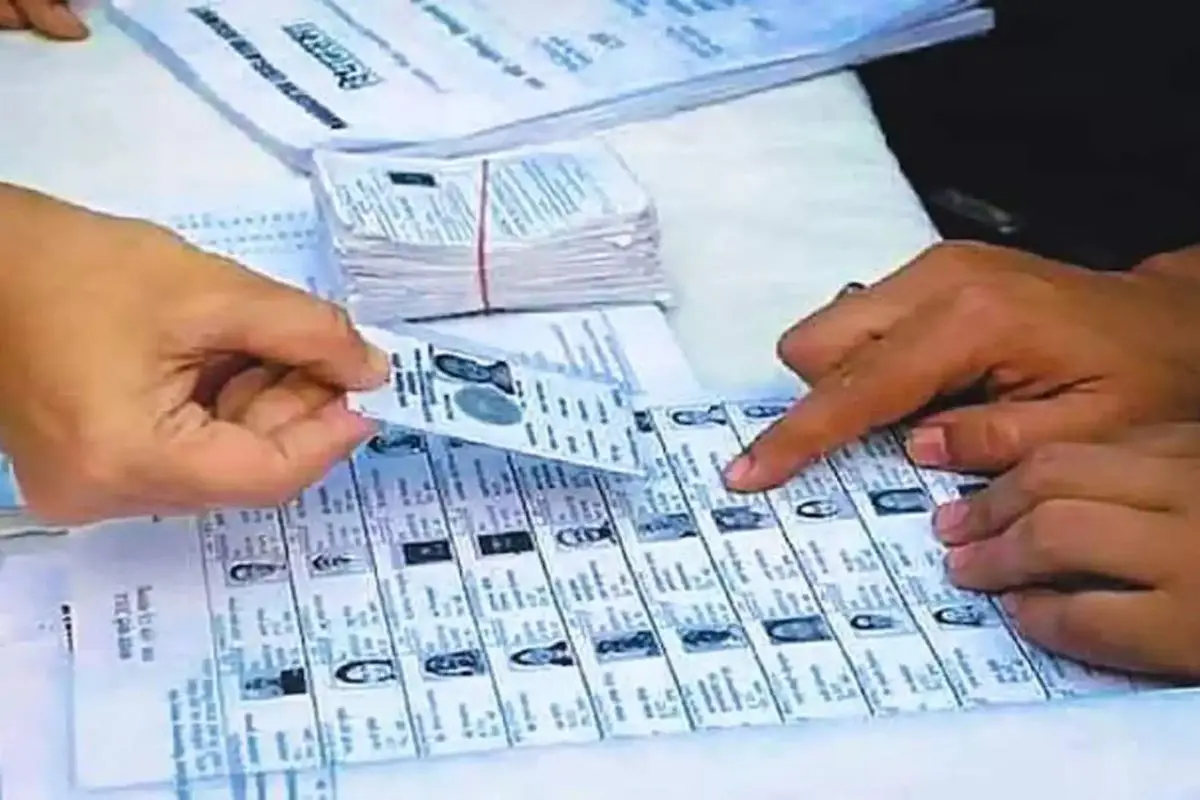
New Delhi: With 47.5 lakh voters excluded from Delhi's draft electoral rolls following the Special Intensive Revision (SIR), just 27,510 applications seeking inclusion were submitted through special enrolment camps, according to figures released by the office of the Delhi Chief Electoral Officer (CEO) on Tuesday.
The figures come as the revision exercise enters its final phase, with the Election Commission scheduled to publish the final electoral rolls on December 4.
Delhi had 1.45 crore registered voters when the SIR exercise began. However, the draft rolls published on August 31 contained only 97.53 lakh names, leaving 47.5 lakh electors classified under the absent, shifted, dead or duplicate (ASDD) category.
Between August 31 and October 26, election authorities received 2.67 lakh Form 6 applications from people seeking inclusion in the final voter list. Of these, 27,510 applications were submitted at special camps organised across the national capital.
The figures indicate a substantial gap between the number of names excluded from the draft rolls and the applications received for fresh inclusion. However, the ASDD category also includes deceased voters, duplicate entries and people who have shifted residence, meaning not all 47.5 lakh exclusions necessarily represent eligible voters seeking restoration.
Over 1.49 lakh camps organised across Delhi
To facilitate voter registration and corrections, election authorities conducted more than 1.49 lakh camps at 14,947 polling stations, colleges, universities and other designated locations.
These drives generated 38,849 applications, comprising 27,510 Form 6 applications for inclusion, 10,729 Form 8 applications for changes such as address shifts and corrections, and 610 Form 7 applications relating to objections and deletions.
Polling station-based camps accounted for the majority of submissions, receiving 36,305 applications. These included 25,255 Form 6 applications, 10,441 Form 8 applications and 609 Form 7 applications.
The highest single-day response at these camps was recorded on September 27, when officials received 9,067 applications, including 6,060 Form 6 and 2,829 Form 8 submissions.
The final round of camps, conducted on October 25, saw 4,388 applications, including 3,265 requests for inclusion, 1,004 applications for corrections or address changes, and 119 objections.
Election officials also organised dedicated enrolment camps for homeless individuals, transgender persons and sex workers.
These camps received 557 applications, of which 549 were Form 6 submissions seeking inclusion in the electoral rolls. The remaining applications comprised seven Form 8 submissions and one Form 7 application.
Separate outreach initiatives targeted residents displaced following demolitions in several parts of Delhi, including Bela Estate, Jailor Wala Bagh, Narela, Bawana, Mangolpuri and Wazirpur Industrial Area.
Colleges and universities record 1,987 applications
Special registration drives at colleges, universities and other educational institutions, aimed primarily at voters aged between 18 and 25, received 1,987 applications.
Of these, 1,706 were Form 6 applications, while 281 were Form 8 submissions. No Form 7 applications were received during these drives.
September 30 witnessed the highest response from educational institutions, with 563 applications submitted, including 483 Form 6 and 80 Form 8 applications.
Over 20,000 objections filed since draft roll publication
Apart from the 2.67 lakh Form 6 applications received after the publication of the draft rolls, authorities recorded 20,074 Form 7 applications and more than one lakh Form 8 applications during the claims and objections period ending October 26.
Before the draft rolls were released, the Election Commission had received 2.12 lakh Form 6 applications, 51,471 Form 7 applications and 2.60 lakh Form 8 applications until August 30.
Meanwhile, Booth Level Officers (BLOs) have continued door-to-door visits to identify eligible voters whose names do not appear on the draft rolls and assist them with the application process.
Electoral Registration Officers are also providing recognised political parties with weekly lists of such electors to facilitate further verification and outreach.
The final electoral rolls are scheduled to be published on December 4.