19 minute viral videos: How unhealthy curiosity is fuelling online misinformation
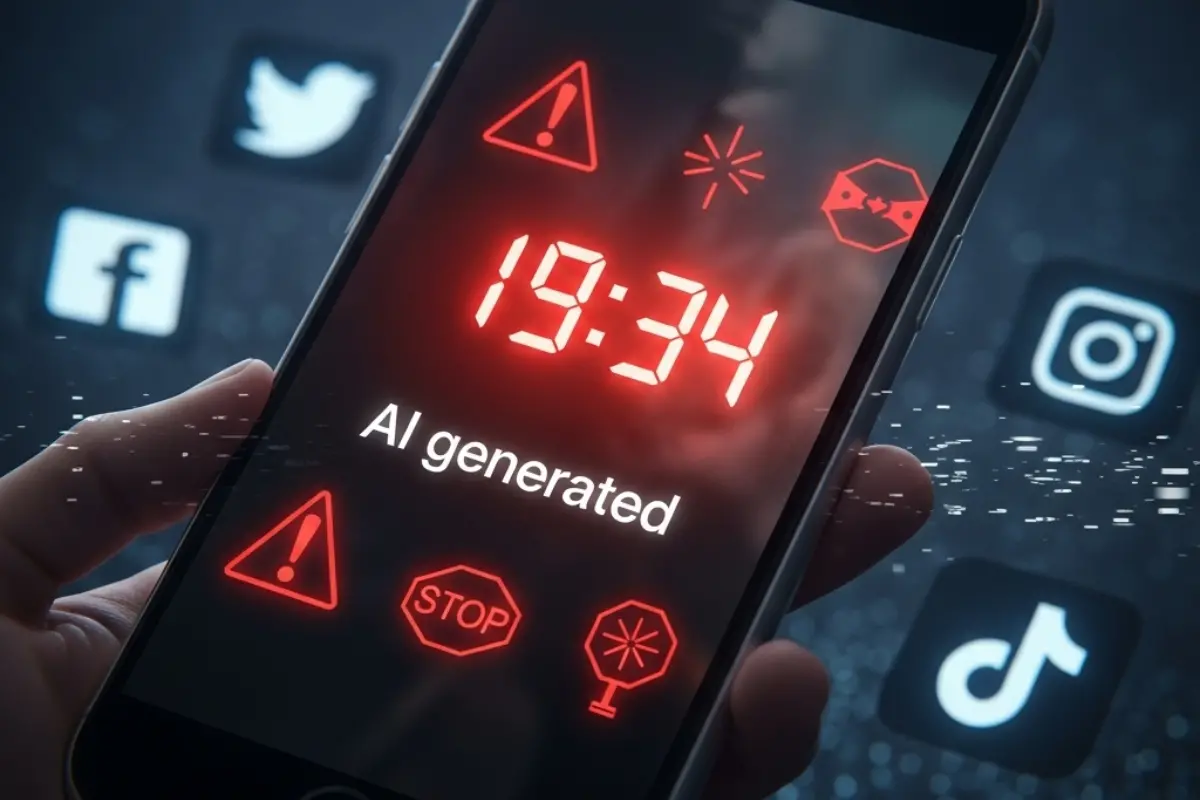
The so-called “Instagram couple’s 19-minute viral video”, often described as being 19 minutes and 34 seconds long, has triggered widespread confusion, curiosity and concern across social media platforms. The trend has been particularly prominent in India, Pakistan and Bangladesh, where millions of users have searched for the clip despite not knowing its origin or authenticity.
Despite the massive online buzz, police authorities have confirmed that the video does not exist in any verified form.
Police confirm the viral clip is fake and AI-generated
The Haryana Police Cyber Cell has issued an official warning stating that the viral video circulating online is entirely AI-generated. In a video message shared on social media, cyber officer Amit Yadav clarified that the footage being discussed has been created using artificial intelligence tools and is not a real recording.
He also warned that several users are forwarding so-called “Part 2” and “Part 3” versions of the clip, which appear to be fabricated in the same manner.
Authorities urge users to stop sharing immediately
Police have urged the public to immediately stop downloading, uploading or forwarding the alleged video. Authorities cautioned that many users are unknowingly engaging in illegal activity by sharing unverified and misleading content.
Yadav further pointed out that tools such as Sightengine can help users check whether a video has been created or manipulated using AI, and advised people to verify content before reacting or sharing it online.
Sharing the video can lead to serious legal consequences
Legal experts and police officials have stressed that sharing such content can attract severe punishment under Indian law. Under Section 67 of the Information Technology Act, circulating obscene material can lead to up to three years of imprisonment and a fine of up to ₹5 lakh for a first offence, with stricter penalties for repeat violations.
Section 67A carries even harsher punishment, including up to five years in prison and a fine of ₹10 lakh. Related provisions under IPC Sections 292, 293 and 354C, which deal with obscene and intrusive content, may also apply.
Similar to the ‘5 minute 39 second viral video’ trend
The controversy closely mirrors earlier online trends such as the “5 minute 39 second viral video link”. In both cases, no original or verified video has surfaced, identities remain unknown, and no official authority has validated the content.
Experts have warned that such clips may be edited, manipulated or completely AI-generated, making them unreliable and potentially harmful.
Why specific timestamps fuel viral misinformation
Digital culture analysts note that precise timestamps like 19:34 or 5:39 play a psychological role in fuelling virality. Specific numbers create a sense of secrecy, exclusivity and urgency, increasing click-through rates and search behaviour even when no real content exists.
This psychological trigger often pushes rumours into trending territory without factual backing.
What users actually see on social media
Instead of real videos, users are encountering reaction reels, memes, misleading “link in bio” posts and hashtags with no original source. WhatsApp forwards and influencer reactions have further amplified the rumours, creating a feedback loop where curiosity drives searches despite the absence of verified information.
Final message from police and cyber experts
Police and cyber safety professionals have reiterated a clear message: the trends are real, but the videos are not. Users are advised to avoid sharing unverified clips, report suspicious content to cybercrime authorities, and remain cautious in an era where AI and misinformation can easily blur the line between reality and fabrication.