Why was a hammer used? Why did no one hear screams? More questions than answers
Thiruvananthapuram: The brutal murder of four family members and a girlfriend by a hammer-wielding Affan has left the community in shock, raising many unanswered questions. Why did the accused, Affan, choose a hammer as his weapon? Why were six people attacked, yet no one heard their screams? The killings, which unfolded in a matter of hours, have left residents grieving and struggling to comprehend the brutal violence.
Affan, the accused, is suspected to have chosen a hammer as his weapon based on his knowledge of its impact, which he may have gained from information found on the internet. Experts suggest that such a weapon, when used on vulnerable people, can have a devastating effect. The victims, all elderly or physically weak, were unable to defend themselves, making the weapon’s destructive power even more lethal.
The hammer's choice appears to have been a deliberate one. Experts indicate that the weight of the hammer and the speed with which it was wielded would have caused immediate and fatal injuries. Dr PB Gujral, a former police surgeon and medico-legal expert, noted that hammer-related murders are extremely rare in Kerala, making this case particularly tragic. He also suggested that the victims likely lost consciousness and succumbed to fatal injuries almost instantly due to the strong blows to their heads. Studies on similar cases support this theory.
A timeline of tragedy
The horrific events began around 1:00 pm when Affan arrived at his grandmother Salma Beevi’s house. Without warning, he struck her on the head with the hammer, killing her instantly. Within just eight minutes, he returned without any change in expression after committing such a gruesome act. The hammer was still hidden in his shoulder bag. The house where the murder took place is near the road from Kallara-Pangode road to Thazhe Pangode Juma masjid. CCTV footage captured Affan returning via a different route from the one he initially took.
Blood may have splashed onto Affan’s body during the attack, but he returned in the same attire, showing no signs of panic.
When Salma Beevi’s body was found, the initial assumption was that she had died from a fall. However, the deep wound on her head raised suspicions. Neighbours, who frequently visited her, had not heard any signs of struggle or disturbance. There were no indications of robbery or forced entry into the house. Salma’s body was found in the kitchen, lying on the floor with her head facing the door. Despite blood spots scattered across the room, no one suspected foul play at first. However, the nature of the injury soon led police to suspect murder.
Tragically, Salma Beevi was just the first victim. As the police were investigating her death, Affan went on to murder his younger brother, a girlfriend, and another family member, all with the same hammer.
The news of Salma Beevi’s death reached the neighbours when her daughter, who visits her every night, arrived. By then, the Venjarammoodu police had already contacted them to confirm the murder.
The last rites
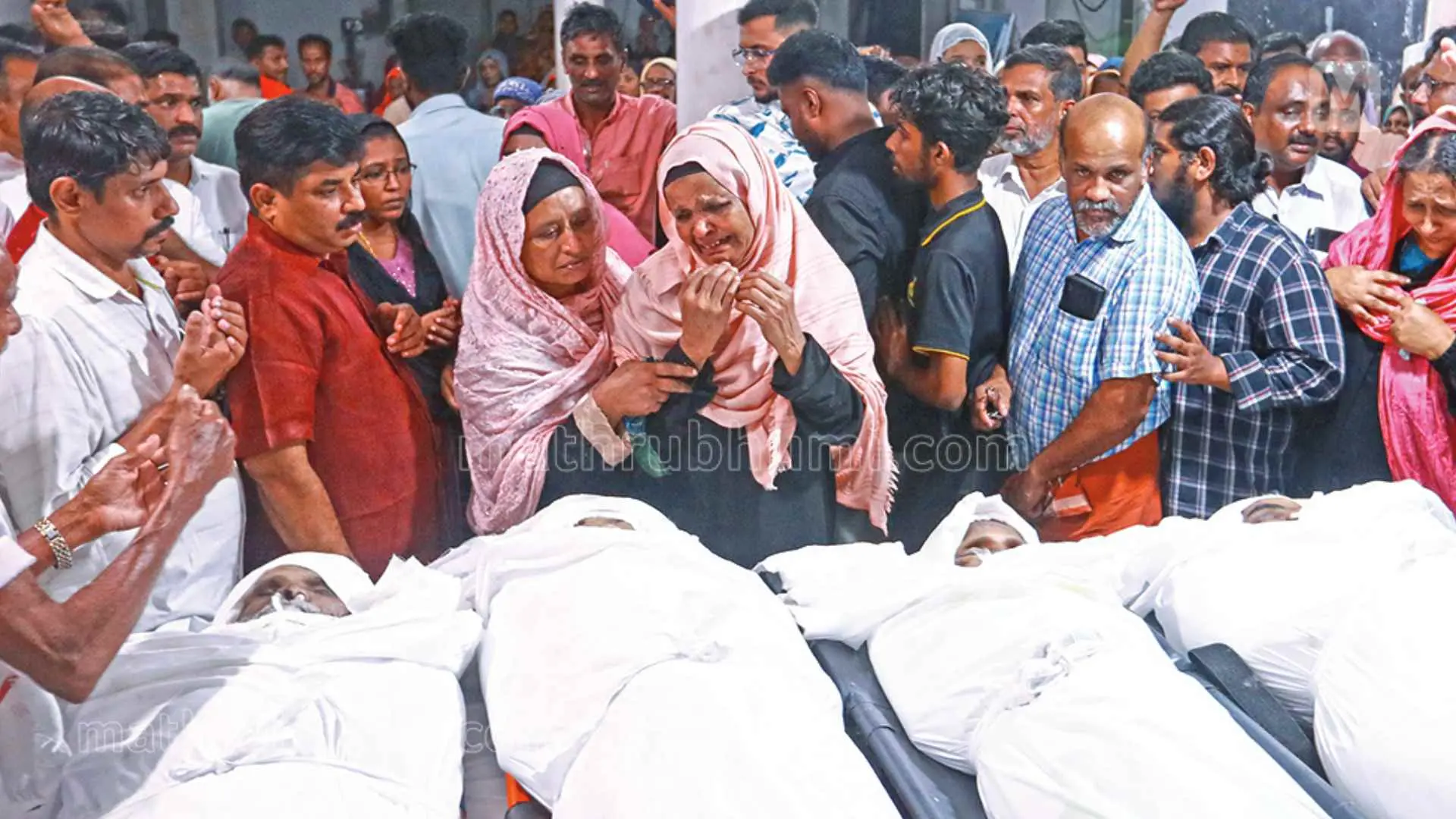
As the bodies of four family members were brought to a madrasa hall near the Thazhe Pangode Juma Masjid, mourners gathered in disbelief, struggling to comprehend the brutality of the crime. Many locals expressed their shock, saying they could not believe that people they knew personally had been murdered in such a violent way. “We had only heard about these brutal attacks. But when we hear that close acquaintances, whom we knew directly, were killed in this way, we can’t believe it,” said one mourner, clearly shaken by the tragedy.
The four family members, including Salma Beevi, were laid to rest at the Thazhe Pangode graveyard on Tuesday evening. Farsana, reportedly Affan's girlfriend, was buried at 4:00 pm in the Chirayinkeezhu Kattumurakkal graveyard, about 40 kilometres away.