Explainer: Why are farmers opposing the proposed India-US trade agreement?
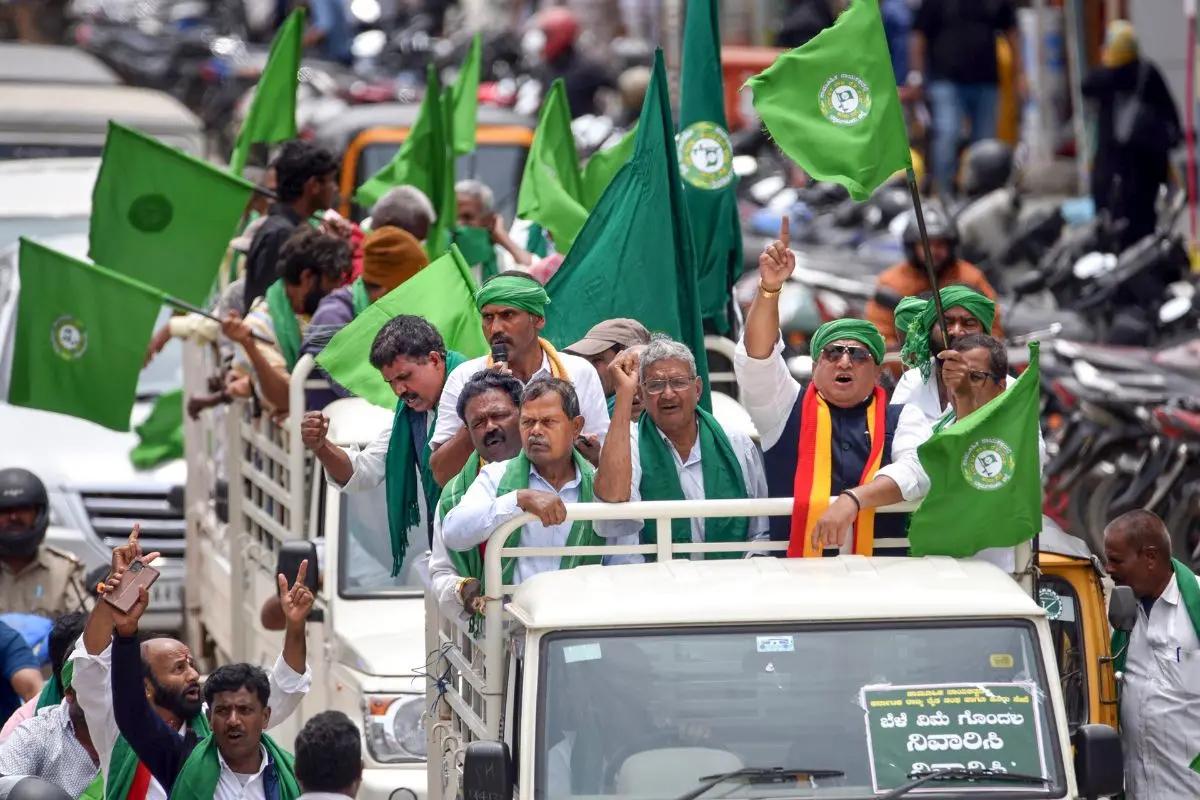
Even though India and the United States are yet to sign a trade agreement, thousands of farmers from Punjab, Haryana, Rajasthan and Himachal Pradesh are converging on Delhi to register their opposition.
Under the banner of the 'Desh Bachao Morcha', farmer organisations are holding a Mahapanchayat at Kisan Ghat, arguing that decisions taken during the negotiations could have long-term consequences for India's agricultural sector.
Ahead of the protest, Haryana Police tightened security at key entry points into the national capital.
Farmer convoys were stopped at the Khanauri and Bastara borders, while heavy barricading remained in place at the Shambhu border.
Restrictions under Section 163 of the Bharatiya Nyaya Sanhita (BNS) also continue in parts of the state.
The Centre, however, has repeatedly maintained that agriculture remains a non-negotiable area and that no agreement will be signed unless it protects India's interests.
Why are farmers protesting?
Farmer organisations say they cannot afford to wait until the agreement is signed, arguing that concessions made during negotiations may be difficult to reverse later. Their concerns include:
- Cheaper US farm imports: Farmers fear subsidised American agricultural products could enter India at lower prices, making it harder for local producers to compete.
- Fall in domestic crop prices: They believe increased imports could reduce prices for Indian produce, affecting farm incomes and rural livelihoods.
- Unequal government support: Farmer unions argue that American farmers receive significantly higher subsidies, putting Indian farmers at a competitive disadvantage.
- Impact beyond agriculture: Protesters claim the agreement could eventually cover dairy, digital trade, e-commerce, intellectual property rights, government procurement, industry and services, potentially affecting multiple sectors.
- Demand for transparency: Farmer leaders want the government to disclose more details of the negotiations and provide written assurances that agriculture and allied sectors will remain protected.
Farmer groups have been campaigning against the proposed agreement for months through rallies, demonstrations and symbolic protests, saying they want safeguards in place before any pact is finalised.
Why hasn't the deal been signed?
Despite several rounds of negotiations, India and the US have not reached an agreement.
According to reports, differences remain over tariff concessions and market access.
India is also seeking assurances that it will receive favourable tariff treatment compared to competitors and that the US will not impose fresh tariffs after the agreement comes into effect.
The Indian government has also indicated that it is unwilling to compromise on agriculture, describing it as one of its key ‘red lines’ during the negotiations.
Commerce and Industry Minister Piyush Goyal has reiterated that India will only sign a trade agreement that is balanced and beneficial for both countries. Trade Secretary Rajesh Agrawal has also said the framework for the agreement is ready, but negotiations will continue until both sides are satisfied with the final terms.
What has the government said?
The Centre has repeatedly sought to reassure farmers that sensitive agricultural products are not being sacrificed during the negotiations.
According to the government, any eventual agreement will include safeguards to protect domestic agriculture while creating opportunities for businesses, workers, farmers and consumers.
Officials have maintained that India will not compromise on its core agricultural interests merely to conclude a trade pact.
With agriculture emerging as one of the most contentious issues in the India-US trade talks, the standoff continues. While the government says it will not cross its red lines, protesting farmer organisations insist those assurances must be reflected in the final agreement before any deal is signed.