Corruption case: What Kerala HC said about findings on ex-DGP’s wealth despite suspending sentence
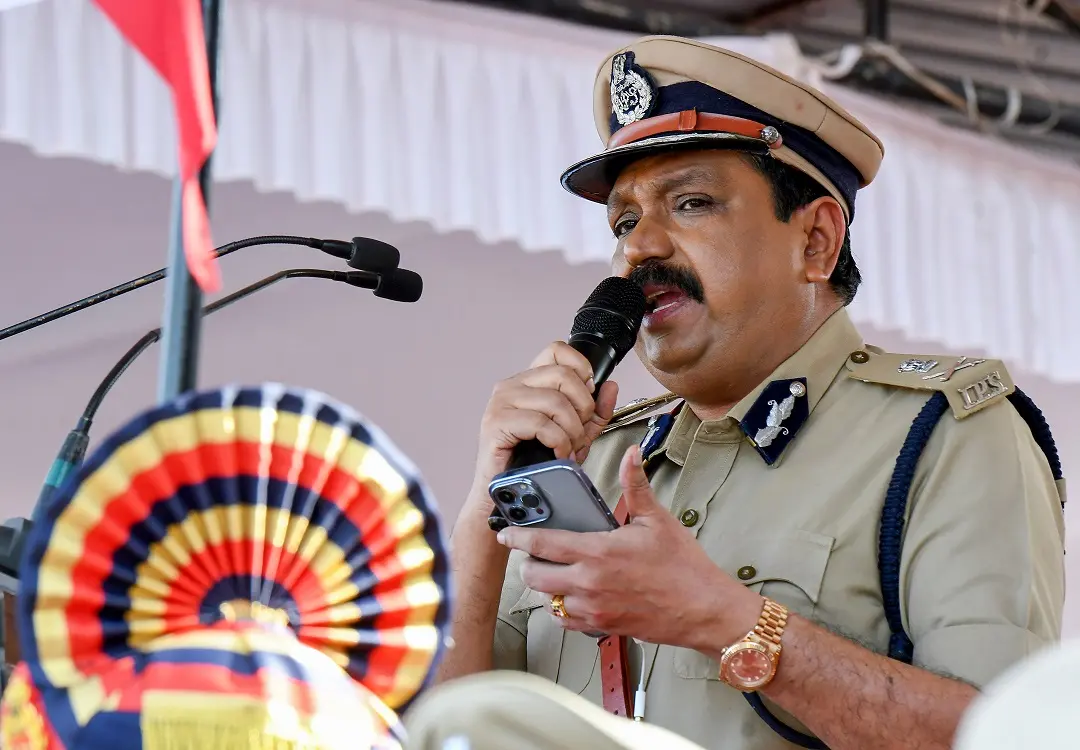
Kochi: The Kerala High Court on Thursday (October 15) suspended the four-year jail sentence of former Director General of Police (DGP) Tomin J. Thachankary in a corruption case, granting him temporary relief and bail pending appeal. Justice A. Badharudeen allowed the former police chief’s plea to halt his prison term, but strictly tied his release to heavy financial deposits and movement restrictions.
Court sets strict financial and travel conditions for release
While granting relief, the High Court made it clear that freedom would not come easy for the former senior officer. The court directed Thachankary to first deposit 75 per cent of the ₹30.84 lakh fine imposed on him by the trial court. Only after depositing this sum will he be permitted to execute a bail bond of ₹5,00,000 with two solvent sureties within one week.
The judge explicitly ordered that the bail bond shall not be executed, nor will the appellant be released from custody, without first depositing the required 75 per cent fine amount. In addition, the court mandated that Thachankary must not leave India without prior judicial permission. He was also warned against involvement in any other crimes, with the court noting that any such involvement would lead to the immediate cancellation of his bail.
High Court upholds trial findings despite granting relief
Despite granting temporary release, the High Court largely agreed with the trial court's assessment of the corruption charges. Justice Badharudeen observed that, on initial review (prima facie), there was no error in the vigilance court's finding that Thachankary had accumulated wealth beyond his legal earnings. The judge noted that the finding regarding his unexplained wealth "could not be faulted in any manner".
The court pointed out that although Thachankary held top positions in the police department and later became DGP, he failed to produce satisfactory documents to investigators to explain his wealth. Addressing his defense strategy, the High Court observed that calling 23 defense witnesses during trial was "a futile exercise, in the fact of the case". However, because the actual jail term handed down was relatively short, the court held that "this is a case in which the sentence imposed is only four years and in such view of the matter, the sentence can be suspended by imposing necessary conditions, in the interest of justice".
Prosecution highlights high rank while defense points to flaws
During arguments, the State's Special Public Prosecutor strongly opposed suspending the sentence, citing Thachankary's high position as former DGP and the gravity of official corruption. The prosecution emphasized that he had accumulated ₹30,84,892.39 in unexplained assets, which amounted to a 52.33 per cent excess over his known legal income. Investigators noted that he had purchased 18 properties in just four years during his tenure as Inspector General.
On the other hand, Senior Counsel B. Raman Pillai, representing Thachankary, argued that the trial court's findings were legally flawed and evidence was insufficient. In his appeal, Thachankary claimed there were procedural irregularities in the sanction order allowing his prosecution. He further contended that investigators miscalculated his rental earnings, property income, financial help from relatives, and assets legally purchased by his wife.
Trial court conviction and background of the case
The legal proceedings stem from a complaint filed by Bobby Kuruvila, which led to a detailed investigation by the Vigilance and Anti-Corruption Bureau (VACB). The VACB probe revealed that Thachankary had amassed over ₹64 lakh in total assets between 2003 and 2007.
On September 17, Special Judge K.V. Rajaneesh of the Kottayam Vigilance Court convicted Thachankary under Section 13(2) read with Section 13(1)(e) of the Prevention of Corruption Act, 1988. The trial court had sentenced him: "In the result, the convict is sentenced to: 1. Rigorous imprisonment for 4 (Four) years and to pay a fine of Rs.30,84,892/-... in default of payment of fine, he shall further undergo rigorous imprisonment for 2 (Two) months." Thachankary subsequently challenged this conviction before the High Court, resulting in Thursday's conditional suspension order.