One lived next door, another ran a hotel nearby: The men convicted in the Bilkis Bano case
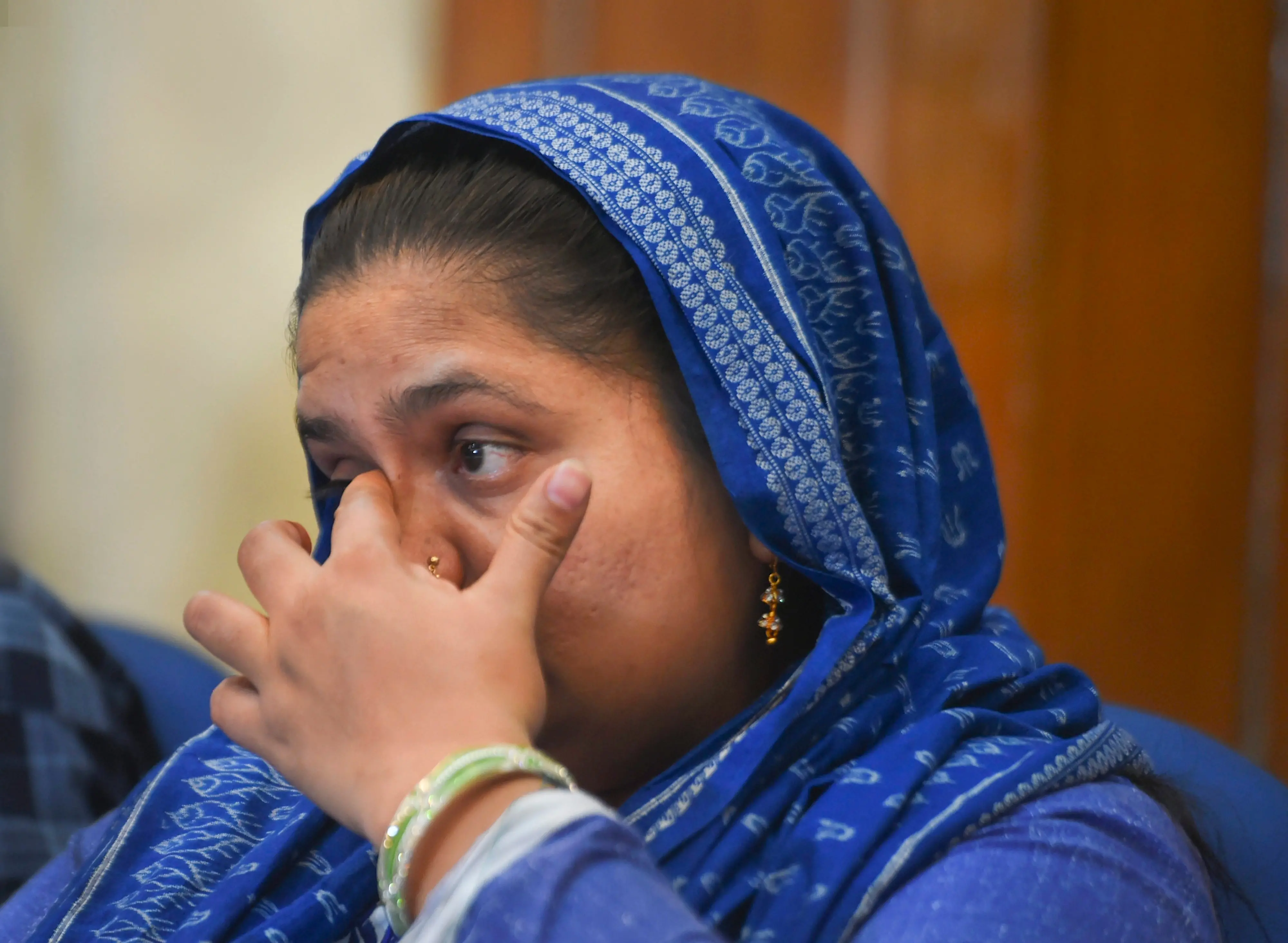
More than 24 years after the 2002 Gujarat riots, the Bilkis Bano gang-rape and murder case continues to return to the courts, raising questions about convictions, remission and the legal process. Bilkis was 21 and five months pregnant when she was gang-raped during the violence, while seven members of her family, including her three-year-old daughter, were killed.
Among the 11 men convicted in the case were Bipinchand Kanaiyalal Joshi, who lived next door to Bilkis, and Pradip Ramanlal Modhiya, who ran a hotel in the same locality. The trial court's records and eyewitness accounts provide a closer look at the two men and the events in Randhikpur village.
Before the communal violence that followed the Godhra train burning in February 2002, Bipinchand Kanaiyalal Joshi and Pradip Ramanlal Modhiya were familiar figures in the area where Bilkis Bano lived with her husband and children.
Joshi was her neighbour in Randhikpur village in Gujarat's Dahod district. His house faced the one occupied by Bilkis and her family. Modhiya operated a hotel in the same locality.
Both men were later convicted in the case involving the gang-rape of Bilkis Bano and the murder of seven members of her family during the 2002 Gujarat riots. They were among 11 men sentenced to life imprisonment by a special Central Bureau of Investigation (CBI) court in Mumbai in January 2008. The Bombay High Court upheld their convictions in May 2017.
Their names have returned to public attention following the latest proceedings in the Supreme Court. However, the trial court's record offers a separate perspective on the case, particularly the eyewitness accounts that placed the two men in the mob that attacked people in Randhikpur.
What eyewitnesses told the trial court
The attack on Bilkis Bano and her family took place on February 28, 2002, a day after the burning of the Sabarmati Express at Godhra triggered widespread communal violence across Gujarat. Narendra Modi, who is India's Prime Minister today, was the state's Chief Minister at the time. The events that followed the Godhra incident, the rapid spread of violence, the circumstances surrounding individual attacks and the questions over accountability have remained subjects of public debate, investigations and legal proceedings. More than two decades later, the 2002 Gujarat riots remain a deeply painful chapter in India's history, with the Bilkis Bano case standing as one of the most consequential legal battles to emerge from that period.
Prosecution witness Imtiyaz Yusuf Ghanchi told the court that he had seen Modhiya pelting stones during the attack. He also identified Modhiya's brother Naresh, who has since died, as being part of the mob and said he was carrying a knife.
Imtiyaz told the court that he escaped with his mother and sister and took shelter in a neighbour's house for two days.
Another prosecution witness, Salim Adam Ghanchi, named Joshi among the people he said he had seen in the mob.
These accounts formed part of the evidence considered during the trial that resulted in the conviction of the 11 men. The convictions were subsequently upheld by the Bombay High Court in 2017.
Joshi's physical condition also came up during the trial
Joshi's physical condition was discussed during the proceedings. The trial court recorded that he used crutches when he appeared before it.
At the time of sentencing, he sought leniency on the grounds of his bodily infirmity. The defence also argued that his physical condition meant he could not have participated in the attack.
The judge, however, said there was no evidence before the court to establish that claim. The court noted that it could not reach a conclusion that his condition had prevented him from taking part in the violence.
From neighbours to convicts: The case against the 11 men
Bilkis Bano was 21 and five months pregnant when she was gang-raped during the violence. Seven members of her family, including her three-year-old daughter, were murdered.
The investigation initially faced serious problems. The Supreme Court transferred the case to the CBI in December 2003. The trial was subsequently moved from Gujarat to Maharashtra to ensure a fair trial.
In January 2008, a special CBI court in Mumbai convicted 11 men and sentenced them to life imprisonment. The Bombay High Court upheld the convictions and sentences in May 2017.
How the remission decision changed the course of the case
On August 15, 2022, the Gujarat government released all 11 convicts under its remission policy, citing their good behaviour.
The decision triggered a separate legal battle. On January 8, 2024, the Supreme Court quashed the remission orders, ruling that Gujarat was not the appropriate government to decide on their release because the trial had taken place in Maharashtra.
The court directed the 11 men to return to prison. They surrendered at Godhra sub-jail on January 21, 2024.
The latest proceedings have brought two of the convicts, Joshi and Modhiya, back before the Supreme Court. Their life sentences have been suspended and they have been granted bail while their appeals remain pending. This does not amount to an acquittal or erase the convictions upheld by the Bombay High Court.
Why the trial record matters beyond the latest court order
The latest development is part of a longer legal history, but the trial record remains central to understanding the case.
1. The significance of the eyewitness accounts
The testimonies of Imtiyaz Yusuf Ghanchi and Salim Adam Ghanchi were part of the prosecution evidence considered by the trial court. Their accounts placed Modhiya and Joshi among those allegedly involved in the attack. The court's findings ultimately contributed to the convictions that the Bombay High Court upheld in 2017.
2. A case that moved beyond the original investigation
The transfer of the investigation to the CBI and the shifting of the trial to Maharashtra were significant steps in the legal proceedings. They followed concerns over the initial investigation and the need to ensure a fair trial. The case therefore became an important example of the Supreme Court's intervention in the investigation and trial process.
3. Remission and suspension of sentence are different legal processes
The 2024 Supreme Court ruling concerned the legality of the Gujarat government's decision to grant remission to all 11 convicts. The court found that Gujarat was not the appropriate authority to make that decision.
The subsequent suspension of sentences for two convicts concerns their pending appeals. It is a separate judicial process and does not overturn the remission judgment or amount to a reversal of their convictions.
4. The continuing burden of a long legal battle
More than 24 years after the 2002 violence, the case continues to move through the judicial system. Bilkis Bano has had to pursue legal remedies at several stages, from the investigation and transfer of the trial to challenging the remission granted to the convicts.
The latest proceedings add another chapter to that history. The final outcome of the appeals will determine whether the convictions against the two men stand or are altered by the Supreme Court.