The distorted mythical symbol in Indian Cinema: ‘Hum Aapke hain koun’ and its southern imitations
The mainstream Indian film-maker has found it fruitful to use the different archetypes of mythical Goddesses to model many of their women characters on. These mythical Goddesses Radha, the poet-saint Meera, Sita, Durga, Kali, Shakti (the inner energy that invigorates Durga and Kali) go to form a sort of a composite archetype in Indian culture. It is easily traceable to the Indian psyche which venerates the female in myth as well as in fantasy. The principal hallmarks of the unified Goddess-figure or the Devi, attain an idealised and exalted state in motherhood. When subjected to abuse and humiliation, her triumph is sometimes established by a total holocaust and destruction brought about by her brave sons until peace and harmony are restored and everything ends on a note of happiness or hope.
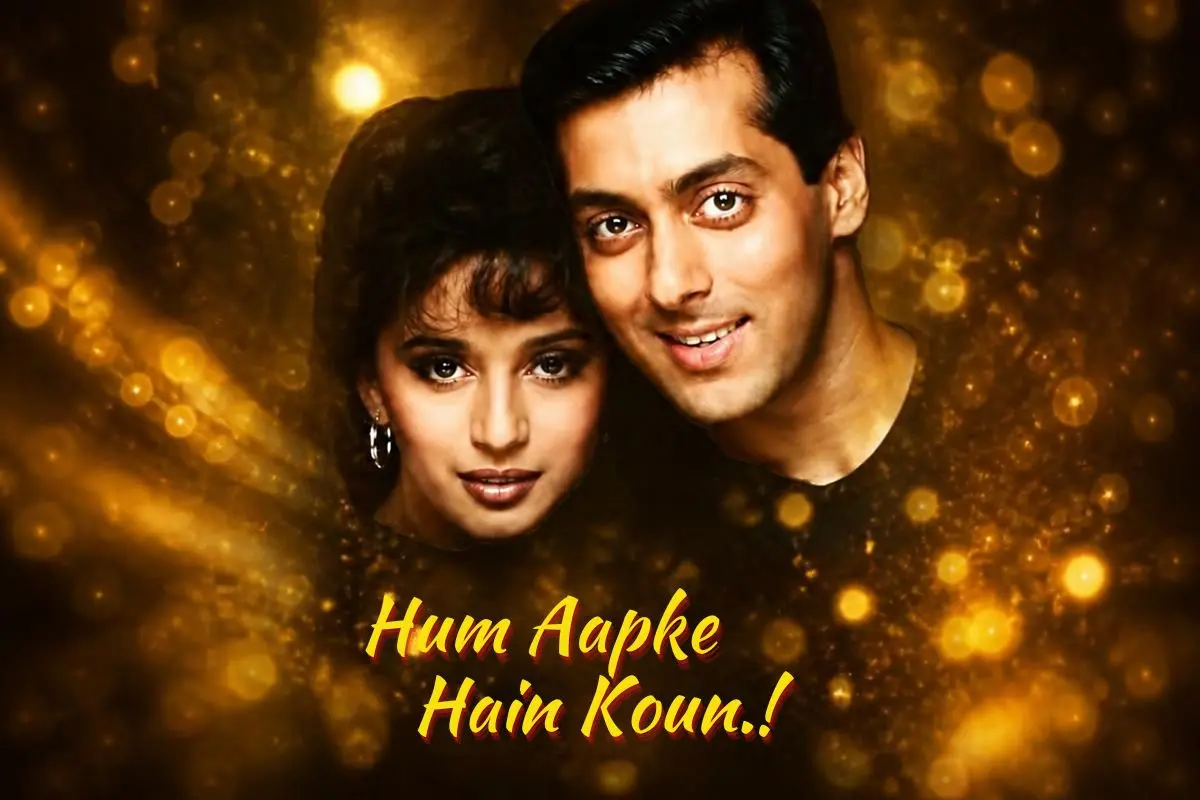
However, this also gives us the scope to look back on the 1994 hit Hum Aapke Hain Koun which turned out to be a thumping box office hit across the country and produced South Indian imitations as well. Hum Aapke Hain Koun came nearly two decades after Jai Santoshi Maa quit the scene. But the message is clear. If a crudely produced, low-budget, star-less Jai Santoshi Maa could captivate audiences for months together, when HPHK arrived, it needed to be dressed up, packaged and presented in modern, jazzy, dazzling clothing that does not compromise on a lavish budget in keeping with the economic policies of a Manmohan Singh. And this is precisely what Hum Aapke Hain Koun had done.
Among the Southern “imitations” the names that come first are - Premalayam (and alternatively known as Premanuragam) in Telugu which became a massive hit in Andhra Pradesh and Telangana, matching the popularity of its Hindi counterpart. Then there was Ninne Pelladatha (transl. 'I will marry only you') a 1996 Indian Telugu-language romantic family drama written and directed by Krishna Vamsi and produced by Nagarjuna under the Annapurna Studios banner. The film starred Nagarjuna and Tabu, with music composed by Sandeep Chowta, marking his debut in Telugu cinema.
Ninne Pelladatha has set many records during its theatrical run and became the highest grosser in Telugu cinema. It received several accolades, including the 1996 National Film Award for Best Feature Film in Telugu. The film was later dubbed into Tamil as Unnaiye Kalyanam Pannikiren and remade in Kannada as Preethsod Thappa.
When the audience watches this Barjatya family entertainer named Hum Aapke Hain Koun even today, it (the audience) watches the songs, the dances, the marriage rituals and fun, the romantic scenes, the melodrama, the moving marriage album filled with smiles, two happy extended Hindu families united in marriage, and the bonhomie that forms the focus of the film.
What generally escapes its attention is the large-scale inundation of the screen with blatant consumer-centered symbols and motifs. As the narrative moves on, we are introduced to a whole array of concrete consumer durables which can fit only into an urban elitist Indian family -- bath tub, soap, shampoo, conditioner, moisturiser, cream, perfumed oil, towel, jeans, jacket, tee-shirt, sneakers, skating rink, billiards table, cold drinks, ice-cream, chocolate, all put together (through Pooja's marriage and Nisha's impending marriage) with images of imported cars, a fridge, air-conditioners, washing machine, vacuum cleaner, kitchen gadgets, acrylic colours, furniture, clothes, suiting-shirting, and so on, familiarising the mass audience with dream pictures of affluence within an essentially Indian ambience.
This is what is visible, with generous doses of glamour and gloss to overwhelm the viewer. What lies hidden (invisible) under this colourful show of blatant consumerism, escapes the attention of the lay audience. A feminist film critic will try to highlight the invisible and point out its implications. The luxurious cushion of cocooned comfort, clothed in enough sophistication and modernity successfully keeps the women in the film confined to the private spaces of their homes, mainly matrimonial. Nisha (Madhuri Dixit) is into computers, but as the narrative unfolds, the audience understands that she will wind up getting married and becoming ‘the politically correct surrogate mother’ to her dead sister’s child. And that will be the end of computers as far as she is concerned.
Hum Aapke Hain Koun is a brilliant example (ironically, because it is such a well-crafted film) of how sheer affluence, specially after marriage, can be a diabolically used political instrument to ‘keep the women in their place’ within the home, without their even beginning to realise that they are trapped into the same conventional lifestyle their mothers and grandmothers were, before them. Which they had sought to prevent through their education and supposedly liberated and progressive upbringing. This is just what is needed to sustain and promote patriarchy.
“So what’s the problem, if this is what makes these women happy?” is an oft-repeated question. The problem is that, this is a happiness that is defined and dictated to them, by patriarchy. In other words, a lifestyle led in total luxury and comfort is neither allowed to, nor seeks to define for itself, any other kind of happiness than the one it is used to. This applies to both men and women. But it suits the Indian social structure better if it is covertly imposed on the modern, urban, educated young woman who is already aware of social problems (dowry, sexual harassment, rape, domestic violence) that oppress women on the one hand and the life-achievements of an Indira Gandhi or a Kiran Bedi or an Arundhati Roy or a Mother Theresa on the other.
Academic scholar Meenakshi Mukherjee, while explaining the appeal of Hum Aapke Hai Koun(1994), writes, “Ramcharitmanas imbues the text with values that hold together the non-existent story. Not only does the initial meeting of the two families take place in Ramtekri, within the ambience of a Ram temple, the chanting of Tulsi's dohas (couplets) providing the background music, but even inside their own room, the bride's father playfully uses the Ramayan in his banter with his wife.
“The repeatedly foregrounded idol of Ram-Sita-Lakshman in the temple is made to serve as the paradigm for the dramatis personae -- the bhaiyya-bhabhi-devar triad -- each of whom performs his/her ideal familial function in the plot with the servant Lalloo possibly filling Hanuman's role.
“In fact, the iconic resemblance between the newly married couple and the mental image of Ram-Sita prevalent all across the Gangetic plain (calendar pictures, Birla temples and Ramanand Sagar each reinforcing each other) is too remarkable to be just a co-incidence. When the bride enters the husband's house, she is presented with a copy of the Ramayan, accompanied by a cryptic comment, is mein Sita hai (there is Sita in this.)”
Are these interpolations a calculated manipulation of box-office tastes that seem to have wearied of excessive doses of meaningless sex and violence? Or, are they the subconscious desires of a family film-producing concern-- the Barjatyas--that has always been committed to the upholding of family values and Indian norms through their films? One suspects that the film is a product of both. Suraj Kumar Barjatya, the young director of this film, took a calculated risk of playing on the most popular mythological theme of all, the Ramayana, relocated within the ambience of an Indian smalltown, set against the backdrop of two families very close to each other, seeking permanent social sanction for this closeness through marriage. Ideologically speaking, Hum Aapke Hain Koun also expresses the ideological beliefs of the Barjatya family, itself closely knit into a unified and a cohesive whole, repeatedly demonstrating their togetherness at all the award-giving functions by going to the extent of the three producers literally receiving the awards together! Explaining his thoughts about the film, director Suraj Kumar Barjatya says, “We may wear jeans and Nike shoes, but we, as Indians, also end up making yearly trips to our holy sites. So, despite the cosmetic changes, we Indians at heart, have remained the same.”
In yet another interview, he said, “It is a very Indian film and we have gone back to our culture, our traditions and it is an expression of our love to our Indian traditions for reference points in the film. What happens in the film can happen to any family. In every house you'll find someone getting married. In every family there is childbirth, and just as naturally there is death in every family too. So the element of identity is well taken care of.”