Stranger Things Season 5 review: The end isn’t here yet but the waiting is almost unbearable
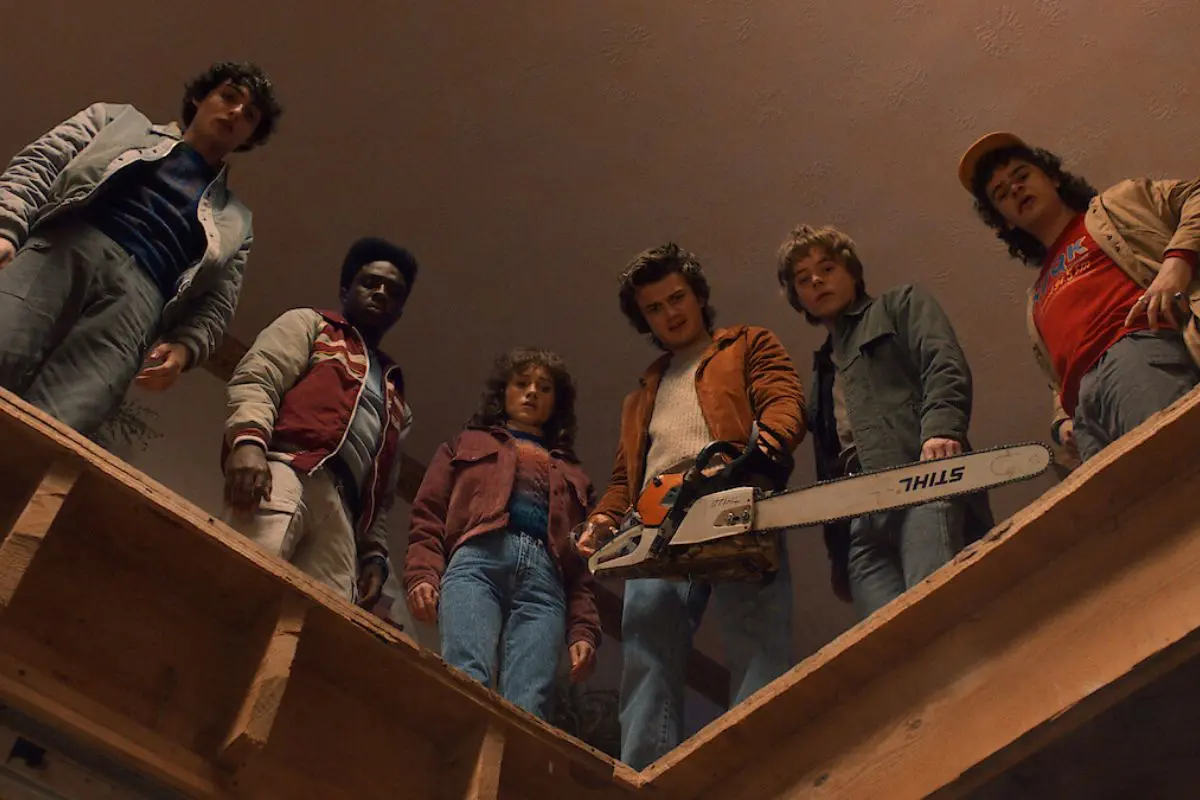
By now, watching Stranger Things feels less like starting a series and more like checking in on old friends as the world burns around them. You don’t question why you’re here or how much longer this can go on. You simply sit down, brace yourself, and hope the farewell will justify the wait.
Season 5 Volume 2 exists squarely in that uneasy middle ground — no longer buoyed by the excitement of arrival, not yet shaped by the ache of finality. Instead, it occupies a prolonged, slightly draining pause before everything inevitably collapses.
Picking up immediately after Volume 1’s explosive ending, the second set of episodes finds Hawkins suspended between survival and surrender. Vecna remains a constant, looming presence, and the long-teased revelation surrounding Will Byers’ abilities initially signals momentum. Instead, the narrative deliberately slows.
Volume 2 is less about escalation and more about regrouping, recalibrating, and emotionally processing what has already unfolded.
By the end of these three episodes, there is a palpable sense that both the characters and the audience are standing almost exactly where they began — waiting for the final domino to fall.
This stasis is Volume 2’s most glaring weakness, but also its most intentional choice. The Duffer Brothers treat these episodes as connective tissue, a bridge between two dramatic peaks. The result is pacing that often feels stretched, as if the story is being gently restrained to preserve the weight of the finale still to come.
Plans are made and revised, journeys begun only to loop back emotionally or physically, and revelations arrive without the seismic punch the series once delivered so confidently mid-season.
Still, Stranger Things understands where its true strength lies. When the spectacle recedes and the characters are allowed to simply exist together, the show rediscovers its emotional core.
The quieter scenes — confessions, reconciliations, shared fear and tenderness- consistently land harder than the large-scale action. At heart, this has always been a story about chosen family, and Volume 2 is strongest when it remembers that.
Sadie Sink once again underscores why Max has emerged as one of the series’ most compelling figures. Her arc unfolds patiently — perhaps overly so but Sink’s restrained, internalised performance gives Max’s journey through fear, resilience and quiet bravery a gravity that much of the surrounding chaos lacks.
A notable addition is Nell Fisher’s expanded role as Holly Wheeler. Fisher brings a grounded confidence and emotional clarity that cuts through the season’s heavy nostalgia, offering a fresh perspective within an ensemble defined by its past.
Will Byers’ return to narrative prominence is both a highlight and a complication. His emotional importance to Stranger Things has never been in doubt, but the execution of his most pivotal moments is uneven.
While the intent behind his arc is sincere and long overdue, the dialogue is sometimes overly explicit, placing enormous pressure on performance to convey nuance that might have been better served through subtlety.
If there is one relationship that remains unfailingly reliable, it is the bond between Dustin and Steve. Their reconciliation after a season of tension and bickering stands out as one of Volume 2’s warmest and most earned moments, a reminder that the series doesn’t need world-ending stakes to feel meaningful, only characters who genuinely care for one another.
Visually, Stranger Things continues to operate on a blockbuster scale. The set pieces are elaborate, the action polished, and the effects impressive. Yet spectacle is also where Volume 2 begins to strain. Action sequences are frequently interrupted by heavy exposition, often delivered mid-crisis to clarify increasingly complex lore.
The constant need to explain, contextualise and reiterate dampens momentum, reinforcing the sense that the series is holding itself in place. Volume 2 may be compulsively watchable, but it is also undeniably transitional — a long pause before the end, asking viewers not for excitement, but for patience.