A farewell to Sreenivasan: The China he believed in, the China he witnessed
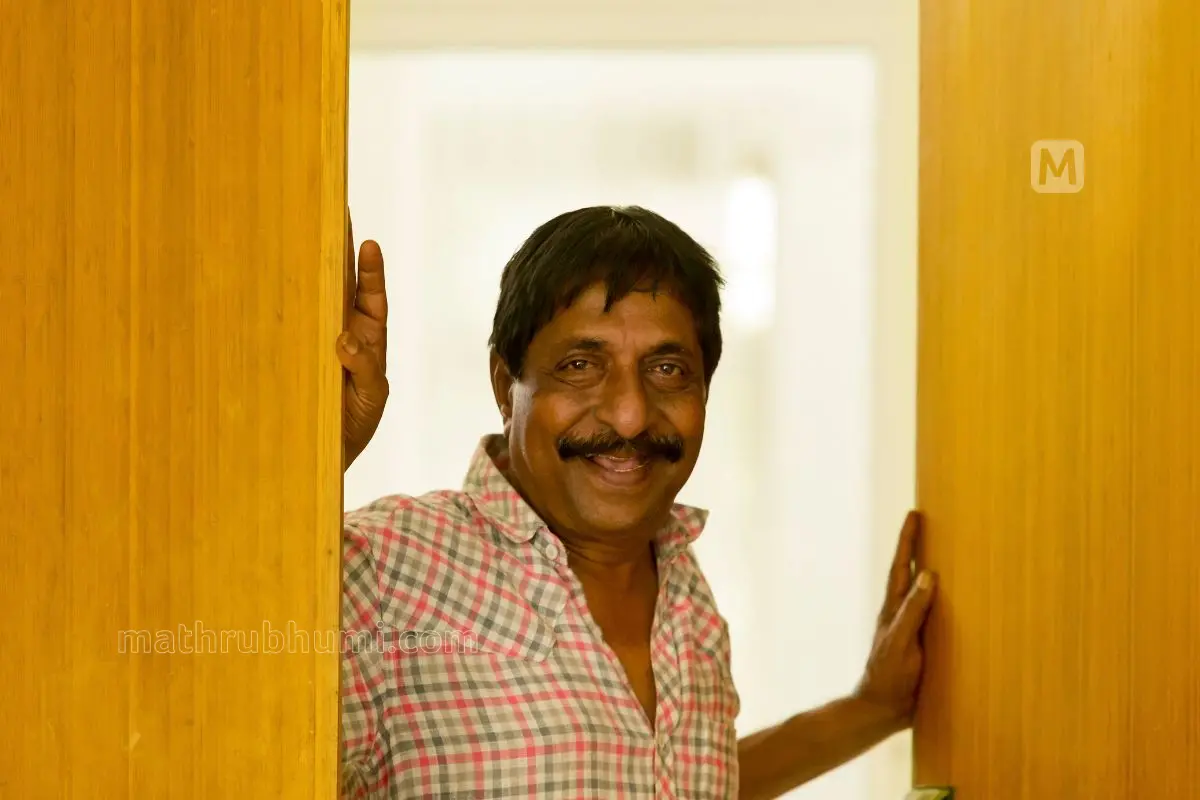
The death of veteran Malayalam actor, writer, and public intellectual Sreenivasan on December 20, 2025, has prompted readers to return to his writings that blended personal memory with sharp political observation.
Among them is a reflective essay he wrote for Mathrubhumi on January 30, 2022, where he revisited his long-standing fascination with China — and how that fascination collapsed after he finally saw the country for himself.
China, Sreenivasan wrote, had occupied a special place in his heart from a very young age. It was shaped by what he heard from communist leaders across the world and from intellectuals who spoke of the country in glowing terms — “Madhura Manohara Manonjna China.”
Even when things fell apart elsewhere, people would say, “China is not like that” or “nothing of this sort happens in China.” In his hometown, admirers of communism — whom he described as “Cuba Mukundans” — were in abundance, praising China endlessly. Back then, he promised himself that he would one day travel to China and experience its glory.
That promise was eventually fulfilled — not once, but twice. However, what he encountered was far removed from the China he had imagined.
Looking back, Sreenivasan wrote that whenever he now hears Cuba Mukundans speak of their “Madhura Manohara Manonjna China,” he finds it hard to suppress laughter — laughter so intense that tears roll down his eyes.
On both visits, he did not see a beautiful China, but instead encountered what poet Vayalar once described as a “terribly cunning China.”
During his first visit, Sreenivasan landed in Beijing amid heavy storms and rain. Despite the hostile weather, he decided to visit Tiananmen Square. For him, this was not just a tourist destination but the very land where the greatest struggle for democracy in China had taken place.
He observed that the Chinese seemed to believe deeply in size. The Forbidden City, Tiananmen Square, and the Great Wall were all famous for their sheer scale.
He speculated that this fascination with enormity might even be linked to the generally short stature of Chinese people. Tiananmen Gate, he noted, literally means “The Gate of Heavenly Peace.” It was here that Chairman Mao declared China a communist nation in 1949.
However, it was also on this very land that the first great cry for democracy was raised on June 3, 1989.
Sreenivasan recalled how hundreds of students arrived in groups on bicycles by 10 o’clock that morning. A young man climbed onto the martyrs’ dome and addressed the gathering, urging them to fight until democracy dawned in China.
When the students refused to leave, the army opened fire from tanks. Tanks were driven into the crowd. People were crushed to death.
Standing in front of the gate — a powerful symbol of Chinese nationalism — Sreenivasan wrote that he could still hear the cries of students and democrats who once filled that space.
From his two visits, he came away with another realisation: only a very small section of China’s massive population truly believed in communism.
Party membership, he observed, was limited. In his interactions with ordinary people, the party and its principles felt distant and inaccessible.
Until then, he had believed that everyone in China was a communist. To test this belief, he asked many people a direct question: “Are you a communist?” Most replied in the negative. His guide, Leiho, answered simply, “No, I’m a Buddhist.” Many people in China, he concluded, did not believe in communism at all.
Written nearly three years before his passing, the essay today reads as a deeply personal act of unlearning — one that reflects Sreenivasan’s lifelong willingness to question ideologies, dismantle myths, and laugh at beliefs he once held sacred.
In revisiting this piece after his death, readers are reminded not just of what Sreenivasan saw in China, but of who he was: a thinker unafraid of disillusionment, and a writer who believed truth mattered more than nostalgia.