First salary Rs 175; A chance encounter with Madhu on Kolkata street changed TP Madhavan’s life
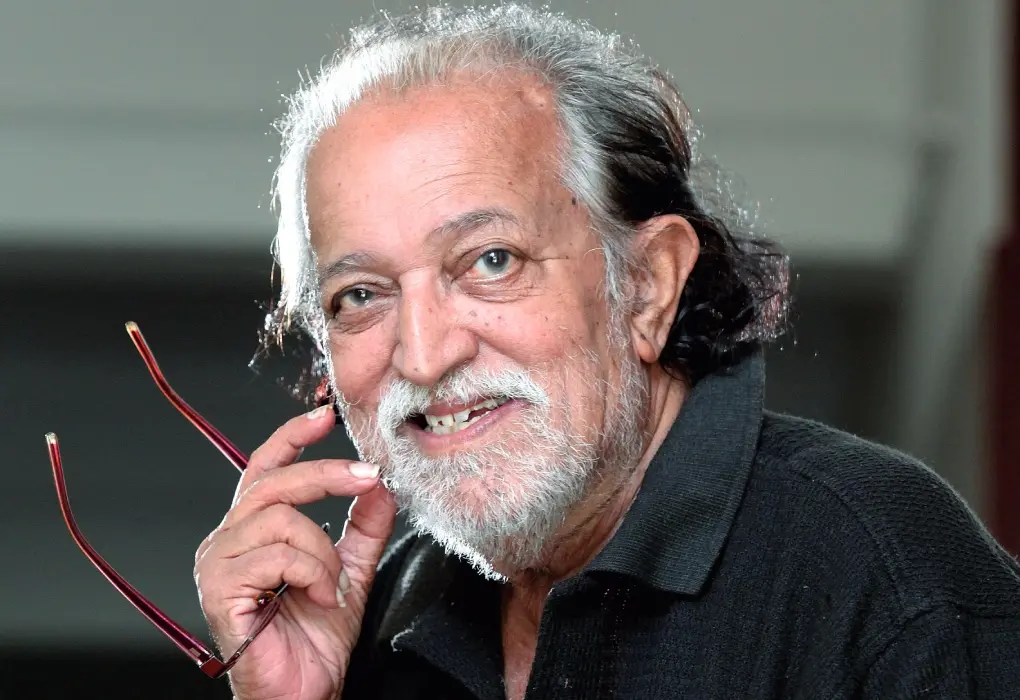
T P Madhavan never imagined that he would end up as a resident in an orphanage during the twilight of his life. Yet, when he looked back at his life, Madhavan felt that perhaps it was destined for him to arrive at some place with a divine presence. After all, why had the thought of taking up asceticism crossed his mind even before marriage? Why had he stayed at Chinmaya Mission’s headquarters in Mumbai for six months, preparing for the life of a monk?
In his later years, despite everyone’s objections, he boarded a flight to Haridwar, having decided that his remaining life would be spent there. This decision was driven by the spiritual reflections that had quietly taken root within him along with the material desires. However, Haridwar was not the end of the journey. It led him to a return trip from the banks of Kashi to the Gandhi Bhavan in Pathanapuram. Here, he found himself walking a true spiritual path, one of interfaith prayer, fraternity and service alongside lives that had been discarded, lives with no one left to care for them.
“Yes, I am happy now,” he said. “When I first arrived here, I was exhausted. There was a restlessness, a nagging sense of ‘What should I do?’ But I’ve realised that this is the path of peace I have been searching for. I feel an energy within me. Many have reached out, asking me to return to films and TV serials. From here, I will once again reengage with cinema. I’m also now a part of this Gandhi Bhavan.”
“Looking back, it all seems like a movie. Over 600 films, mostly in small roles, but my life was always intertwined with cinema. I even served as the secretary of the actors' association AMMA for a while. But it wasn’t until I turned 40 that I entered the film industry. After completing my post-graduation, I first joined the army. However, after six months, I broke my hand and had to bid farewell to that career. After that, I worked as a journalist in Mumbai.
“At Indian Express, my salary was Rs 175. Later, I moved to an advertising agency in Bangalore, where I earned Rs 400. Moving to Kolkata opened the door to my entry into the world of cinema. Before that, cinema was merely a distant dream. I still remember standing in Mumbai, waiting to catch a glimpse of Rishi Kapoor. My life changed when I met the actor Madhu during his visit to Kolkata.
“I followed him down the street, called out to him, and he turned around with a smile. That was the beginning of a friendship. Madhu was searching for a heroine for the film ‘Priya’ at the time, and I helped him. Our bond grew from there. Later, when he came to Bangalore for films like ‘Kamam Krodham Moham’ and ‘Akkaldama’, I continued to assist him. I even had roles in those films. From then on, I had small roles in many films," he continued.
Madhavan's breakthrough came with the role of a lame man in Balachandra Menon’s ‘Kalika’. After that, he started getting noticed in more significant roles. Judge, brahmin, steward, lawyer, servant, manager, doctor, psychiatrist—whenever a director thought of such a character, his face often came to their mind first. Though small, most of these roles left a mark on the audience.
"I could list countless memorable characters: the police inspector who admired the pulp novelist in *Ayal Katha Ezhuthukayanu*, Sharodi in *Aaram Thampuran*, the police officer in *Sandesham*, Bhaskarettan in *Udayananu Tharam*, Raman Nair in *Narasimham*, Harivamsha Lal Pannalal in *Pathram*—the list goes on. When I took on the role of Harivamsha Lal, screenwriter Renji Panicker said something that I still carry as an award: “Madhavettan, you are an actor with immense versatility,” Madhavan said.
“Once I entered the cinema, I lost another life—my family life. I was married to a woman who was the managing director of a large company. She didn’t like my decision to enter films. After I did, I received divorce papers. That relationship ended. But perhaps it was all part of destiny. My son, Raja Krishna Menon, also found his way to the film industry.
“Like me, he began in the advertising world. Now, he’s proven himself as the director of the blockbuster 'Airlift',” Madhavan said, his face glowing with pride as he spoke about his son.
There was no bitterness about the fact that his family never looked back. “We parted when he was twelve. After that, he was only his mother’s son. Let that be. My wife and I also have a daughter, Devika,” he said.
“In the old days, my friends in the film industry used to joke about my initials T P, calling me ‘Thallipoli Madhavan’, meaning ‘Madhavan who causes chaos’. I would then correct them, saying it’s “Thanthakku Pirannavan” which means the ‘son born to a father’. Many used to describe me as ‘the man who came to act in a car’. My father S V Pillai was the Dean at Kerala University. My mother Saraswathi was a writer. My uncle was writer T N Gopinathan Nair. None of them approved of me entering the film industry. That’s why I studied for an MA and took up a job. Forty is a turning point in everyone’s life. It was at that age that I decided to pursue cinema,” he added.
Why journey to Haridwar?
He was living in Ernakulam and he thought of moving to Thiruvananthapuram. But when he went there, the ailments began—bladder-related issues. He lost everything, even the clothes Madhavan had with him. That was when he turned to an ashram in Haridwar. One night, he fell from his bed. As he lay there, he noticed his hand was rising involuntarily. He called the head of the ashram on mobile, and they took him to the hospital. A relative arrived, and later his sister from America came to see him. Timely treatment saved him. That was how he returned to Thiruvananthapuram. It was Prasad Nooranad, a serial director, who told him about Gandhi Bhavan in Pathanapuram.
“When I came here, I felt like I had finally arrived at the place I had been searching for. Now, my life is with these people. If you ask me what life has taught me, I have much more to say. Let the remaining years be for that," he concluded.
(As published in Chithrabhumi)