The day Bengaluru came to a standstill: 25 yrs since Veerappan kidnapped Kannada superstar Rajkumar
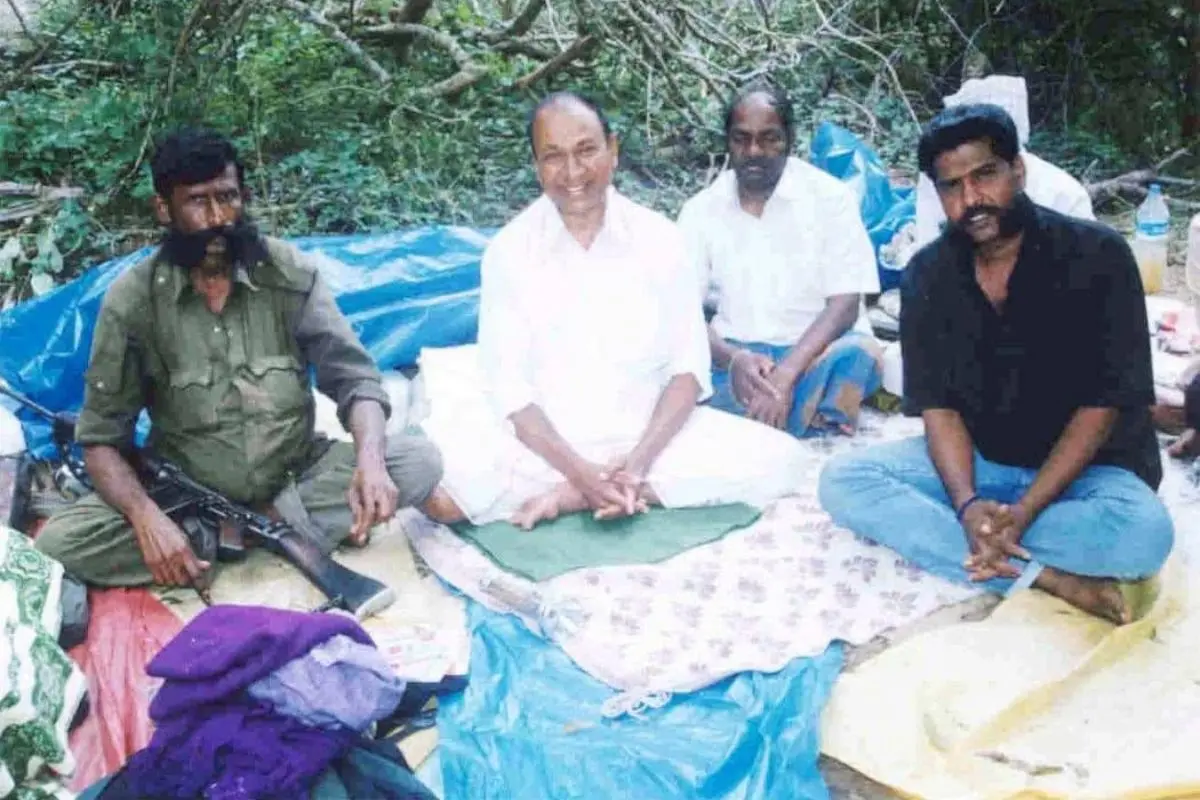
Thiruvananthapuram: It has been exactly 25 years since Kannada film legend Dr Rajkumar was abducted by the notorious forest brigand Veerappan, a chilling incident that shook South India and remains etched in public memory.
On the night of July 30, 2000, Veerappan and his gang stormed a farmhouse in Gajanur, located on the Tamil Nadu–Karnataka border, and abducted actor Rajkumar along with three others. What followed were 108 days of national anxiety, sleepless nights for the Chief Ministers of both Tamil Nadu and Karnataka — M Karunanidhi and S M Krishna — and a tense political and emotional standoff.
Veerappan, a sandalwood smuggler and elephant poacher with a long criminal history, put forward politically sensitive demands, including the release of 121 TADA detainees and the recognition of Tamil as a second official language in Karnataka. These demands plunged both states into a deep crisis.
When Dr Rajkumar was finally released after 108 days in captivity, it sent shockwaves through Karnataka, especially Bengaluru, which came to a complete standstill. As the stunning news broke around 8 am, shops across the city shut down instantly, roads emptied and vehicles disappeared. Sporadic attacks were reported on Tamils, given the incident took place in Tamil Nadu. Pro-Kannada groups and Rajkumar’s loyal fans took to the streets, treating the incident as an attack on their cultural icon — a man many revered as a “god-like figure”.
The case triggered heated debates in both Houses of the Indian Parliament. Former Karnataka Chief Ministers S R Bommai (Rajya Sabha) and Bangarappa (Lok Sabha) raised the issue with deep emotion. Then Prime Minister Atal Bihari Vajpayee and Home Minister L K Advani assured the states of full support in resolving the crisis. However, concerns for Dr Rajkumar’s safety meant that a commando operation was ruled out.
The government’s attempts to negotiate, including releasing prisoners under pressure, drew sharp criticism from the Supreme Court, which condemned any appeasement of a forest bandit.
Five peace missions were undertaken, including Nakeeran Gopal, a journalist who met Veerappan multiple times in the forest. However, the most major breakthrough came when Tamil nationalist leader P Nedumaran met Veerappan personally, reigniting hopes for Rajkumar’s release. Yet even after 100 days, the actor remained a captive.
The Indian media, particularly Kannada and Tamil newspapers, splashed the story across their front pages for months. When Malayalam daily Mathrubhumi’s editor K Gopalakrishnan took over, the newspaper famously ran a full-length image of Veerappan holding a rifle, contrasting with other publications that featured Rajkumar’s photo. The issue reportedly sold out instantly.
This reporter recalls seeing Bengaluru gripped by fear, as seen from the usually busy High Grounds Circle, where people withdrew indoors. Outside Rajkumar’s residence, his fans — including many women — wept and prayed for his safe return.
After more than three months of uncertainty, Dr Rajkumar was finally released on November 15, 2000. Veerappan was eventually killed in an encounter with the Special Task Force in 2004, and Rajkumar also passed away in 2006.
Yet, even today, the terms of Rajkumar’s release remain a mystery. Persistent rumours that crores of rupees were paid as ransom have been consistently denied by both his family and government officials.
In a final twist, 14 years after Veerappan's death, a court acquitted all accused in the kidnapping case. But the memory of Koose Muniswamy Veerappan, who evaded capture for two decades, killed hundreds of elephants, forest officials and police officers, and held a cultural icon hostage, remains one of the darkest chapters in India's criminal history.