‘Teri pyari pyari surat’: Remembering the timeless legacy of Sarojadevi
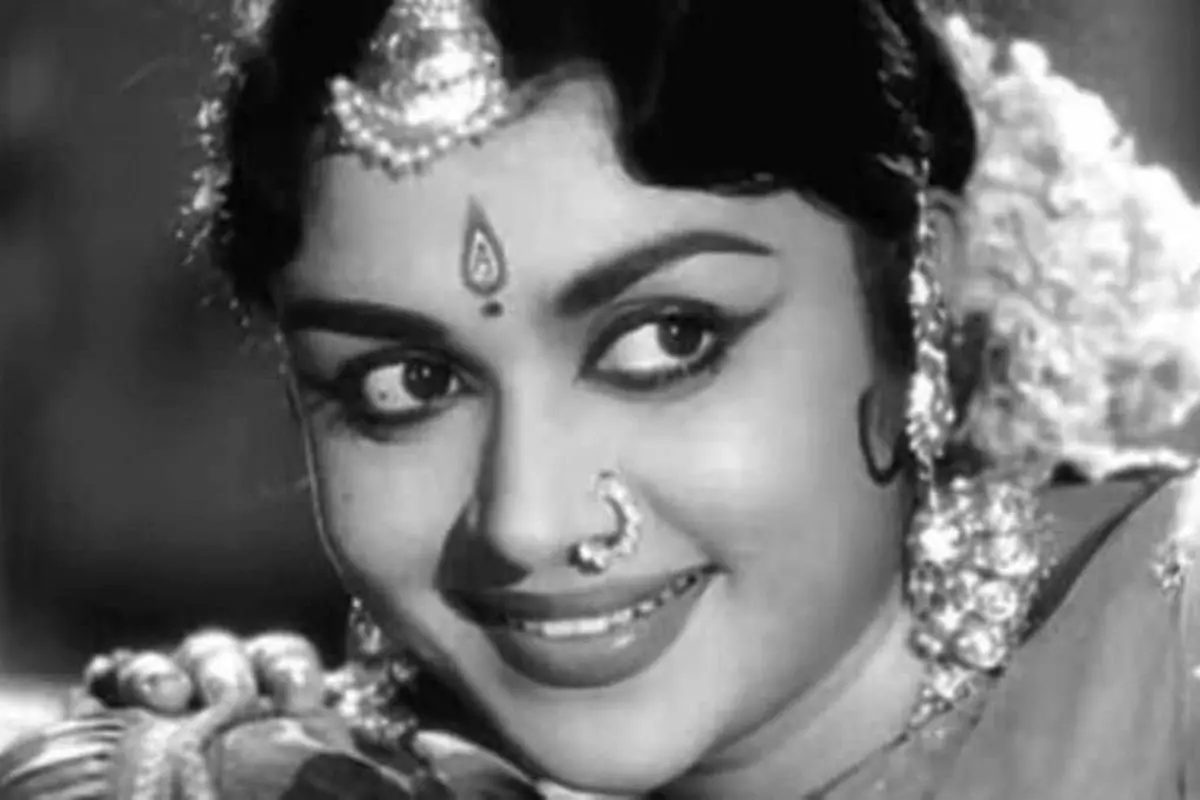
‘Teri pyari pyari surat’: The memory of Sarojadevi lives on in this song that defines romance
Singer Usha Timothy still holds close the memory of the most romantic side she ever witnessed of Mohammed Rafi — and it features his wife, Bilquis, as the heroine of that story.
“Rafi Sahib used to sing a particular song just for his wife at stage concerts. He must have always checked in advance to be sure which one she wanted,” recalls Usha, who shared the stage with Rafi across the world. “Only once did he break that routine. The audience that evening was so demanding, requesting one song after another, that he grew exhausted and forgot his wife's special request. After the concert, when we returned to the green room, Bilquis — whom I lovingly called Baji — was sitting with her head bowed. The sadness and quiet reproach were written all over her face. No matter what we said, she wouldn’t speak.”
Then came Rafi Sahib’s final, heartfelt gesture. “He gently lifted her chin with his finger, looked deep into her eyes, and sang her chosen song right then and there: ‘Teri pyari pyari surat ko kisi ki nazar na lage...’ Never before or after have I heard that song sung with such romance. Who could hear Rafi sing and not feel joy? Within moments, Baji’s face lit up with a smile. And just like that, the hurt melted away with the song.”
It was this very classic that first came rushing back to mind upon hearing the news of Sarojadevi’s passing — the evergreen melody where Rajendra Kumar, eyes full of tender longing, sings to his beloved onscreen:
“Teri pyari pyari surat ko kisi ki nazar na lage chashme baddoor...”
The unforgettable hit from Sasural (1961), directed by T Prakash Rao, has long outlived the memory of the film itself. Sarojadevi had made her Hindi debut just a year earlier in the Opera House, opposite Ajit. That film, too, had memorable songs, including the Mukesh-Lata Mangeshkar duet “Dekho mausam kya bahaar hai…”, a melody composed by Chitragupt and inspired by Jim Reeves’ Bimbo.
Yet, for southern Indian audiences, Sarojadevi’s voice is most vividly remembered through P Susheela. Whether it was “Aalayamaniyin osai…” from Paallum Pazhavum, “Thottal poo malarum…” from Padagotti, “Raajavin paarvai raaniyin pakam…” from Anbe Vaa, “Chittukuruvi muththam koduthu…” from Puthiya Paravai or “Paarthaal pasi theerum…” from the film of the same name — she brought to life an entire universe of unforgettable songs and moments.
“She was one of the finest actresses to embody my songs on screen,” Susheela once said. She points to “Rahasiyam Parama Rahasiyam…” from Periya Idathu Penn as a prime example. “MS Viswanathan sir had told me to bring out an air of secrecy in the song. He said it should feel like a whisper in the ear, filled with emotion.”
The song was recorded at Saradha Studio, with sound engineer Rangaswamy. “I sang it just as MSV sir asked — softly, with intimacy. After a while, he came into the studio from the console and told me, ‘Lower the pitch a bit less — increase the volume just a little. Or else no one will hear it.’ That’s how the song was recorded,” Susheela recalls. “I was so curious how it would be picturised. But when I saw the film, I was amazed. Sarojadevi had acted with such depth and absorption. The way she performed the line ‘Rahasiyam Parama Rahasiyam…’ made it feel like she had sung it herself.”
There was a rare and tender chemistry between the singer and the screen actor — a shared fragrance of feeling and artistry. And now, with the passing of one half of that bond, another curtain falls on a golden chapter in the history of Indian film music.
Farewell, Sarojadevi.