Rain in Malayalam cinema: These films show rain like you’ve never seen before
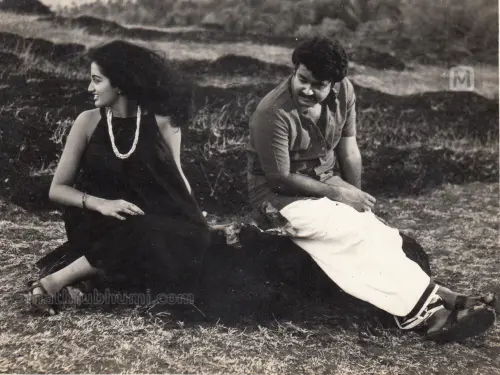
Kerala’s monsoon has always been more than a seasonal backdrop in Malayalam cinema—it is atmosphere, metaphor, and emotional architecture. From intimate romances to real-life disasters, filmmakers have used rain to shape character psychology and narrative depth in uniquely Malayalam ways.
Below is an expanded look at some key films where monsoon plays a central cinematic role.
Thoovanathumbikal (1987): Rain as emotional conflict and desire
P. Padmarajan’s Thoovanathumbikal is widely regarded as one of the most sophisticated romantic dramas in Indian cinema, and its monsoon setting is inseparable from its emotional core.
Set in Thrissur, the film uses continuous rain to reflect Jayakrishnan’s emotional instability and duality. His relationships with Clara and Radha are not just romantic choices but moral and emotional contradictions. The rain becomes a visual extension of this confusion, never stable, always shifting, sometimes gentle and sometimes overwhelming.
Padmarajan never uses rain as decoration. Instead, it functions like punctuation, pausing conversations, intensifying silences, and softening reality. The wet streets, dim lighting, and monsoon haze create a world where clarity is impossible. Love here is not linear; it is fluid, like rainfall itself.
Ennu Ninte Moideen (2015): Monsoon as memory
Based on a real-life tragedy, Ennu Ninte Moideen uses rain as an emotional timeline across decades.
The love story of Moideen and Kanchanamala is defined by separation imposed by family and society. Monsoon sequences repeatedly mark moments of longing, silence, and emotional endurance. Rain becomes a shared language between the lovers even when physical distance separates them.
What makes the monsoon significant here is its emotional continuity. Even when the characters are apart, rain connects their worlds. It preserves memory, intensifies nostalgia, and gives permanence to love that society tries to erase. The rainfall is less about the weather and more about emotional persistence across time.
2018 (2023): Monsoon as catastrophe
Jude Anthany Joseph’s 2018 transforms monsoon cinema into disaster realism. Inspired by the 2018 Kerala floods, the film portrays rain not as symbolism but as a lived catastrophe.
The relentless rainfall becomes the central force that reshapes geography, society, and human relationships. Rivers overflow, homes disappear, and entire communities are displaced. Unlike traditional monsoon films, where rain enhances emotion, here it directly creates conflict and survival challenges.
What stands out is the collective narrative. The monsoon forces strangers into cooperation, breaking social barriers. Human resilience becomes the emotional centre of the film, and rain functions as both destroyer and unifier. It is history captured in real-time emotional detail.
Moonnam Pakkam (1988): Monsoon as waiting and existential silence
Padmarajan’s Moonnam Pakkam is a quiet, haunting meditation on loss. Set in a coastal village, the film uses monsoon and sea imagery to build emotional stillness.
The story revolves around a grandfather waiting for his missing grandson, and this waiting becomes the essence of the film. Rain falls continuously, not dramatically but persistently, creating a sense of emotional suspension.
Director Padmarajan uses rain as a powerful narrative tool to transition the film from vibrant joy to devastating grief. The relentless heavy rain and violent waves following a sea tragedy mirror the characters' internal helplessness, culminating in a final, gloomy act of despair.
Perumazhakkalam (2004): Monsoon as grief, justice, and forgiveness
In the Malayalam classic Perumazhakkalam (“The Season of Heavy Rains”), director Kamal uses the monsoon not merely as a backdrop but as a living emotional force that mirrors the inner world of the characters.
Rather than functioning as atmospheric scenery, the relentless rainfall becomes a powerful metaphor for grief, isolation, and emotional release. It continually echoes the psychological turmoil of the two central women, Raziya (Meera Jasmine) and Ganga (Kavya Madhavan), who are trapped in a deeply painful moral dilemma involving love, loss, and forgiveness.
The film’s unending rains reflect the characters’ internal storms. Just as the skies remain heavy and unresolved, both women carry an emotional burden that refuses to settle. Unlike romantic monsoon films, this one uses rain as a source of pressure rather than beauty.
Mazha (2000): Monsoon as poetry
In Lenin Rajendran’s Mazha, which translates to “The Rain”, rain functions as a powerful central metaphor for unfulfilled desire, poetic longing, and lingering memory.
Adapted from Madhavikutty’s short story Nashtappetta Neelambari, the film uses monsoon imagery to reflect the inner emotional world of Bhadra (Samyuktha Varma), whose life is quietly shaped by her intense, almost dreamlike infatuation with her music teacher, Sastrigal (Biju Menon).
Rather than treating rain as a background element, the film weaves it into the emotional fabric of the narrative. Each rainfall mirrors Bhadra’s restrained passion and the silent weight of emotions she cannot express openly. The monsoon becomes an extension of her inner life, fluid, fragile, and unresolved, echoing her memories, desires, and the bittersweet nature of her longing.
Here, rainfall is not just seen but almost “heard” as part of the narrative rhythm. The film blends music, emotion, and monsoon imagery into a seamless poetic structure. Love and longing are expressed through visual softness and lyrical pacing.